


A sitting room asks a different question than a living room. The living room has to do everything; the sitting room only has to do one thing well: make people want to sit down and stay. Whether yours is a formal front room that hosts guests twice a year or the quiet corner of the house where you read on Sunday mornings, the best sitting room decor ideas start from that single purpose and build outward, one deliberate layer at a time.
Because the room has a narrower job, you can be braver with it. Deeper colors, more personal art, a chair chosen purely because you love it: the sitting room is where a house shows its personality. This guide covers how to define the room’s mood, seat it properly, light it for conversation, and style every corner, including the small and awkward ones. By the end, you will have a complete plan rather than a pile of disconnected purchases.
What Makes a Sitting Room Different From a Living Room?
The distinction is older than most of our houses. The sitting room descends from the parlor, the room kept for receiving guests and for the family’s quieter pursuits, while the larger living room absorbed everyday life, children, and eventually the television. Modern homes blur the two, but the spirit survives: a sitting room is the calmer, more intentional space, usually without a TV at its center.
That difference changes how you decorate. Without a screen dictating the layout, seating can face itself, arranged for conversation in a circle or a close L. Fabrics can be a little more refined, because the room sees coffee and conversation rather than pizza night. And the styling can be more personal: books you actually read, art you actually chose, objects with a story attached.
If your home has only one living space, you can still carve a sitting room out of it. A rug, a pair of chairs, and a small table in one corner, arranged as their own conversation group, create a sitting area with a distinct mood inside a multipurpose room. The ideas in this guide work at both scales, the whole room and the borrowed corner alike.
Choose the Room’s Mood: Quiet Retreat or Social Space
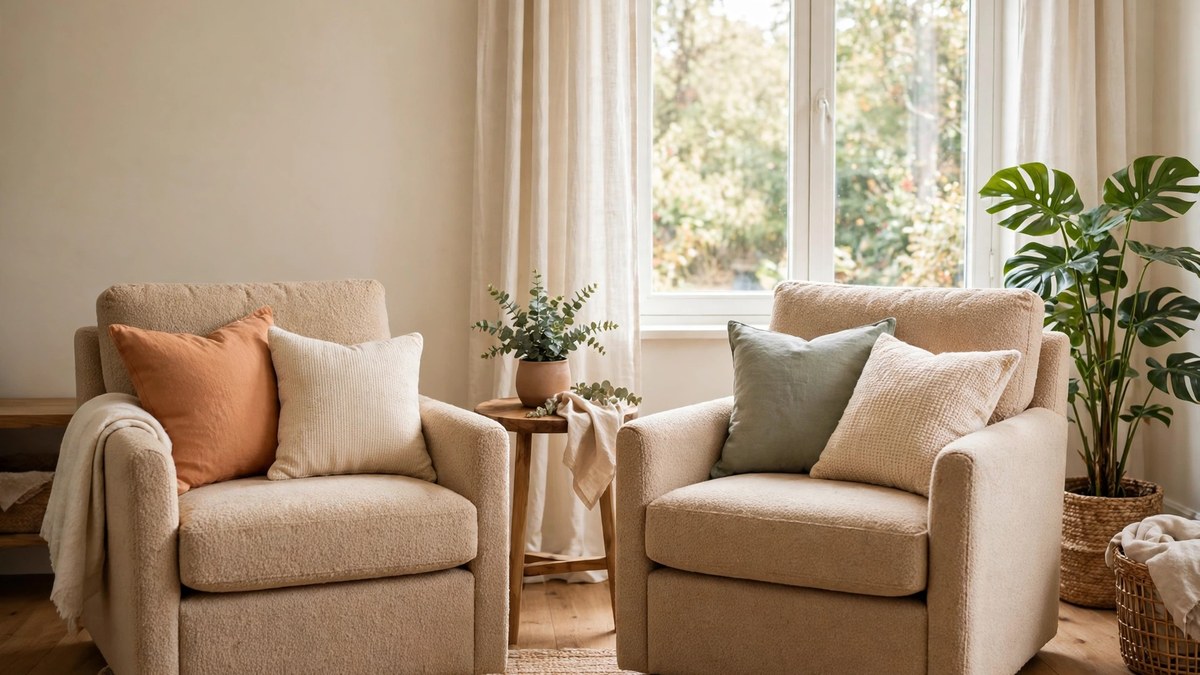
Every sitting room leans one of two ways. The retreat version is a refuge: soft light, deep seats, a reading chair by the window, colors that lower your heart rate. The social version is built for talk: seating for six or more, brighter light, a drinks tray within reach, and enough energy in the palette to keep a room full of guests feeling lively.
Neither is better, but mixing them accidentally gives you a room that does neither job. Decide which yours is before you buy anything, and let that decision arbitrate every later choice. A retreat room gets the linen sofa and the low lamp; a social room gets the extra pair of chairs and the larger rug.
Mood is set mostly by color temperature and light level. Warm colors, wood tones, and pools of lamplight read as retreat. Cooler colors, crisper contrast, and brighter, more even light read as social. Whichever direction you choose, commit to it across the big pieces. A room with a clear mood feels designed even when the furniture is humble, because every piece is playing the same note.
Seating That Invites People to Stay Awhile
In a sitting room, seating is the design. Start with the most comfortable chair you can afford and build around it. Conversation seating works best when chairs and sofas sit close enough for talk without raised voices, roughly 4 to 8 feet apart, with every seat inside that circle having a surface nearby for a drink or a book.
The classic arrangements are few because they work. Two chairs angled toward a sofa, a pair of matching chairs facing a loveseat across a coffee table, or a single deep sofa with a bench opposite. Keep seat heights within a couple of inches of each other so nobody is talking down or up at anyone. Standard seat heights run about 17 to 19 inches; mixing a very low lounge chair with a tall formal one feels awkward in practice.
Consider the chaise or daybed if the room leans retreat. A chaise gives one person a genuinely luxurious sprawl for reading and restores the historical flavor of the room, since the fainting couch and the reading chaise were sitting-room furniture long before they were bedroom pieces. Place it where the light is best rather than where symmetry suggests, and give it its own small table. In a social room it can feel self-indulgent; in a retreat room it becomes the seat everyone quietly hopes is free.
Add one piece of movable seating: a pouf, an ottoman, or a lightweight side chair that can be pulled into the circle when a fifth person arrives. And test comfort honestly. A chair that photographs beautifully but punishes a long conversation will quietly empty your sitting room of guests. Sit in pieces before you buy, and sit the way you actually sit, not the way the showroom hopes you will.
Cosy Front Room Ideas for the First Room Guests See
In many homes the sitting room is the front room, the first real space a guest steps into, and it sets the tone for everything after. The best cosy front room ideas work on two levels at once: the room makes an impression in the first ten seconds, and it rewards the people who actually sit down in it.
Start at the door. What a guest sees on entry should be a composed view: a focal point such as a fireplace, a styled console, or a large piece of art, with seating arranged to look inviting rather than like a waiting room. Keep a clear path from the door to the seating, and give guests somewhere obvious to land, because a room people are afraid to enter gets admired from the doorway and never used.
Warmth is the front room’s signature. Layer a rug underfoot, keep a folded throw on the nearest chair, and make sure the lighting at dusk is lamplight, not overhead glare. A small tray with a carafe and glasses, or a stack of beautiful books on the table, signals that this room is lived in and loved, not staged. If your front room also has to work harder day to day, our broader ideas for designing a living room cover how to blend the formal first impression with everyday function.
Sitting Area Ideas for Corners, Bays, and Awkward Nooks
Not every sitting space is a whole room, and some of the most charming ones are not. These sitting area ideas turn the leftover square footage most homes waste, bay windows, wide hallways, the corner by the stairs, into the seats everyone fights over.
A bay window is a ready-made alcove: add a low bench or a pair of small chairs, a narrow table between them, and a pendant or wall sconce above, and you have a reading nook with the best light in the house. A corner needs only one excellent chair, a floor lamp arched or stood beside it, a small round side table, and a rug or mat to define the territory. The definition matters; without something underfoot, a chair in a corner looks like storage, not a destination.
Wide landings and hallways wider than about 4 feet can hold a slim console or a bookcase plus a single chair, making a pass-through space feel furnished. Under-stair nooks suit a bench with cushions and a basket of blankets. The formula is always the same four elements: a comfortable seat, a light source, a surface, and a boundary underfoot. Give any nook those four things and it becomes a sitting area people actually use.
Color Palettes That Suit a Sitting Room
Because a sitting room is about mood, it can carry deeper and richer color than a high-traffic family room. Jewel tones such as deep green, navy, and burgundy look sophisticated in a room used mostly in the evening, especially paired with warm wood and brass. In a small sitting room, a deep color on all four walls can actually feel cocooning rather than cramped, provided the lighting is warm and plentiful.
For a retreat mood, the reliable palettes are soft and tonal: warm whites with oatmeal and camel, sage with cream and natural wood, or dusty blue with gray and linen. These schemes depend on texture for interest, so vary fabrics and finishes generously. For a social room, add one confident accent, a saffron chair, a coral cushion, lacquered red boxes on the table, against a calm ground, and the room gains energy without shouting.
Wallpaper deserves a mention in this room more than in others. A sitting room used for reading and talk can carry a pattern that a busier room cannot: a quiet stripe, a botanical print in the room’s palette, or grasscloth for texture without print at all. Paper one wall, usually the one the seating faces least during conversation, or paper all four in a small room for a jewel-box effect. Modern paste-the-wall and peel-and-stick papers have made this a weekend project rather than a life sentence, and in a room this size the cost stays modest.
Ceilings deserve a decision too. In a sitting room, painting the ceiling a shade deeper than the walls, or the same color for a cocoon effect, increases the sense of enclosure that makes the room feel intimate. It is the cheapest drama available in decorating, and in this room, drama is welcome.
Lighting for Conversation and Reading
Sitting rooms live by lamplight. The overhead fixture, if one exists, should be the backup singer, not the lead. Plan on a lamp for every two seats at minimum, placed so the light falls over shoulders onto books and faces. Table lamps on side tables between chairs serve two seats at once, which is both economical and flattering.
Shade choice changes the mood more than the lamp itself. Linen and paper shades diffuse light softly and suit retreat rooms; darker or metallic-lined shades direct light downward and feel more formal. Keep bulb color consistent across the room, warm at around 2700K, because mixed temperatures make even a pretty room feel subtly wrong.
Readers need one genuinely good light: a floor lamp with an adjustable arm beside the reading chair, or a pharmacy-style lamp that throws light directly onto the page. If you are choosing fixtures now, our guide to living room lamp ideas compares the main types and where each earns its keep. Add candles or a small lantern for the evenings when the room is about talk rather than tasks, and put everything you can on dimmers.
The Fireplace, the Window, or the Art: Picking a Focal Point
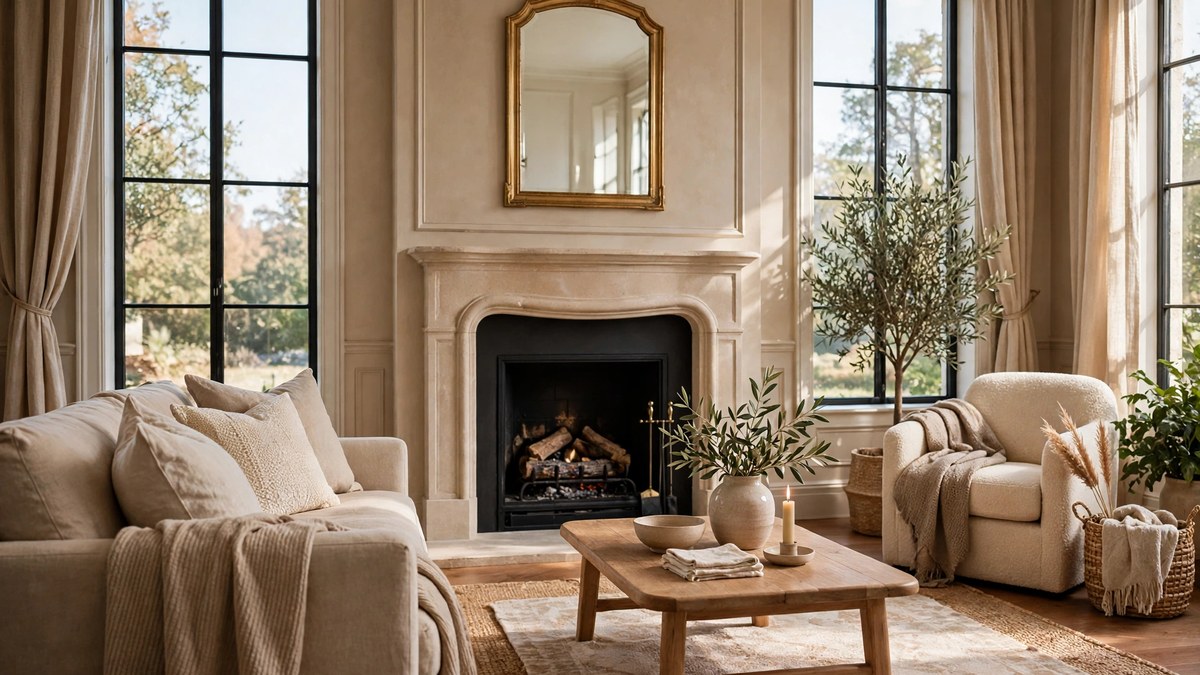
A sitting room without a focal point feels like a furniture holding area. The focal point gives the seating something to gather around, and in a sitting room you have three classic candidates. A fireplace is the strongest, and even a non-working one anchors a room beautifully when the firebox holds candles, books, or a plant. Arrange the two best seats flanking or facing it, and conversation has a hearth to orbit.
A large window is the second candidate, especially with a garden or street-tree view. Angle chairs toward the light rather than turning backs to it, and keep window treatments simple so the view does the decorating. The third candidate is art: one large piece, or a tightly hung gallery grouping, on the main wall, with seating arranged to face it and a picture light or sconces to honor it after dark.
What matters is that there be one winner. Rooms with a fireplace, a huge TV, a view window, and a gallery wall all shouting at once leave guests unsure where to look, and the seating ends up serving none of them. Pick the strongest feature your room actually has, demote the rest to supporting roles, and the arrangement will make sense at a glance.

Small Sitting Rooms: Furniture That Earns Its Place
Small sitting rooms succeed on editing, not on miniaturized furniture. One normal-scale, comfortable loveseat or a pair of full-size armchairs will always beat a suite of doll-sized pieces. Choose seating with exposed legs and arms that do not balloon, since visible floor makes a room feel larger, and keep the total piece count low: two seats, one table, one lamp, one rug is a complete room.
Glass or acrylic tables, and furniture with open bases, let light and sight lines pass through, which buys visual space. A round coffee table eases traffic in tight quarters and removes sharp corners from shin level. Wall-mounted shelves and sconces free the floor entirely, and a mirror placed to catch window light can nearly double the sense of depth.
Resist filling every wall. In a small sitting room, one styled wall and breathing room elsewhere reads as calm and intentional. If you are drawn to the polished end of the spectrum, our formal living room ideas include several principles, symmetry, pairs, and a restrained palette, that scale down beautifully to small rooms.
Textiles and Finishing Touches
Textiles are where a sitting room gets its personality and its softness. Start with the curtains: in this room, full-length drapes that just kiss the floor look more considered than short panels, and hanging them a few inches above the frame makes the ceiling feel taller. Lined drapes also muffle street noise, which matters in a front room.
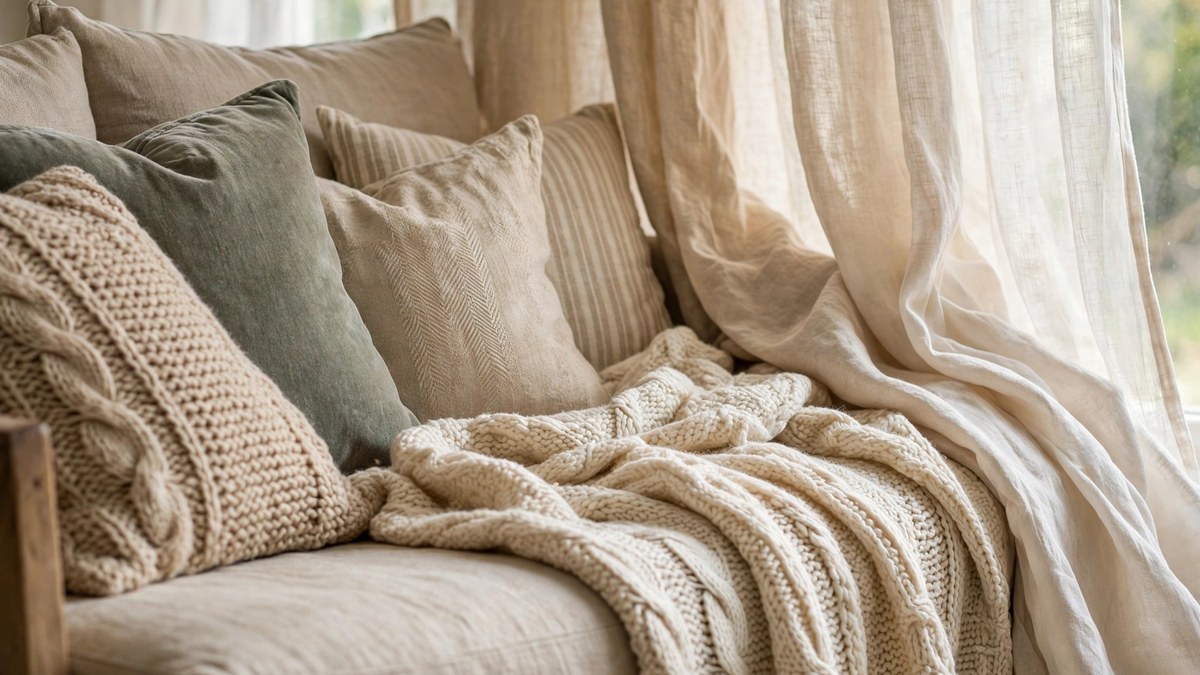
Layer the seating with cushions in a disciplined mix: a pair in the room’s main fabric story, one in a contrasting pattern, and one small lumbar or bolster for the reading chair. Keep a throw within arm’s reach of every seat you expect to be used on a cold evening; a sitting room that looks warm but feels chilly fails at its only job.
Books deserve deliberate styling here, because this is the room where they belong out in the open. A short stack on the coffee table with one object on top, spines arranged by color on one shelf if you are that person, a single open art book on a stand: all read as intention. What reads as storage is the overstuffed, double-rowed shelf. Edit the books the way you edit everything in this room, keeping the ones you love visible and letting the rest live elsewhere.
The finishing touches should be personal but edited. A tray on the table with two or three objects, a stack of books with one beautiful thing on top, a plant where the light allows, and one piece of art that means something to you. Every object should survive the question of whether it makes the room better. If not, it belongs in another room, and the sitting room stays calm.
Common Sitting Room Mistakes to Avoid
The most common mistake is treating the sitting room as a museum: furniture nobody may sit on, arranged for a photograph. A room that is never used becomes dusty storage with good upholstery. If guests head for the kitchen instead, your sitting room has failed, no matter how it looks.
Next is the waiting-room layout, chairs lined against walls facing inward across a vast empty middle. Pull seating into a close group on a rug and the room warms up instantly. Third is lighting: a single ceiling light and no lamps guarantees the room stays unused after dark.
Fourth, undersized art. One small picture alone on a big wall looks lost; group pieces or go larger. And fifth, ignoring the senses beyond sight: a sitting room should have a scent, a texture underfoot, and quiet. A candle, a wool rug, and drapes that soften echo do more for this room than another accessory ever will.
Frequently Asked Questions
What is the difference between a sitting room and a living room?
Traditionally, the sitting room was the quieter, more formal space for guests, reading, and conversation, while the living room handled everyday family life and the television. Today the terms overlap, but a sitting room still implies a calmer room, usually without a TV as its center, arranged around talk and relaxation.
How many chairs does a sitting room need?
Seat at least four people comfortably: a loveseat plus two chairs, or a sofa plus one chair and a movable pouf. The key test is conversation distance, roughly 4 to 8 feet between seats, with a side table or coffee table within reach of every seat.
What colors make a sitting room feel cosy?
Warm, mid-to-deep tones feel cosiest: deep green, navy, warm burgundy, and camel, along with warm whites and natural wood. Whatever palette you choose, warm lamplight around 2700K and plenty of texture in the textiles will do as much for cosiness as the paint itself.
Can I create a sitting area in an open-plan home?
Yes. Define the zone with a rug, arrange two chairs and a small table as a conversation group, and add a floor lamp. That boundary underfoot plus dedicated seating gives the corner its own identity inside the larger space, even without walls.
What should I do with a sitting room I never use?
First, diagnose it: the usual causes are uncomfortable seating, a waiting-room layout, or no lamps. Fix those three things before buying anything new. Then give the room a daily job, morning coffee, evening reading, so it re-enters your routine rather than waiting for guests.
Are formal sitting rooms out of style?
No, but they have relaxed. Today’s formal sitting room keeps the symmetry and good bones but trades stiff fabrics for washable ones and swaps fragile antiques for comfortable upholstery. The goal is a room that looks composed and still gets used every week.
How do I light a sitting room with no ceiling fixture?
Use the lamp-per-two-seats rule: table lamps on side tables, a floor lamp by the reading chair, and sconces or picture lights if wiring or plug-in options allow. Layering three or more warm sources usually lights a sitting room better than one overhead ever did.
Final Thoughts
A sitting room succeeds when people choose it. Give it one clear mood, seating arranged for conversation at comfortable distances, a single focal point, warm layered light, and textiles that invite lingering. Edit out everything that does not serve those things. Do that, and the quietest room in your house becomes the one nobody wants to leave.
