


The best living rooms are not the ones that photograph well for a day. They are the ones that still work on a tired Tuesday night, with the dog asleep on the rug and homework spread across the coffee table. When people search for ideas for designing a living room, they usually find pictures. What they actually need is a process: a way to make decisions in the right order, so the sofa, the rug, the lights, and the colors all end up pulling in the same direction.
This guide gives you that process, along with the practical measurements and rules of thumb designers rely on. Whether your room is a formal space used twice a year or the hardest-working square footage in the house, the steps below will take you from an empty or tired room to one that looks intentional and lives comfortably. Work through them in order, and most decorating dilemmas solve themselves along the way.
Start With How You Actually Live in the Room
Before you look at a single sofa, write down what the room has to do. Watch how your household uses it for a few days. If the living room is where the kids do homework, where you fold laundry, and where guests land on holidays, it needs durable fabrics, a real work surface, and flexible seating. If it is mainly an adults’ retreat for reading and conversation, you can choose lighter colors and more delicate pieces.
Be honest about the television. In most American homes the TV is the true center of the room, and designing around a fireplace you rarely use while pretending the TV is not there leads to awkward layouts and strained necks. Decide what the room is for first, and let the design serve that honestly.
Also note the room’s constraints: where the doors, windows, vents, and outlets are, and which walls are long enough for a sofa. These fixed points narrow your options in a helpful way. A clear-eyed list of functions and constraints is the foundation every professional starts from, and it costs nothing but an evening of paying attention.
How Do You Decorate Your Living Room? A Simple Order of Work
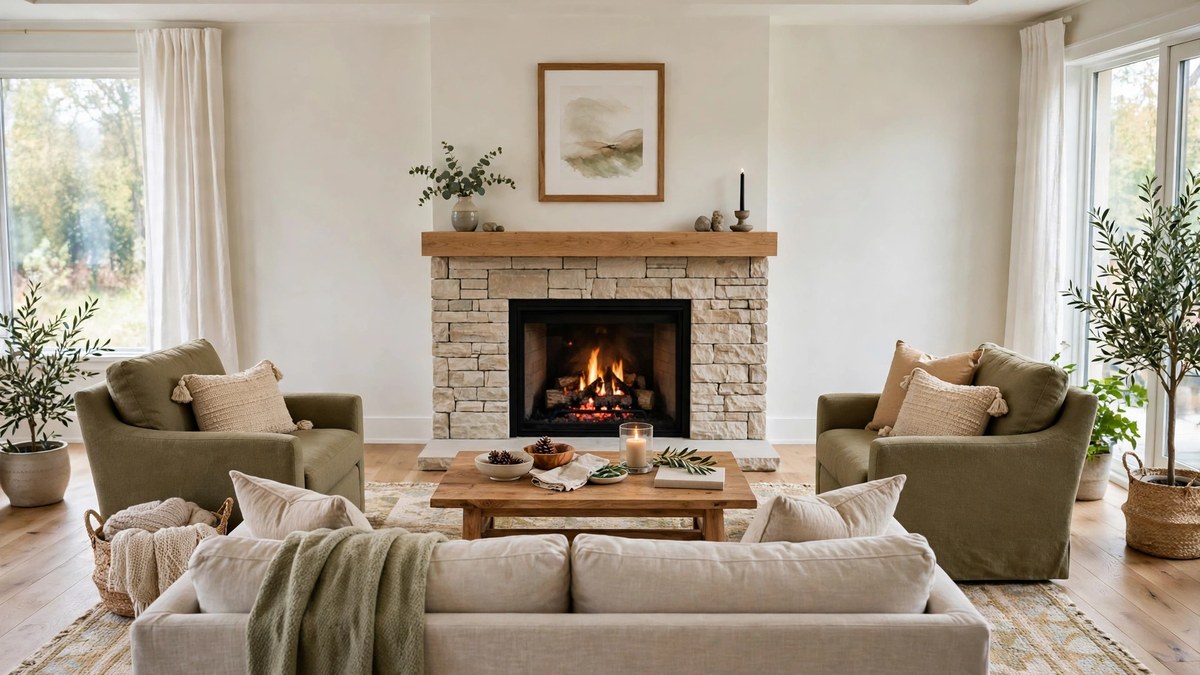
If you have ever wondered, how do you decorate your living room without it turning into a series of expensive experiments, the answer is sequence. Decorating in the wrong order is why people end up with a rug that is too small, lamps that do not reach the outlets, and paint that fights the sofa. Professionals work in a set order because each decision feeds the next one.
Here is the order that works:
- Fix the layout on paper first, using the room’s focal point and traffic paths.
- Choose the largest pieces: sofa, then chairs, then the rug that anchors them.
- Set the color palette, using the rug and upholstery as your anchors.
- Add case goods and storage: consoles, bookcases, and side tables.
- Layer lighting, then window treatments.
- Finish with art, textiles, and the small styling layer you can change seasonally.
Paint, surprisingly, comes late. It is far easier to match paint to a rug you love than to find a rug that matches a paint you committed to in week one. Keep receipts and measure everything twice, and the sequence will carry you. For a worked example of this process applied to a more relaxed, front-of-house space, see our guide to sitting room decor ideas.
Choose a Layout Around a Focal Point
Every living room needs one focal point: the thing the furniture arrangement acknowledges. It might be a fireplace, a large window with a view, a media wall, or even a striking piece of art. Arrange the main seating to face or flank that point, and the room immediately feels organized rather than scattered.
Traffic flow is the second half of layout. Leave roughly 30 to 36 inches for main walkways so people can cross the room without sidestepping furniture. Within the seating group, keep the coffee table about 14 to 18 inches from the sofa edge: close enough to set down a drink, far enough to stretch your legs. Side tables should sit within easy reach of each main seat, because a seat without a landing spot is a seat nobody chooses.
Float furniture when the room allows it. Pulling the sofa even a few inches off the wall makes a room feel considered, and in large rooms, floating the whole arrangement on a big rug creates a room-within-a-room that feels intimate despite the square footage. Avoid pushing every piece against the walls unless the room is genuinely small; in a small room, wall-anchored layouts are the right call, and the trick is choosing slimmer pieces instead.
Get the Furniture Scale Right
Scale mistakes are the most common reason a living room feels off, and they are made at the buying stage, not the styling stage. A standard three-seat sofa runs roughly 78 to 88 inches long, with a seat depth of about 20 to 24 inches. In a small room, that depth matters more than length: a deep, lounge-style sofa can eat the whole floor plan. Measure your room, then tape the footprint of any major piece on the floor with painter’s tape before you buy. Live with the outline for a day and walk around it.
Balance heights and weights across the room. If the sofa is low and wide, pair it with chairs that have some leg showing to keep the room feeling airy. If one side of the room carries a tall bookcase or armoire, the other side needs visual weight too, perhaps a large piece of art or a pair of chairs, so the room does not feel like it is tipping.
One more scale check happens at the front door, not in the room. Measure your doorways, hall turns, and stair landings before ordering anything large. A sofa that cannot make the turn into the room is an expensive lesson in geometry, and delivery crews see it weekly. Most sofas between 78 and 88 inches navigate standard 30- to 32-inch doorways at an angle, but tight turns and low ceilings defeat some of them. When in doubt, ask the retailer for the piece’s diagonal depth, the number that actually decides whether it fits through.
Finally, count seats like a host. A living room should seat at least your household plus two guests without dragging in dining chairs. Ottomans, a bench, or a pair of stools that can move where needed are the flexible friends of every well-planned room.
Build a Color Palette That Flows
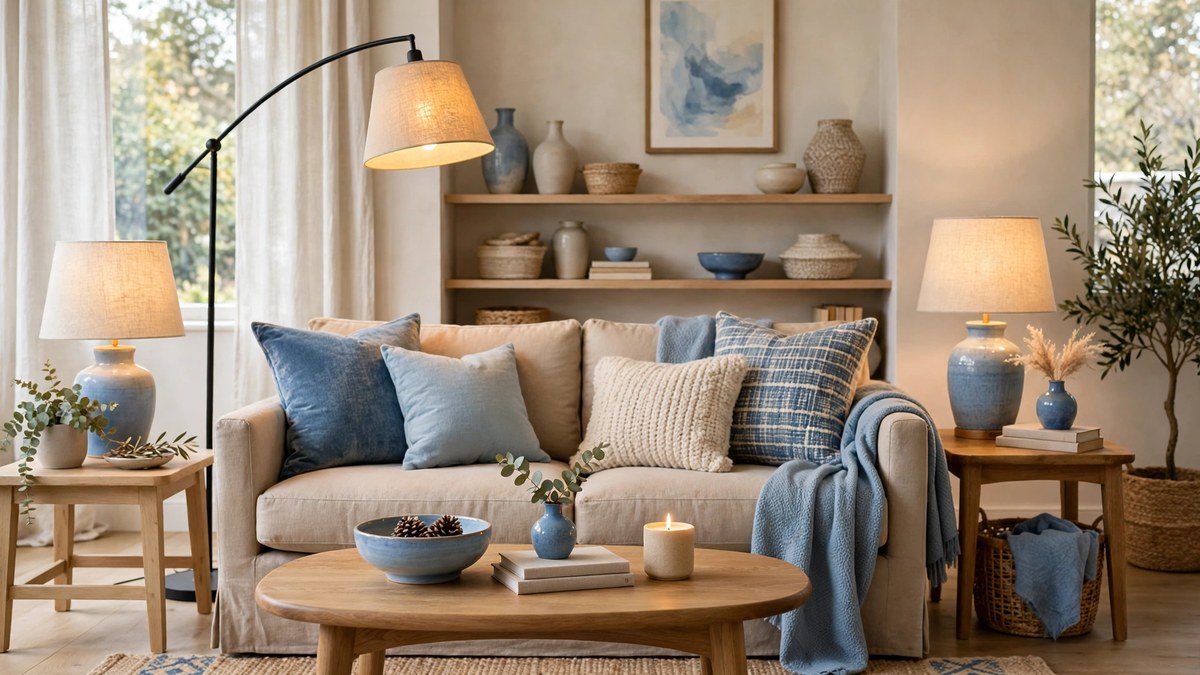
A reliable living room palette has three layers: a dominant color covering about sixty percent of what you see (usually walls and the largest upholstery), a secondary color at about thirty percent (chairs, curtains, rug), and an accent at about ten percent (pillows, art, objects). This 60-30-10 rhythm keeps a room lively without tipping into chaos.
Start from something fixed. If you are keeping an existing rug or sofa, pull your colors from it. If you are starting fresh, choose the rug first, because it is the largest block of pattern and color on the floor. Our deeper guide to choosing colors for a living room walks through warm, cool, and neutral schemes with specific paint directions for each.
Remember that light changes color all day. A north-facing room gets cool, gray light that can make pale blue or gray walls feel chilly; warmer whites and mid-tone colors behave better there. South-facing rooms can handle cooler tones easily. Always test paint as a large swatch on two walls and live with it through a full day before committing. For a broader grounding in why some combinations work, the basics of interior design as a discipline are worth a skim before you spend money.
Layer Lighting at Three Heights
A single ceiling fixture is why so many living rooms feel flat at night. Designers light in layers at three heights. Overhead or ambient light sets the base. Mid-height light, from table lamps and sconces at about eye level when seated, does the real work of making faces look good and pages readable. Low accent light, from picture lights, uplights, or candles, adds the glow that makes a room feel expensive.
Aim for at least three light sources in a modest room and five in a large one, spread so no corner stays dark. Put lamps on dimmers or use smart bulbs where you can; the ability to drop the light level is what turns a family room into an evening room. Warm bulbs, around 2700K, flatter skin tones and wood finishes and suit living spaces far better than daylight bulbs.
Plan lighting with the furniture layout, not after it. Every reading chair needs a lamp within reach, and every outlet’s location matters. If outlets are scarce, arc floor lamps and cordless rechargeable lamps solve more problems than you would expect, and they move when the furniture does.
Choose a Rug That Anchors the Seating
The rug is the frame of the seating group, and the most common mistake is buying one size too small. In most living rooms, the rug should be large enough that at least the front legs of the sofa and chairs rest on it. The standard sizes, 5 by 8 feet, 8 by 10, and 9 by 12, cover most rooms; an average living room usually needs the 8 by 10 or larger to look right.
When in doubt, size up. A rug that extends beyond the furniture on all sides makes the room feel generous, while a small rug floating in the middle makes even good furniture look stranded. Leave a border of bare floor around the rug, roughly 8 to 18 inches, so the arrangement reads as deliberate.
Material matters for real life. Wool is durable, naturally stain-resistant, and the long-term value pick. Low-pile synthetics clean up easiest and cost less, which suits busy households. Whatever you choose, add a rug pad: it stops slipping, adds cushion, and extends the rug’s life. The pad should be cut about an inch smaller than the rug on every side so it stays hidden.
Layering is the exception that proves the size rule. A smaller vintage or patterned rug layered over a larger, inexpensive natural-fiber base gives you pattern at the right scale without the price of a huge statement rug. The base should still follow the front-legs rule; the top layer is decoration and can be smaller. This trick also rescues a beloved rug that is too small for the room it now lives in.
Mix Textures So the Room Feels Finished
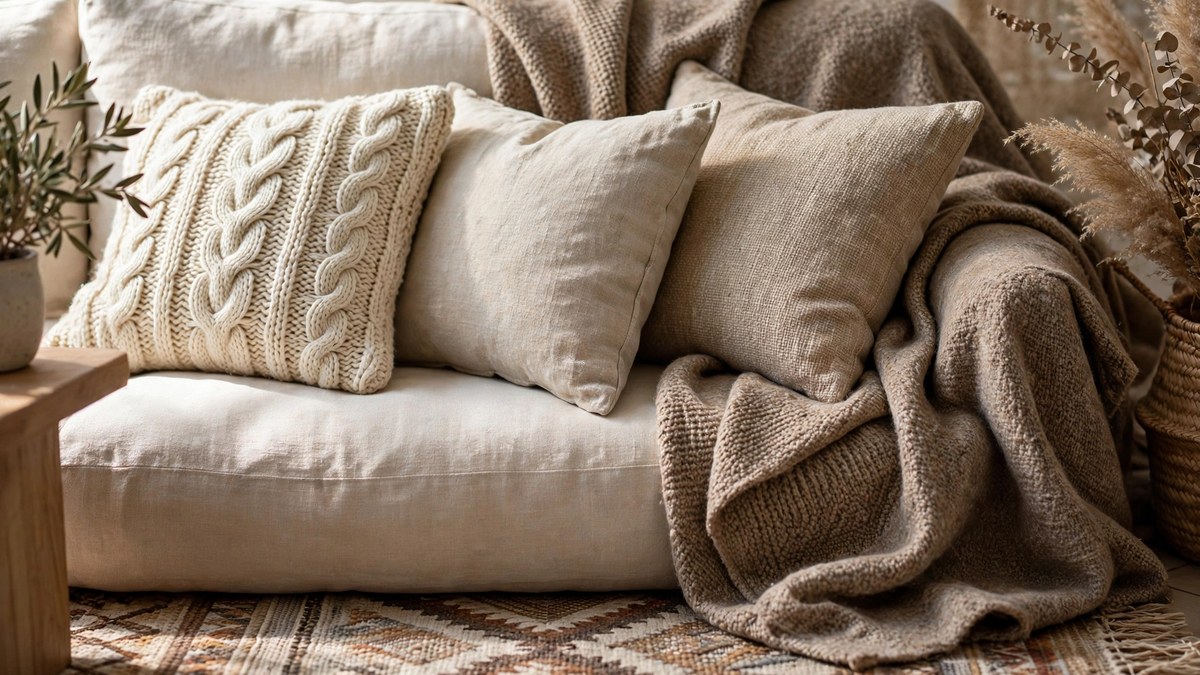
Two rooms with identical furniture can feel completely different based on texture alone. A room done in one flat material, all smooth cotton and painted wood, feels like a showroom. The fix is to layer opposites: nubby with smooth, matte with a little shine, soft with structured.
An easy checklist covers most rooms. Something soft: upholstery and a throw. Something woven: a basket, a jute or wool rug. Something wooden and something metallic. Something living: a plant or a vase of branches. Glass or ceramic for a reflective note, and leather or a natural hide if it suits your style. You do not need much of each; the contrast is what the eye reads as richness.
Texture is also the safe way to decorate in a neutral palette. If you love calm, low-color rooms, vary texture aggressively and the room will feel warm instead of bland. This is the core trick behind the most inviting neutral spaces, and it costs far less than adding more furniture.
Add Storage That Hides the Everyday Clutter
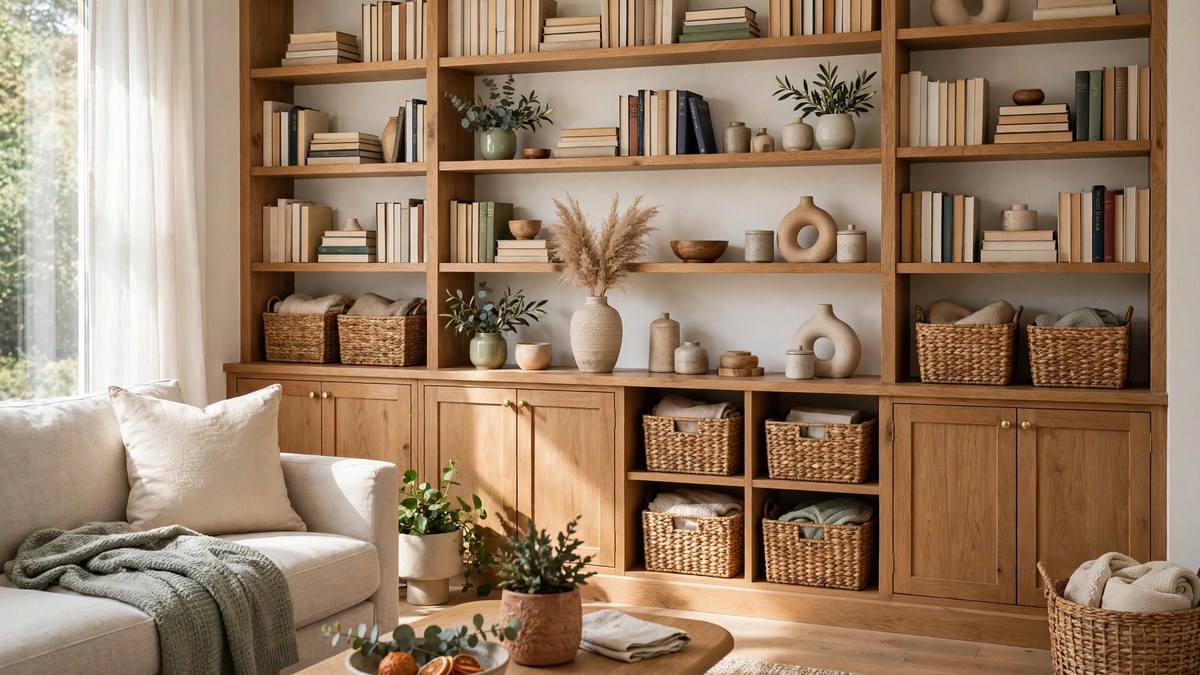
Living rooms fail in real life when there is nowhere for real life to go. Remotes, chargers, blankets, board games, and the dog’s toys need a home inside the room, or they will live on every surface. Closed storage is the answer for most of it: a media console with doors, baskets with lids, an ottoman that opens, or a cabinet that doubles as a sideboard.
Style the open storage you do have. Bookcases look best with a mix of books, breathing room, and a few objects, not wall-to-wall spines. Leave roughly a third of each shelf empty or filled with one sculptural piece, and the whole case reads as furniture rather than warehousing.
Build in a ten-minute reset. If every item in the room has a designated basket, drawer, or shelf, the room can go from daily chaos to guest-ready in minutes. That reset habit is what keeps a designed room designed, long after the decorating energy fades. A comfy, slightly lived-in room that can be tidied fast is the goal; if you want that warmer direction specifically, our cozy living room ideas take the same bones and soften them.
Family Room Decorating Tips for Homes With Kids and Pets
When the living room doubles as the family room, durability becomes a design feature, not a compromise. These family room decorating tips start with fabric: performance fabrics and washable slipcovers shrug off juice, muddy paws, and marker incidents that would ruin delicate upholstery. Leather, real or good faux, wipes clean and ages gracefully, which is why so many family rooms rely on one great leather piece.
Choose a forgiving rug. A patterned, mid-tone rug hides the evidence of daily life between cleanings, and low pile vacuums up crumbs and pet hair far more easily than shag. Round coffee tables or upholstered ottomans remove sharp corners from toddler airspace, and an ottoman with a tray gives you the table function back when you need it.
Then design for the way families actually sprawl. A sectional or a sofa plus a deep chair beats two formal chairs nobody sits in. Add floor cushions or a couple of poufs for kids who prefer the floor anyway. Keep one basket per category of chaos: blankets, toys, and game controllers. And protect one small corner of adult dignity, perhaps a side table with a plant and a framed photo, that stays styled. The room can be kid-proof and still feel like yours.
Common Living Room Mistakes to Avoid
The most frequent mistake is buying furniture in sets. A matched sofa, loveseat, and chair in identical fabric flattens a room; mixing pieces that share a color family or leg style looks collected instead. Second is the too-small rug, covered above, followed closely by art hung too high. The center of a piece or grouping should sit at about eye level, roughly 57 inches from the floor, not up near the ceiling line.
Third is single-source lighting and fourth is pushing everything to the walls. Fifth, and most fixable, is stopping at furniture and never adding the finishing layer of textiles, plants, and objects. That last ten percent is what makes a room feel done, and it is the cheapest part of the whole project.
Finally, avoid designing for a life you do not live. A white silk sofa in a house with three kids and a retriever is not elegance; it is a countdown. Choose the beautiful version of what your household can actually maintain, and the room will stay beautiful.
Frequently Asked Questions
Where should I start if my living room needs a total refresh?
Start with layout and the largest pieces, not paint or accessories. Decide the room’s main function, pick a focal point, and arrange or replace seating accordingly. Once the bones work, set a palette from the rug or sofa, then layer lighting and textiles. This order prevents the most expensive mistakes.
How do I make a small living room feel bigger?
Use furniture with exposed legs, choose a rug big enough to fit under the front legs of your seating, and hang curtains high and wide so windows read larger. A restrained palette with strong texture variety feels calm rather than cramped, and mirrors placed to reflect light or a view genuinely help. Avoid overfilling: fewer, correctly scaled pieces beat many small ones.
What is the best sofa size for an average living room?
Most average rooms suit a sofa between about 78 and 88 inches long, with a seat depth of 20 to 24 inches. The real test is proportion: tape the footprint on the floor and check that walkways of roughly 30 inches remain, and that the coffee table can sit 14 to 18 inches from the sofa’s edge.
How many lamps does a living room need?
A good minimum is three light sources besides the overhead: typically a floor lamp and two table lamps, or sconces in the mix. Larger rooms need about five. Spread them at different heights and in different corners, and favor warm bulbs around 2700K for a flattering evening glow.
Should my living room have a TV or a fireplace as the focal point?
Choose the one your household gathers around most. If the TV wins, mount or place it at a comfortable viewing height, roughly centered at seated eye level, and arrange seating for viewing first; the fireplace can become a styled secondary feature. Forcing a layout to serve both usually serves neither.
What is the cheapest way to make my living room look designed?
Add the finishing layer: a correctly sized rug if yours is too small, curtains hung high, two or three lamps instead of the overhead light, and textiles with varied textures. Then edit ruthlessly; removing the wrong pieces often improves a room more than adding new ones, and it costs nothing.
How do I choose between an open-plan and a defined living room look?
In open-plan spaces, use a large rug, a sofa’s back, and consistent flooring or color to define the living zone without walls. Repeat one or two colors from the adjoining kitchen or dining area so the zones feel related. Defined rooms can take bolder color and more contrast since they stand alone.
Final Thoughts
Designing a living room is a sequence, not a shopping trip. Settle the function, fix the layout, scale the furniture, then layer color, light, texture, and storage in that order. Do that, and almost any room comes together, whether your taste runs formal, cozy, or somewhere in between. Start with the step your room needs most, and let each decision make the next one easier.
