
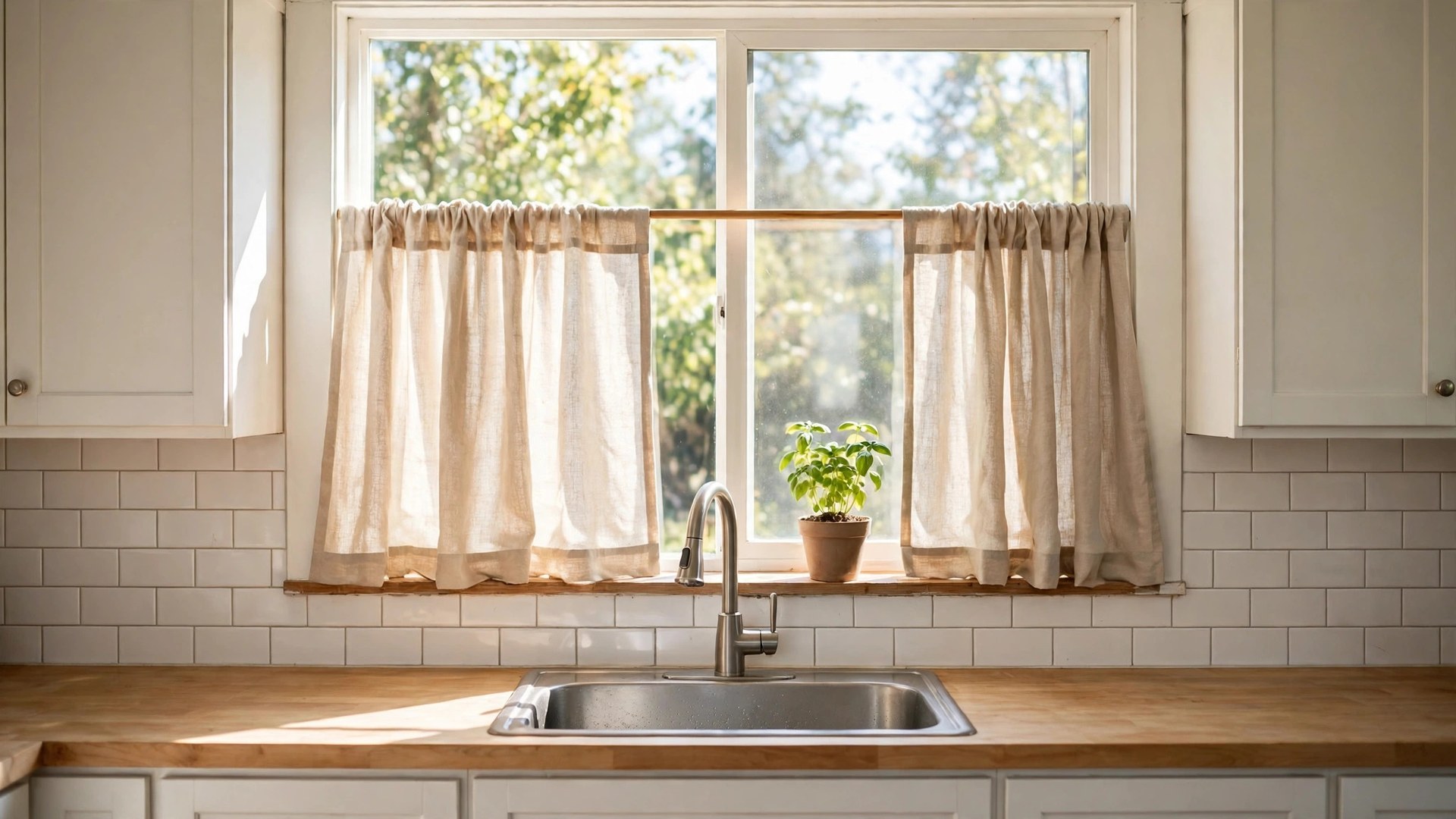

Kitchen windows work harder than any others in the house. They face steam, grease, splashes, and strong sun, often all in the same day, and most sit right above the sink where hands are wet and patience is short. The right window treatment kitchen ideas respect those conditions. They let in daylight for chopping and cleaning, give you privacy from the neighbors, and wipe clean without a fuss.
This guide covers the main options, from cafe curtains and Roman shades to blinds and shutters, plus the materials and mounting choices that survive real cooking. Whether your kitchen window is a wide picture window over the sink or a small square in a rental, you will find a treatment here that fits the window, the budget, and the way you cook.
Kitchen Window Treatment Ideas for Over the Sink
The window over the sink is the classic kitchen window, and it has specific needs. Treatments here must stay clear of the faucet, tolerate splashes, and open easily, because you will adjust them with wet hands more often than you expect. Short treatments are the natural fit: cafe curtains, short Roman shades, roller shades, and valances all live happily in this spot.
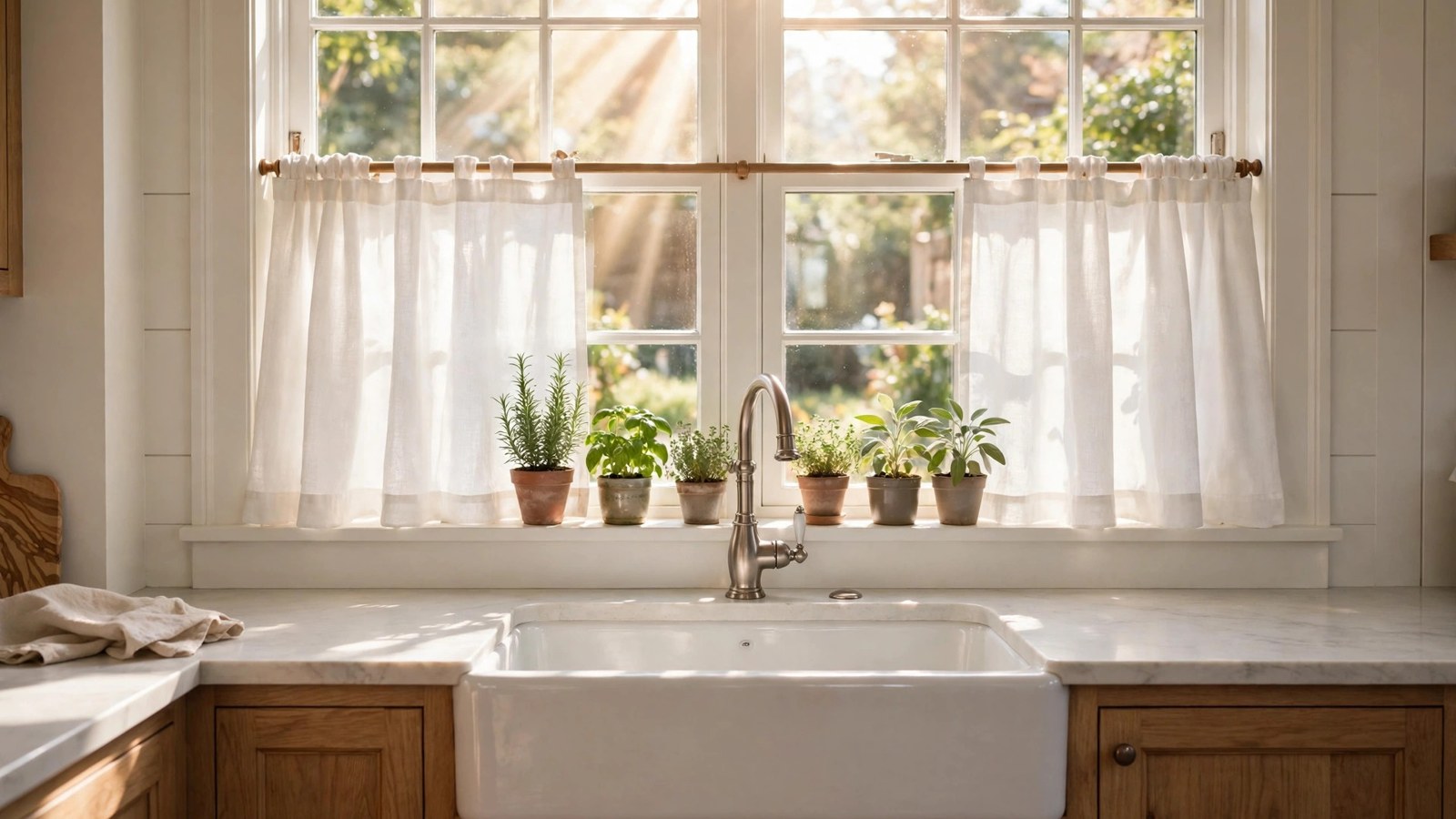
Measure the faucet height before choosing anything that hangs. A treatment that ends a few inches above the backsplash avoids the splash zone entirely. If your window sits high and the sill is deep, a plant ledge of herbs can share the space, but keep fabric clear of leaves you water often.
Inside-mounted shades give this window a clean, tailored look and keep the sill free for a soap dish or a small plant. Outside-mounted treatments make a small window look bigger and can hide less-than-perfect trim. Either way, choose a lift you can operate one-handed, such as a cordless shade or a simple continuous loop positioned away from the water.
For more fabric-forward options in this exact spot, these curtains for kitchen windows ideas walk through cafe curtains, valances, and shades in detail.
Window Treatment Ideas for Kitchen Windows That Face the Sun
A south- or west-facing kitchen window can flood the room with glare and heat right when you are cooking dinner. The fix is a treatment that filters light rather than blocking it completely, so the room stays bright without the squinting. Light-filtering roller shades, solar shades, and woven wood shades all soften harsh sun while keeping the view soft and the room usable.
Solar shades are rated by openness, which describes how much light and view pass through the weave. A tighter weave blocks more glare and heat; a looser weave keeps more of the view. In a kitchen, many homeowners land in the middle, enough filtering to cut the glare off counters and screens while still seeing the yard.
Layering helps too. A shade handles the daily sun, and a simple valance or a pair of short side panels adds the softness fabric brings. If afternoon heat is a real problem, look at cellular shades, whose honeycomb pockets trap air and add insulation at the glass. That same pocket of air helps in winter, when kitchen windows can feel drafty.
As a general reference, window coverings are used to manage sunlight, privacy, and insulation, and the right choice depends on the room and how much daylight it needs, as explained in this overview of window coverings and treatments.
Ideas for Kitchen Window Treatments in Small Kitchens
Small kitchens need treatments that earn their space. Bulky drapes are out; they swallow light, crowd counters, and collect cooking smells. Instead, think flat, fitted, and light in color. A roller shade mounted inside the frame disappears when raised, leaving the whole window open to daylight, which makes a small room feel larger.
Cafe curtains are the other small-kitchen classic. Hung on a slim rod across the middle of the window, they cover the lower half for privacy while the top half pours in light. Standard cafe lengths are often around 24 to 36 inches, and tier curtains come in pairs that can cover more of the glass when needed. Choose a light cotton or linen-look fabric that launders easily.
Keep the palette close to the wall color so the treatment blends rather than chops the wall into pieces. If you crave pattern, use it in the cafe curtain or a valance where a small dose reads as charm instead of noise. Mirrors and glossy tile already help small kitchens; a simple, bright window treatment completes the effect.
Storage thinking helps here too. If your small kitchen uses every inch, the window wall can hold a narrow shelf under the sill for cookbooks or a rail for utensils, as long as nothing blocks the treatment’s movement. The window stays functional and the wall works harder.
Ideas for Window Treatments in Kitchens With Big Windows
Large kitchen windows, sliding doors, and window walls call for treatments that move in sections. One giant shade is heavy, expensive, and awkward; several narrower shades side by side are easier to lift, cheaper to replace, and let you adjust each section for sun and privacy independently. Match the fabric and line the bottom bars up so the group reads as one design.
Panel track systems suit sliding doors and very wide windows, sliding fabric panels along a track like a modern take on vertical blinds. Vertical blinds themselves remain a practical, budget-friendly answer for doors, especially in vinyl that wipes clean. Choose wide vanes for a calmer, more modern look.
For a softer feel, consider stationary side panels framing the glass with a shade doing the real work underneath. The panels add color and height, the shade handles light, and neither interferes with a door’s swing or slide. Keep panels clear of the cooking zone, though; fabric near a range collects grease and is a safety concern, so panels belong on dining-side windows, not beside the stove.
Big windows also invite a window seat or a breakfast nook beneath them. If that is your layout, coordinate the treatment with the cushions and pillows so the whole corner feels planned, much like the styling in these kitchen table decor ideas.
Window Treatment Ideas for Kitchen Privacy Without Losing Light
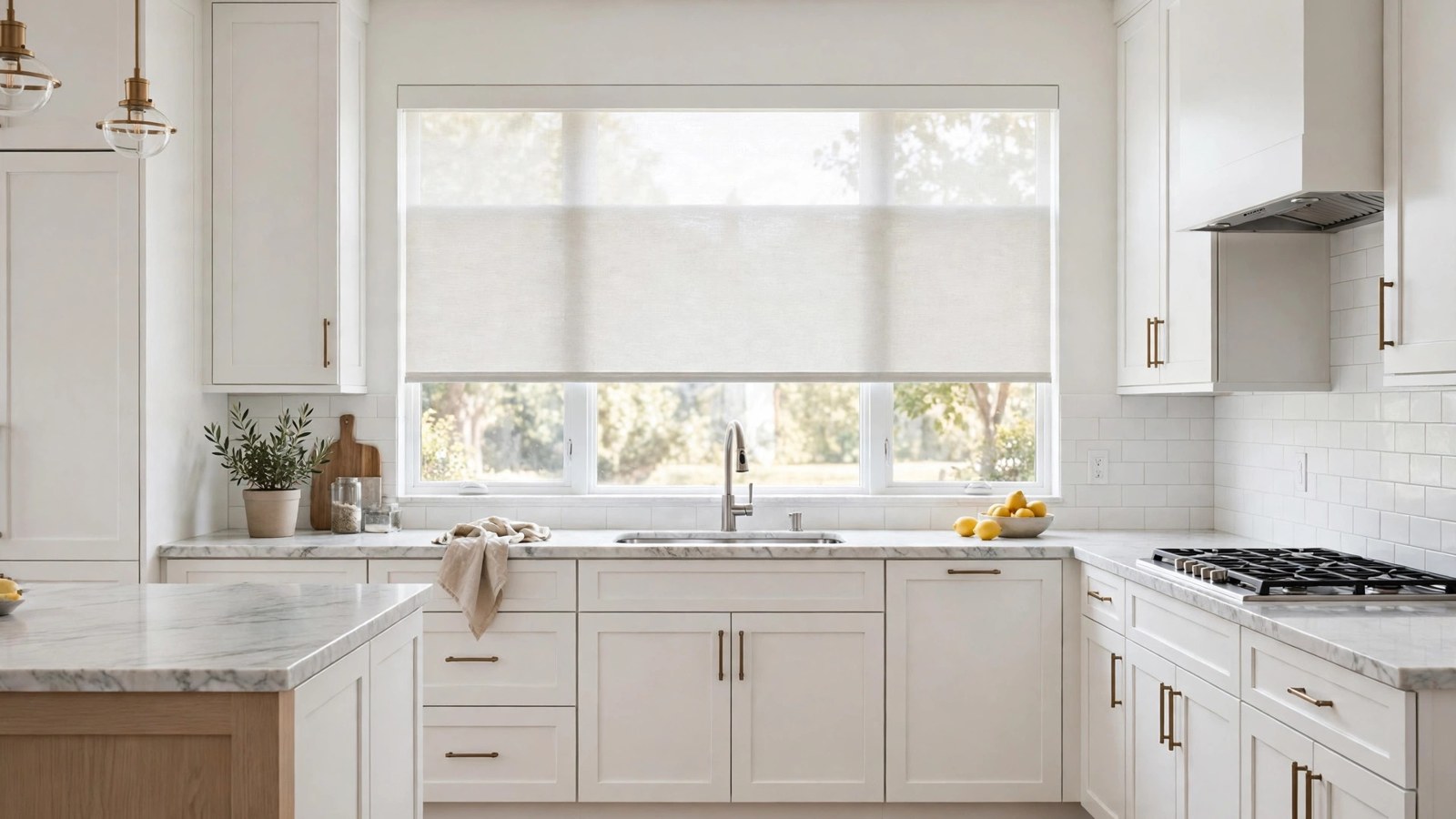
Many kitchen windows face a neighbor’s house, a sidewalk, or the street. You want privacy at the sink without living in a cave. The classic answer is a bottom-up approach: cover the lower portion where sight lines actually are, and leave the top open to the sky. Cafe curtains do this naturally. So do top-down, bottom-up shades, which lower from the top or rise from the bottom to cover exactly the band of glass you choose.
Frosted or textured window film is the renter-friendly option. It applies with water, peels off cleanly, and turns clear glass into soft, private glass while passing most of the daylight. Use it on the lower sash only, or on a street-facing side window, and pair it with a valance for style.
Sheer fabrics offer gentle privacy in the daytime, though at night, with lights on inside, sheers become transparent, so homes that need evening privacy should pair sheers with a shade or choose a light-filtering fabric with more body. Plantation shutters deserve a mention here as well: tilt the louvers and you get privacy, airflow, and angled light all at once, in a surface that wipes clean.
Cafe Curtains, Valances, and Short Panels
These three classics exist because kitchen windows are often short, wide, and busy. Cafe curtains cover the lower half of the window from a rod mounted mid-frame. They are inexpensive, easy to sew or buy, and simple to launder, which matters in a room where fabric absorbs cooking odors over time. Cotton, linen blends, and polyester that mimics linen all work; choose a fabric you can toss in the wash.
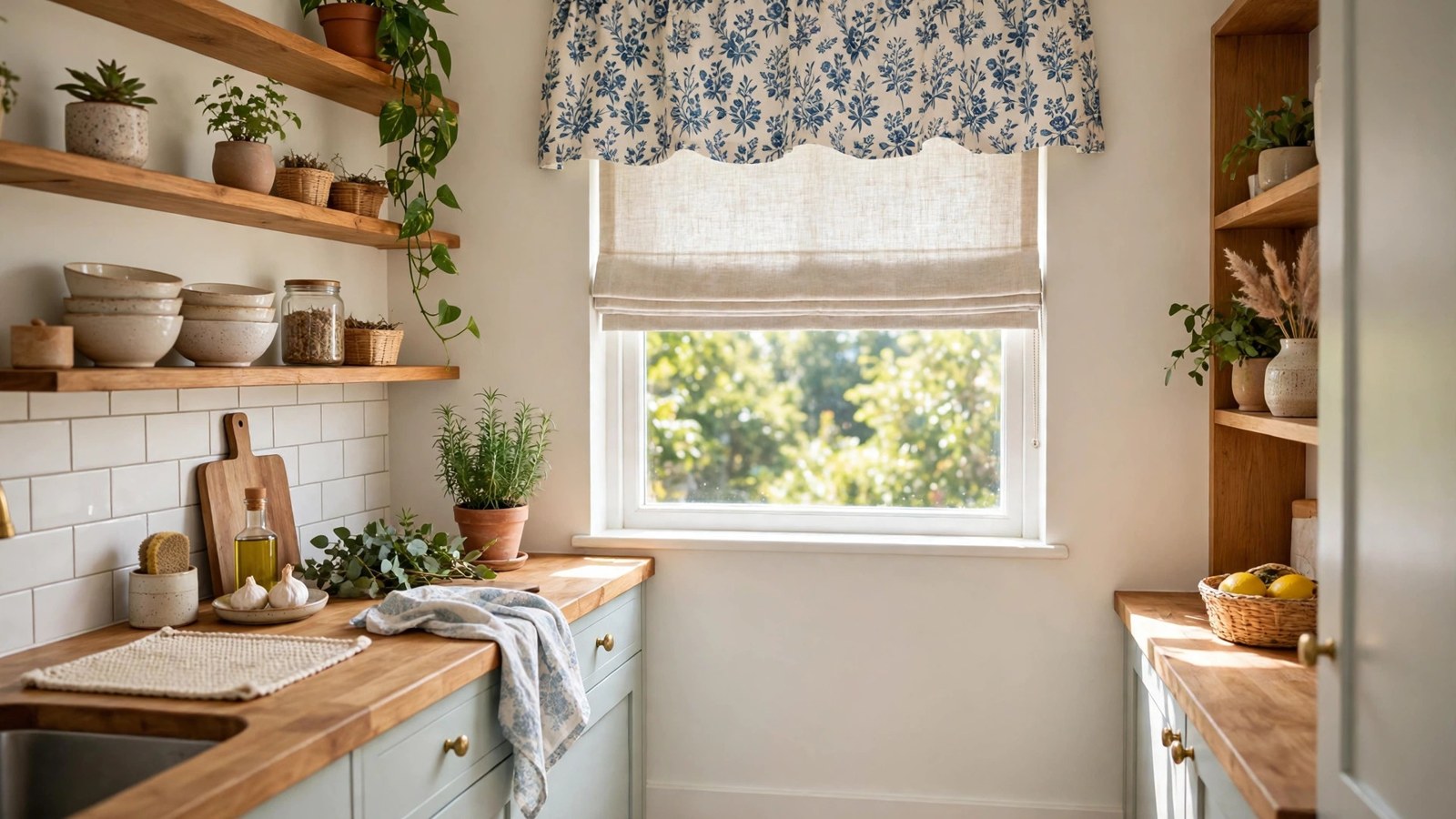
Valances are short fabric toppers, typically about 12 to 18 inches long, that dress the top of the window without covering much glass. They suit windows where privacy is not a concern but the window looks bare. A valance over a plain roller shade is a smart pairing: the shade works, the valance decorates.
Short panels that end at the sill or just below it give a fuller curtain look without puddling near counters. Standard curtain lengths like 63 inches suit taller kitchen windows and dining-area windows, while the long 84, 95, and 108 inch lengths belong in dining rooms and living rooms rather than over counters. Keep any fabric well away from burners, and never let curtains hang where they can blow across a lit stove.
Shades and Blinds That Handle Steam and Splatter
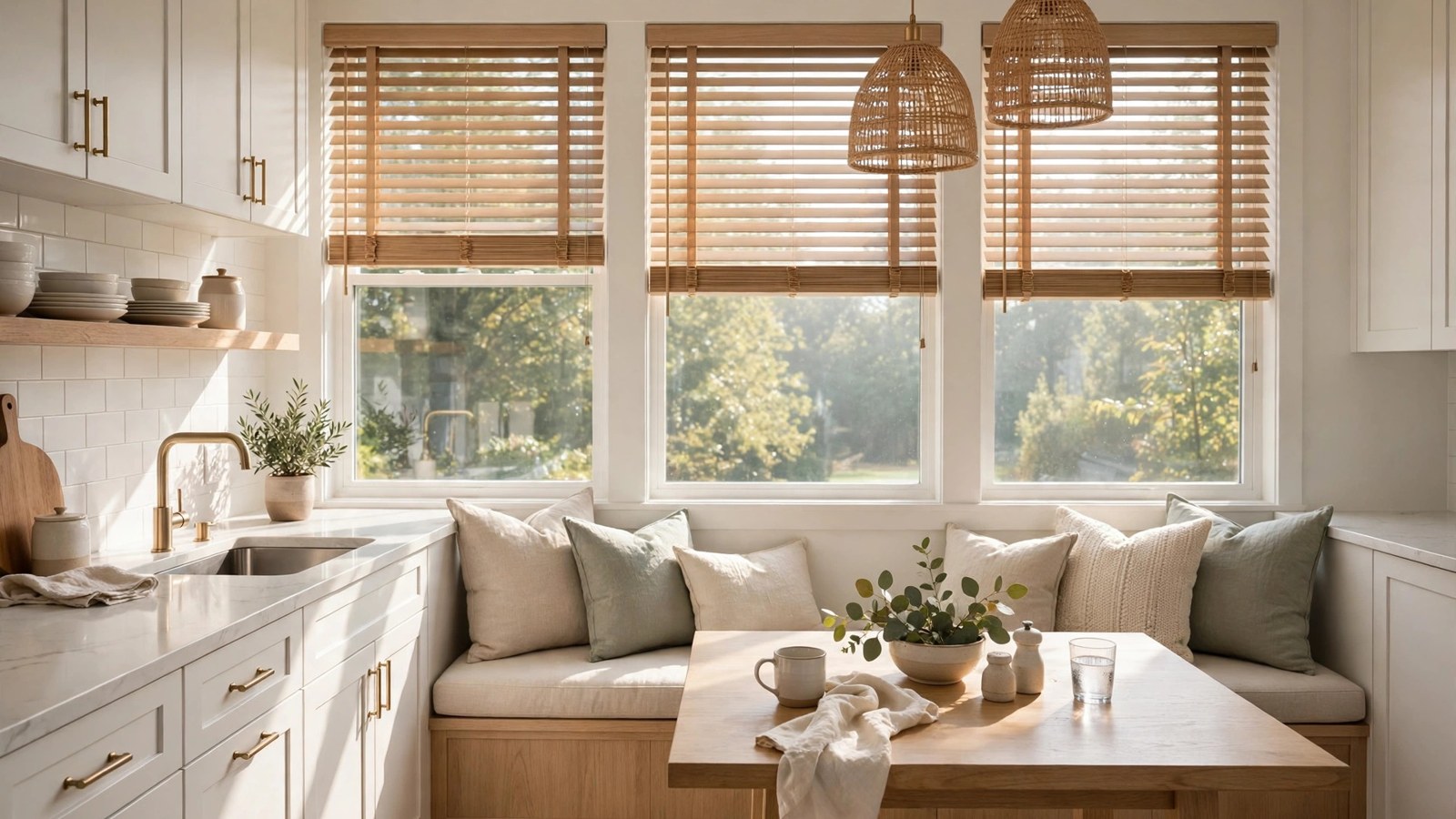
When easy care tops the list, hard treatments win. Faux wood blinds look like painted wood but shrug off humidity that would warp the real thing. Vinyl and aluminum blinds are lighter and cheaper, and all three wipe down with a damp cloth. In a kitchen, that wipe-down matters: airborne grease settles on slats, and a monthly pass with a cloth keeps them bright.
Roller shades in vinyl or screen fabric are the other low-maintenance champions. They present a flat surface that collects far less grime than slats and raise into a small roll that nearly vanishes. Roman shades give a softer, folded look; choose them in a washable or wipeable fabric and in a cordless lift for the sink area.
Shutters, whether real wood sealed well or a composite made for humid rooms, are the premium pick. They frame the window beautifully, tilt for light control, and clean with a quick dust and wipe. For a steamy kitchen, composite and vinyl shutters are the safer long-term choice.
Whatever you choose, coordinate the window with the room’s light plan. Bright task light over the sink and counters makes any treatment look better, and the layering advice in this guide to recommended kitchen lighting pairs naturally with your window choices.
Fabrics and Materials That Clean Easily
Kitchen fabric lives a hard life, so choose it like workwear. Tight weaves release grease and odors in the wash better than loose, nubby weaves. Polyester and polyester blends resist shrinking and fading and come in linen-look textures that fool the eye. Cotton is washable and cheerful but can shrink; buy it pre-shrunk or size up slightly. True linen is beautiful and casual, yet it wrinkles and costs more, so many kitchens use it only in a valance.
For shades and blinds, the material ranking for easy care usually runs vinyl and faux wood first, then aluminum, then sealed real wood, with fabric last unless it is removable and washable. That does not ban fabric; it just means you should choose fabric where you can reach it, remove it, and launder it without a production.
Color and pattern play a practical role too. Mid-tone colors and small patterns hide the light film that kitchen windows collect between cleanings far better than stark white or very dark solids. If your cabinets and walls are white, a soft patterned cafe curtain adds charm and forgives splashes at the same time.
Measuring and Mounting Basics
Good results start with honest measurements. For an inside mount, measure the width of the window opening in three places, top, middle, and bottom, and use the narrowest number. Measure the height the same way and use the longest. Record measurements to the nearest eighth of an inch and note which is width and which is height; it sounds obvious and is mixed up constantly.
For an outside mount, decide how much overlap you want, commonly about 1.5 to 3 inches beyond the frame on each side for better light blocking and privacy, then measure that total span. Outside mounts forgive out-of-square windows and make the window read larger.
A few mounting tips save headaches:
- Find studs or use proper anchors for rods and headrails, especially for heavier shades
- Check that the treatment clears handles, cranks, and the faucet’s swing
- Test the lift before final tightening, and confirm cords or loops sit away from water
- For cordless shades, confirm you can reach the bottom rail comfortably from where you stand
If two windows meet in a corner, treat them as a pair. Matching treatments at the same height keep the corner calm, and a shared valance across both can tie them together elegantly.
Matching Treatments to Your Kitchen Style
Style still matters in a working kitchen, and the window is a large enough surface to set the tone. Farmhouse kitchens suit cafe curtains in ticking stripe or small checks, Roman shades in natural linen-look fabrics, and shutters painted to match the trim. The look is soft, practical, and forgiving of the odd splash, which is exactly what a farmhouse kitchen promises.
Modern kitchens read best with flat, quiet treatments: roller shades in white or gray, solar shades with a fine weave, or slim aluminum blinds. The treatment nearly disappears, letting cabinets and counters carry the design. Transitional kitchens, the blend most homes actually have, can go either way, and often land on faux wood blinds or a Roman shade that borrows a color from the backsplash or the island.
Renters and cautious decorators can lean on tension rods, adhesive-mounted shades, and window film, all of which install without drilling and leave with you. Whatever the style, repeat one element from elsewhere in the room, a color, a metal finish, or a fabric texture, and the window will feel like part of the kitchen rather than an afterthought added on moving day.
Tips and Common Mistakes
Kitchens punish a few common window mistakes, so it helps to know them in advance:
- Do not hang long curtains near the stove. Fabric near burners is a fire risk and a grease magnet. Keep panels on windows away from the range.
- Do not choose real wood blinds over a steamy sink. Humidity can warp them. Faux wood or vinyl handles the same spot without complaint.
- Do not mount so low that fabric meets the faucet. Splashes will spot and stiffen fabric quickly. End treatments above the splash zone or choose wipeable materials.
- Do not forget the night test. Sheers that feel private at noon can be see-through at night with the lights on. Check from outside after dark.
- Do not skip the wash test. If a fabric cannot be washed or wiped, it will slowly turn dingy in a kitchen no matter how pretty it starts.
On the positive side, do match the treatment’s style to the kitchen’s style. Shaker cabinets love cafe curtains and Roman shades; sleek modern kitchens suit roller and solar shades; farmhouse kitchens shine with shutters and simple linen tiers. When the window agrees with the cabinets, the whole room feels intentional, and coordinating the treatment with the art, shelves, and tile on your kitchen walls makes the effect even stronger.
Frequently Asked Questions
What is the best window treatment for over a kitchen sink?
Short, wipeable, and easy to lift are the winning traits. Cordless roller shades, faux wood blinds, and cafe curtains all work well. The treatment should end above the splash zone, clear the faucet, and operate with one hand, since the other hand is usually wet or holding a dish.
Are curtains safe in a kitchen?
Curtains are safe on windows away from the stove, in lengths that end at or above the counter. The danger is fabric hanging near burners, where it can catch grease or blow across a flame. Keep panels and tiers on sink and dining windows, and use shades or blinds near the range.
How do I keep kitchen window treatments clean?
Choose washable or wipeable materials from the start. Vacuum fabric with a brush attachment monthly, launder cafe curtains and tiers a few times a year, and wipe blinds and shutters with a damp cloth to cut grease. A quick routine prevents the dingy buildup that is hard to reverse.
What window treatment gives privacy but keeps the light?
Cafe curtains, top-down bottom-up shades, frosted window film, and light-filtering shades all protect privacy while passing daylight. Cover the lower part of the glass where sight lines are, and leave the upper glass open or filtered so the room stays bright.
Should kitchen blinds be real wood or faux wood?
Faux wood is usually the better kitchen choice, especially near the sink or stove, because it resists the humidity and splashes that can warp real wood. Real wood can work in a dry, dining-side window, but faux wood costs less and asks for less worry.
How far should a kitchen valance hang?
Most valances are about 12 to 18 inches long, enough to dress the top of the window and hide a shade’s headrail without covering much glass. Mount the rod a few inches above the frame so the window looks taller, and keep the proportions light in small kitchens.
Can I use Roman shades in a kitchen?
Yes, especially in washable fabrics and cordless styles. Roman shades bring softness that blinds cannot, and they suit sink windows and breakfast nooks beautifully. In heavy steam or splash zones, choose a wipeable fabric or a faux Roman valance over a working shade.
One last habit ties the whole project together: live with your shortlist before you commit. Tape fabric swatches and shade samples to the window and look at them at breakfast, at noon, and under the evening lights, because kitchen light changes color more than almost any other room’s. Check the view from the street after dark, test how the sample fabric feels when you imagine wiping it down, and confirm the lift works with one wet hand. A treatment that passes those small, honest tests will still be making you happy years from now, long after a prettier-on-screen choice would have started to annoy you every single day.
Conclusion
The best kitchen window treatments respect the room they live in: they shrug off steam and splashes, open with one hand, protect privacy without stealing daylight, and wash or wipe clean. Start with the window’s job, over the sink, facing the sun, or framing the breakfast table, then pick the treatment built for that job. Measure carefully, mount securely, and your kitchen windows will look as good as they work.
