
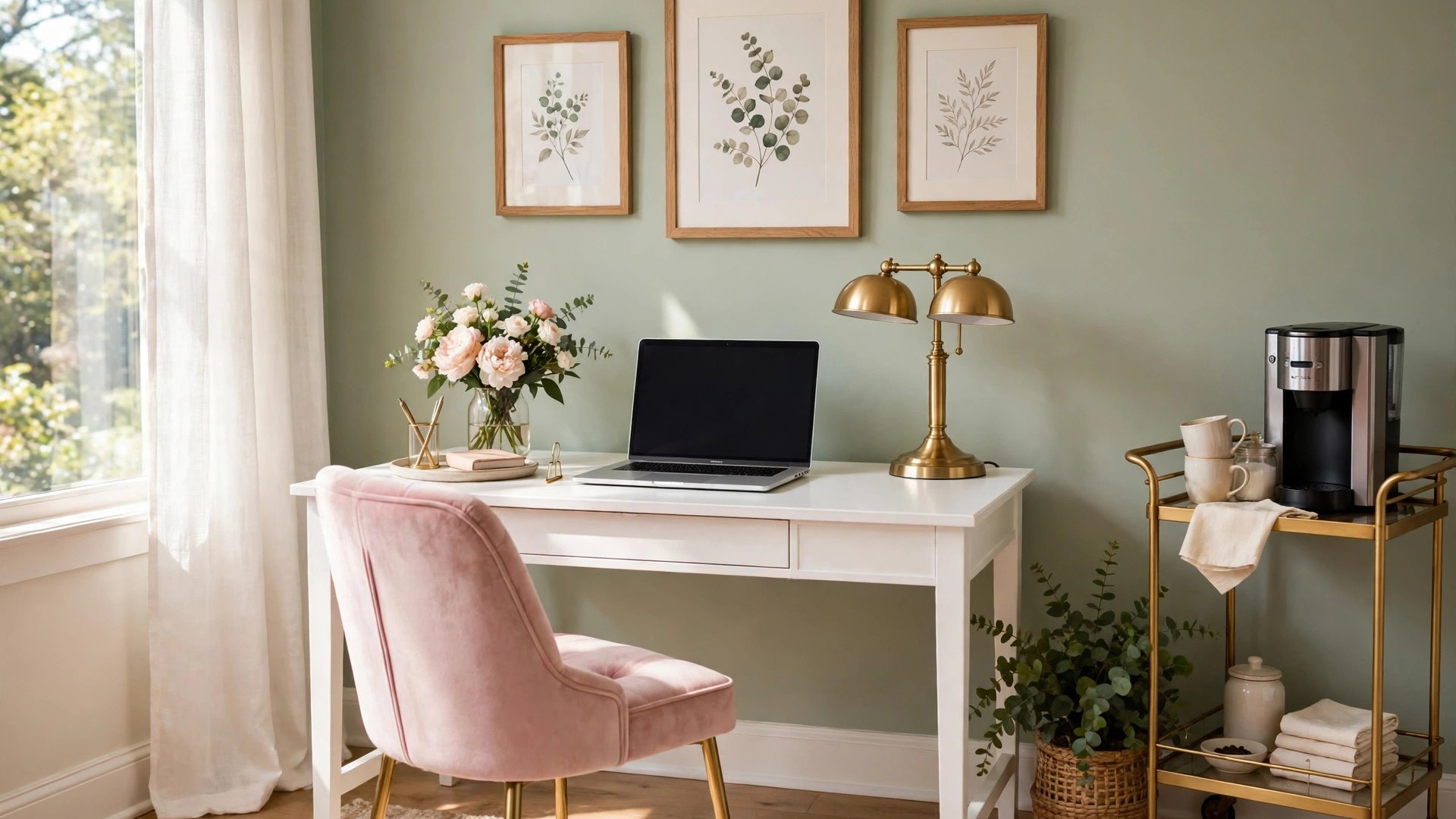

A home office should never feel like a borrowed corner of someone else’s house. If you are working from a desk that wobbles, under light that flatters no one, surrounded by equipment chosen purely because it was on sale, it is no surprise the workday feels longer than it is. Your workspace deserves the same care you give the rest of your home.
The home office ideas for her in this guide are built on a simple belief: beautiful and practical are not opposites. You can have the upholstered chair and the good posture, the brass lamp and the glare-free screen, the styled shelves and storage that actually works. We will cover choosing your style, setting up the desk properly, color palettes that feel fresh rather than frilly, storage disguised as decor, and even a coffee bar corner — plus how to make it all fit in small spaces and on real budgets.
Start With a Style That Feels Like You
Before buying anything, name the feeling you want. Do you work best in a calm, spa-like space of whites, woods, and linen? A glamorous corner with brass, velvet, and a statement mirror? A cheerful room of color, pattern, and art? There is no correct answer — the right style is the one that makes you want to sit down and begin.
Collect five or six inspiration photos and look for what repeats: the same metal finish, the same shade family, the same chair shape. Those repeats are your style, written plainly. Then make three small decisions that will guide every purchase: one main color, one metal or wood finish, and one texture you love, such as rattan, boucle, marble, or warm oak.
Our office decor ideas gallery-style guide is a helpful next step for refining that look once you know your direction. The point of choosing a style first is discipline: when every object passes the same three-question test — is it my color, my finish, my texture? — the room comes together almost by itself.
The Desk Setup: Beautiful and Built for Real Work
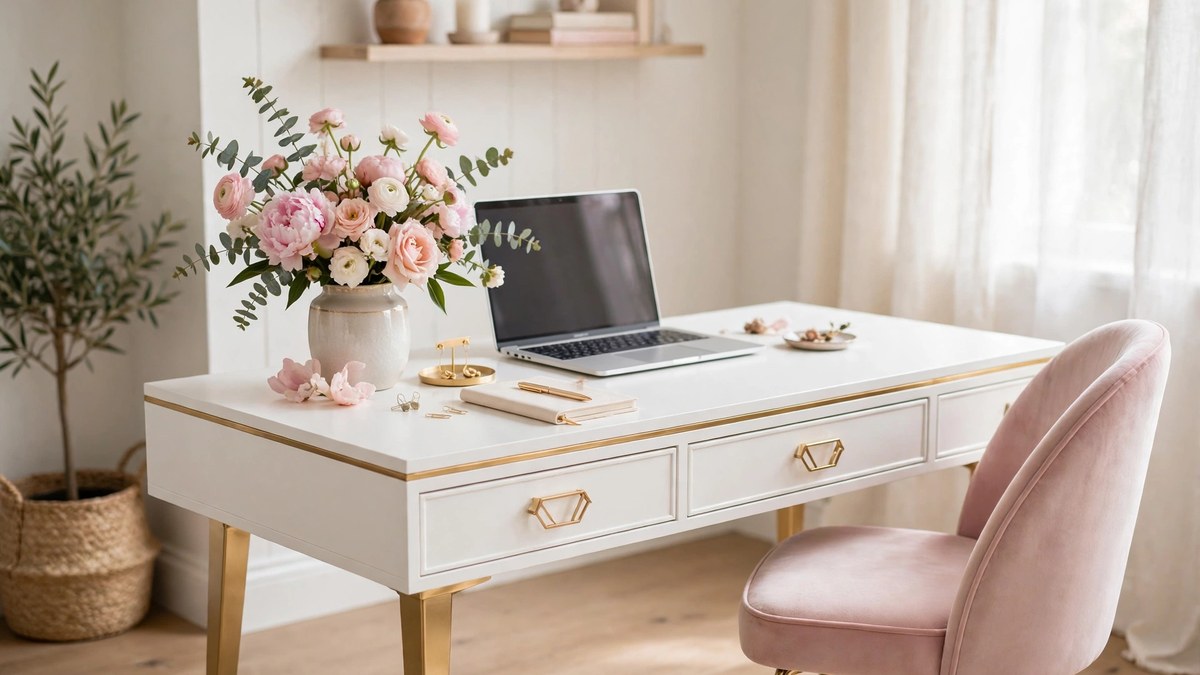
Start with the desk, because everything else arranges itself around it. A writing desk with slender legs and one or two drawers suits most home offices better than a bulky executive desk, and it comes in finishes from white lacquer to walnut. Aim for a surface around 44 to 55 inches wide if you use a monitor, and keep the depth near 24 inches so the room stays airy.
The chair is where style and health negotiate. An upholstered desk chair in velvet, linen, or boucle looks beautiful and, if it has proper seat height adjustment and lumbar support, works beautifully too. If the prettiest chair lacks support, add a slim lumbar cushion in a matching fabric rather than choosing between your back and your aesthetic — you need both for eight-hour days.
Set the screen at eye level, even if that means a beautiful solution: a stack of coffee table books under a monitor is a stylist’s trick that genuinely works, and brass or acrylic monitor stands exist for a more polished look. Keep the daily tools — laptop, notebook, pen cup, phone charger — in a defined arrangement, and let everything else live elsewhere. A desk that starts each morning clear is the real luxury.
Think about your hands’ daily route across the desk, too. The notebook belongs on your writing side, the phone charger within reach but out of the eyeline, and a small dish or tray for jewelry, hair ties, and lip balm — the small things that otherwise scatter. A desk mat in leather or linen defines the working area, protects the surface, and quietly makes even a budget desk feel tailored.
Color Palettes That Feel Fresh, Not Frilly
Feminine does not have to mean pink, and pink does not have to mean childish. The palettes that work hardest in women’s home offices share one trait: they are grown-up about saturation. Soft, muted versions of colors — blush instead of bubblegum, sage instead of mint, dusty blue instead of baby blue — feel elegant and stay easy to work in for long hours.
Try one of these proven combinations as a starting point. Blush, cream, and brushed gold for a warm, glamorous calm. Sage, white oak, and matte black for a fresh, modern organic feel. Navy, crisp white, and natural rattan for a coastal-classic mood that photographs beautifully on video calls. Or charcoal, camel, and cream if you prefer your workspace tailored and dramatic.
Paint the whole room if you can; if not, paint the wall behind your desk or choose one large piece of art in your palette and let it lead. Repeat your main color at least three times — chair, cushion, art, or storage boxes — so the scheme looks chosen rather than accidental. Our office decor guide has more palette examples styled at full-room scale.
Decor Details That Make the Room Yours
Decor is not the reward for finishing the office; it is part of how the office works, because a room you love is a room you will keep tidy and enjoy sitting in. Start with the wall behind your desk — it is your backdrop on every call and your view is the opposite wall, so style both thoughtfully.
A gallery of framed prints, a single oversized piece of art, or a mirror with a beautiful frame all work. A mirror does double duty: it bounces light around the room and gives you a quick appearance check before meetings. Add one living plant if you have any light at all — a pothos on a shelf, a small olive tree in the corner — because greenery softens screens and equipment like nothing else.
Then the small luxuries that make the day pleasanter: a candle you light at the start of work, a pretty tray that corrals your notebook and glasses, a soft throw over the chair for chilly mornings, a framed photo that is for you and not for the camera. Keep the desktop count low — three styled objects is plenty — and rotate them seasonally if you get bored, rather than accumulating more.
Coffee Bar Ideas for Office Corners, Carts, and Desks
Few upgrades change the feel of a workday like not having to trek to the kitchen for every refill. Coffee is one of the most popular drinks in the world, and a small dedicated station in your office turns a chore into a ritual. These coffee bar ideas for office spaces scale from a full corner to a single tray.
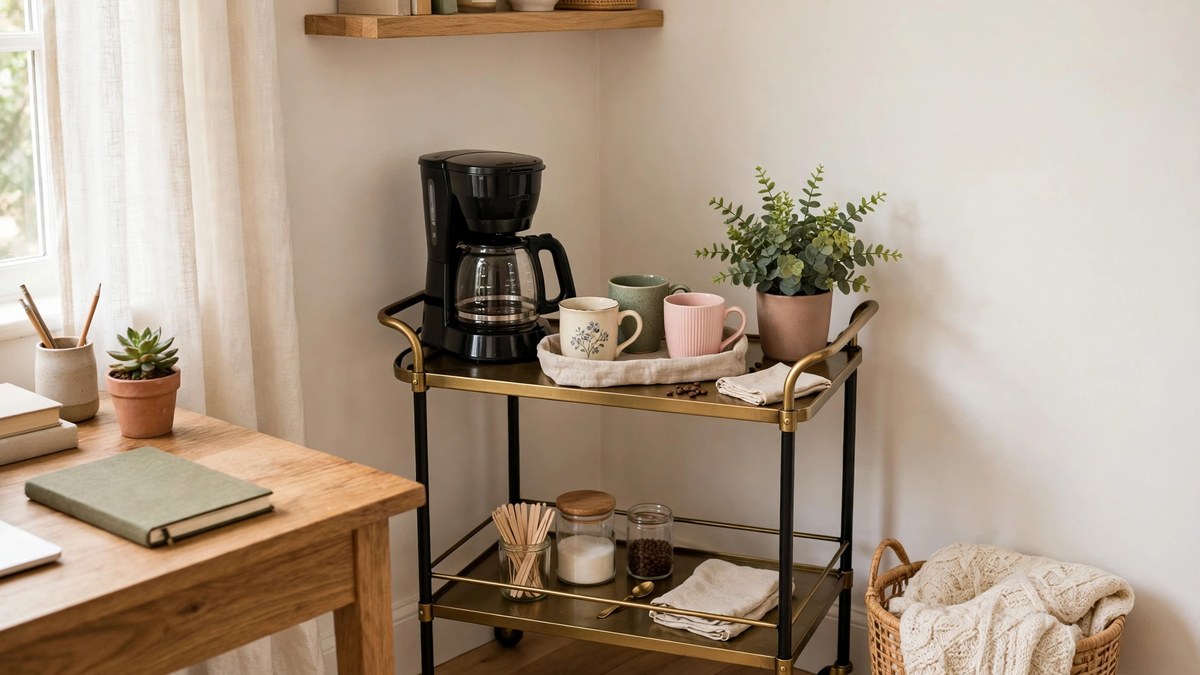
The corner version: a small cabinet, console, or bar cart holds your machine — espresso maker, pour-over setup, French press, or electric kettle for tea drinkers — plus cups on hooks or a shelf above. Add a lidded jar for beans or pods, a small plant, and a framed print, and the corner reads as a charming cafe moment rather than appliance storage.
Short on floor space? The tray version works on a desk or bookshelf: one beautiful tray carrying a small machine or kettle, two favorite mugs, and your supplies in matching canisters. Whatever the scale, plan the practicalities — a nearby outlet, water you can refill without a hike, and a small towel or mat under the machine for drips. A tiny trash or compost spot for grounds and pods keeps the station tidy instead of feral.
Not a coffee drinker? The same station logic works beautifully for tea — kettle, a small selection in a pretty box, a teapot or infuser mug — or for a hydration station with a glass carafe, a tumbler, and sparkling water for the afternoon slump. The point is not the beverage; it is having a small, deliberate ritual within arm’s reach that punctuates the workday kindly.
Storage That Looks Like Decor
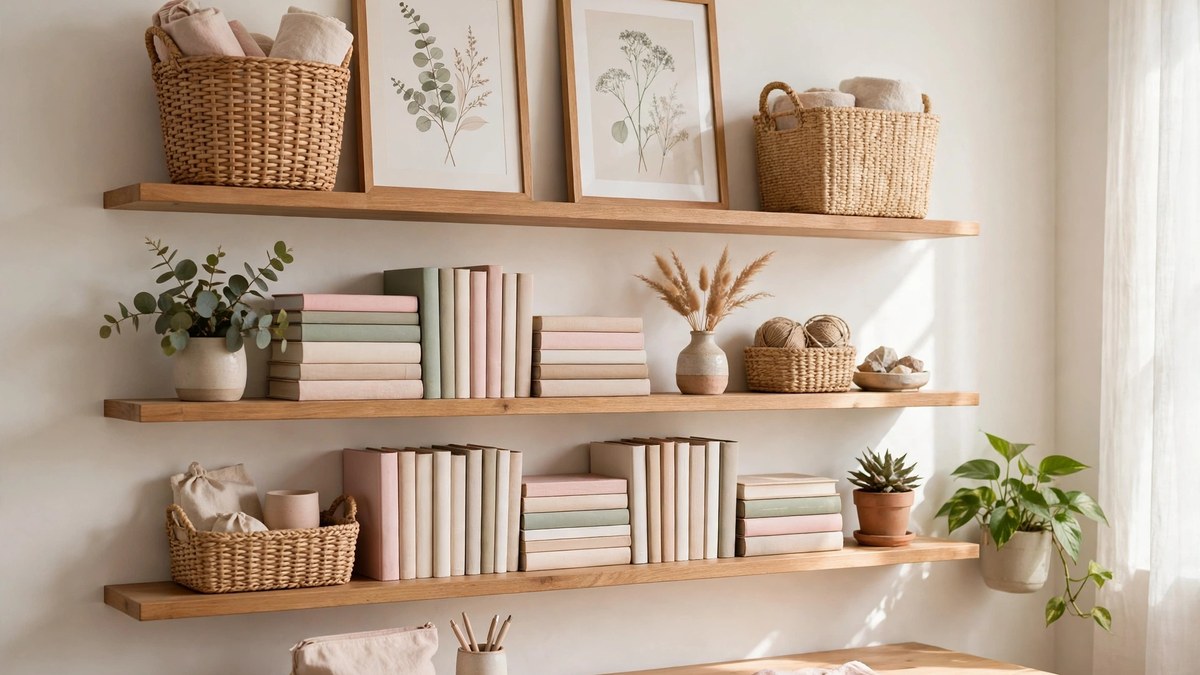
The storage rule in a styled office is simple: if it is open, it must be beautiful; if it is not beautiful, it goes behind a door or in a box. Pretty storage exists in every category now — woven baskets for blankets and cords, fabric-covered boxes for files, ceramic canisters for clips and chargers, and bookshelves styled with books arranged by size or color family.
Use the one-third rule on open shelves: roughly one-third books, one-third storage boxes or baskets, one-third breathing room with a plant, a vase, or art. Shelves styled this way read as decor on camera and in person, while still holding a working office’s worth of supplies.
For papers, choose a letter tray or magazine file in your finish — brass, leather, woven seagrass — and give it a single job as your inbox. The printer, that eternal eyesore, can live inside a cabinet, under a linen cloth, or on a low shelf behind a plant. And hide the cords: a cable box that matches your palette, clips that route wires down the desk leg, and one power strip out of sight will do more for the room’s elegance than another throw pillow.
Lighting and Greenery for a Softer Workspace
Lighting makes or breaks both your comfort and your camera image. Layer it: daylight from a window if you are lucky, a desk lamp for task light, and one warm ambient source — a small table lamp on a shelf or a floor lamp in the corner — for the hours when the ceiling light feels harsh.
Choose your desk lamp as jewelry for the room: brass, ceramic, glass, or a sculptural shape that suits your palette. Aim the light at your work surface from the side opposite your writing hand to avoid shadows, and for video calls, keep a light source in front of you — the desk lamp raised on books behind your screen works surprisingly well. Bulbs matter too: a warm-to-neutral bulb, roughly 3000–4000K, flatters skin and keeps colors honest.
Greenery is the other softener. If you have bright light, a small olive tree, a fiddle leaf fig, or a trailing pothos will thrive; in low light, snake plants and ZZ plants forgive almost anything. Group plants at different heights — one tall, one on the desk, one trailing from a shelf — and the office instantly feels designed rather than assembled.
Making It Fit: Small Spaces, Corners, and Shared Rooms
Not everyone gets a whole room, and these ideas adapt gracefully to less. A corner office built around a small writing desk, a wall shelf, and a beautiful chair can occupy less than 20 square feet and still feel like a destination. A closet office goes further: worktop across the closet, shelves above, a sconce or clamp lamp, and doors that close on the workday. Our home office ideas for small spaces digs into measurements and product types for these compact setups.
Sharing a room — an office in the bedroom or living room — is about signaling. A rug under your desk zone, a bookcase or a folding screen at your back, and a consistent end-of-day tidy keep work in its place. Style the desk to match the host room’s palette so the office reads as part of the room’s design by evening, and keep the laptop in a drawer or a pretty box overnight.
Even a hallway or landing can work if it is wide enough: a slim console desk, a wall-mounted shelf, and a chair that tucks completely underneath. The smaller the footprint, the more the styling matters, because the office is always on display — which is one more reason to make it beautiful on purpose.
Budget-Friendly Upgrades That Feel Luxe
A gorgeous office does not require a gorgeous budget; it requires priorities. The highest-impact inexpensive move is paint — one wall or the whole room in your palette color transforms everything for the cost of a gallon and a Saturday. Secondhand furniture is the other great lever: writing desks, bookshelves, and lamps are plentiful used, and a fresh coat of paint or new hardware makes them yours.
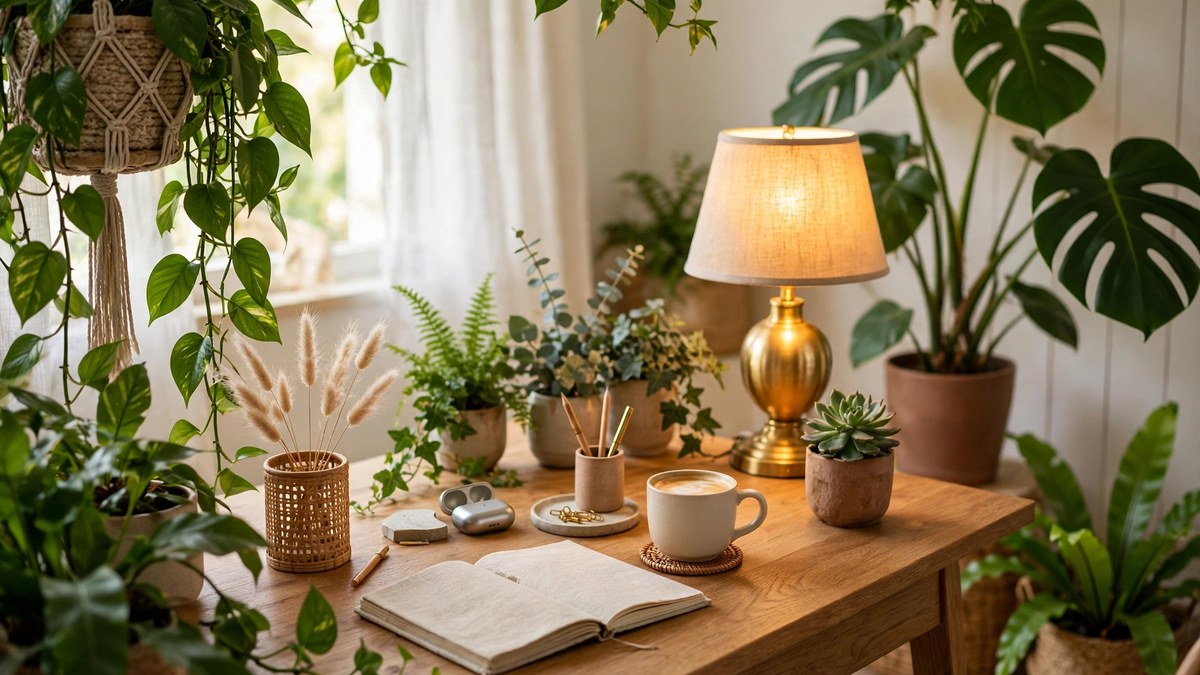
Spend small amounts where your senses notice them daily. A beautiful mug and tray for your coffee station. A cushion that makes your chair both prettier and kinder to your back. One framed print, properly sized, instead of three small ones. Matching storage boxes so the shelves look calm. A plant in a real pot, not the plastic nursery one.
Save the splurge for the chair if you work long hours, and for the desk lamp if you work after dark. Everything else can arrive gradually — a styled office is allowed to evolve, and hunting for the right pieces secondhand is part of the pleasure.
A Getting-Started Plan: Your Office in One Weekend
If the full vision feels like a lot, here is a realistic two-day version. On Saturday morning, clear everything out of the work zone and clean it properly — an empty, clean corner is the best design tool there is. Decide the palette and the desk position while the space is bare, then paint if you are painting; one wall takes a few hours including drying time between coats.
Saturday afternoon, set up the bones: desk, chair, lamp, and your technology, with cables managed as you go rather than later. Live in the setup for the evening and notice what annoys you — the glare at 4 p.m., the drawer that should swap sides — while everything is still easy to move.
Sunday is styling day. Hang the art or mirror, style the shelves with the one-third rule, set up the coffee tray or cart, add the plant and your three desktop objects, and put every supply into its box or basket. Finish by sitting down with a coffee and opening your camera to check the backdrop. Small, staged weekends like this are how most beautiful offices actually happen — not in one giant shopping trip.
Common Mistakes to Avoid
The most common mistake is choosing the chair by looks alone and paying for it with back pain by month two. Test support honestly, or plan the lumbar cushion from the start. Second is over-styling the desk itself: too many lovely objects leave nowhere to work, and the room becomes a photo instead of a tool.
Third is ignoring the camera view. The prettiest desk in the world will not help if your backdrop is a drying rack; sit down, open the camera, and style what it sees. Fourth is letting the palette drift — buying every pretty thing regardless of your three guiding choices — until the room feels busy instead of beautiful.
Finally, do not skip storage planning because the room looks fine empty. Offices accumulate paper, tech, and supplies relentlessly; without closed homes for them, even the most beautiful office dissolves into clutter within a season.
Frequently Asked Questions
How do I make my home office feel feminine but professional?
Lean on palette and finish rather than novelty items: soft muted colors, one repeated metal or wood tone, upholstered textures, and art you genuinely like. Keep the desk setup ergonomic and the backdrop tidy, and the room reads as polished and personal at once — professional because it is composed, feminine because it is yours.
What colors work best for a woman’s home office?
Muted, sophisticated versions of favorite colors work best for long workdays: blush with cream and gold, sage with white oak, dusty blue with white, or tailored neutrals like charcoal and camel. The key is lower saturation and repetition — choose one main color and use it at least three times in the room.
Where should I put a coffee bar in a small office?
On a bar cart in a corner, on top of a low cabinet, or as a tray station on a bookshelf or the end of your desk. Keep it near an outlet, keep water refills simple, and corral everything — machine, mugs, supplies — on the cart or tray so the station reads as one styled moment instead of scattered appliances.
What is the best chair for a stylish home office?
An upholstered desk chair with adjustable height and real lumbar support, in a fabric that suits your palette — velvet, boucle, and linen-look fabrics are popular for a reason. If the chair you love lacks support, add a slim matching lumbar cushion. Avoid dining chairs for full-time work; they are rarely kind for eight hours.
How can I style office shelves so they look like decor?
Use the one-third rule: a third books, a third attractive storage boxes or baskets, a third open space with a plant, vase, or small art piece. Arrange books in short stacks and upright runs, keep colors within your palette, and hide anything purely functional inside the boxes. The shelves will read as a styled backdrop rather than storage overflow.
How do I make a tiny corner office feel special?
Define it and finish it: a rug to mark the zone, a desk and chair you truly like, one shelf styled with the one-third rule, a lamp you enjoy looking at, and one personal touch like a framed photo or a plant. Small spaces forgive nothing, but they also reward every deliberate choice — a finished tiny office feels like a jewel box.
What are inexpensive ways to make a home office look expensive?
Paint, repetition, and tidiness. One confident wall color, accessories repeated in a single finish, cables hidden, surfaces mostly clear, and matching storage boxes will make even thrifted furniture look intentional. Good light — a warm lamp instead of a bare ceiling bulb — is the final, cheapest luxury.
Conclusion
A home office that feels like you is not a vanity project; it is a tool for better workdays. Choose a style and let it guide your purchases, set the desk and chair up properly, build a palette of soft, repeated colors, hide storage in beautiful containers, and crown it with a coffee corner and good light. Start with the desk wall and one palette decision this week — the rest of the room will follow.
