
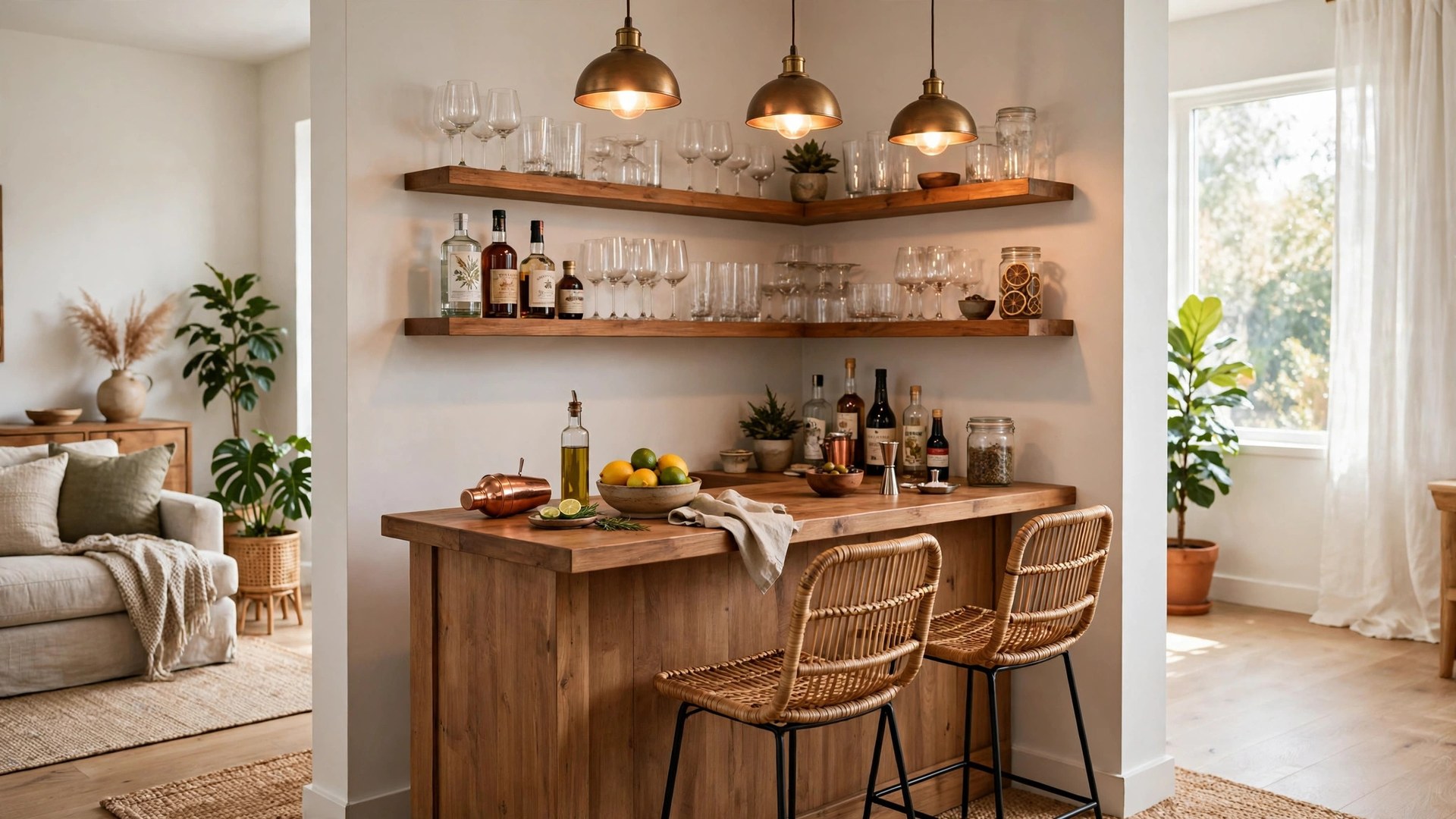

A home bar does not need a dedicated room, a plumber, or a contractor. The best home bar ideas start with one honest question: where do people already gather in your house? If friends naturally end up in the kitchen, a bar belongs nearby. If movie nights happen in the den, a compact setup there will get far more use than a fancy build in a room nobody visits.
This guide walks through layouts, do-it-yourself builds, small-space tricks, decor, and budget plans, so you can pick the version that fits your home and your habits. Whether you dream of a full counter with stools or just a handsome cart in the corner, the principles stay the same: a flat surface to mix on, storage within reach, good light, and a style that matches the rest of the room.
Bar Ideas for Home Gatherings Start With the Right Spot
Location decides everything else. Walk through your home and look for underused square footage: the end of a dining room, a wide hallway nook, the wall beside a fireplace, or the corner of a living room where an accent chair currently collects laundry. A bar needs surprisingly little room. A cart takes about 2 by 3 feet, while a small counter setup works in a run of about 4 to 6 feet of wall.
Think about traffic flow next. Guests should be able to reach the bar without squeezing past the sofa or blocking a doorway. If the bar sits near the kitchen, refilling ice and rinsing glasses is easy. If it lives in a den or basement, plan a way to carry supplies, such as a tray or a small bin, so trips stay painless.
Power and water are bonuses, not requirements. An outlet nearby helps if you want a mini fridge, a blender, or lighted shelves. Running water turns a dry bar into a wet bar, but a large water jug, a good ice bucket, and a bus tub for used glasses handle most parties just fine. Choose the spot first, then design around what it offers instead of forcing a design into the wrong place.
Home Bar Design Ideas That Set the Layout
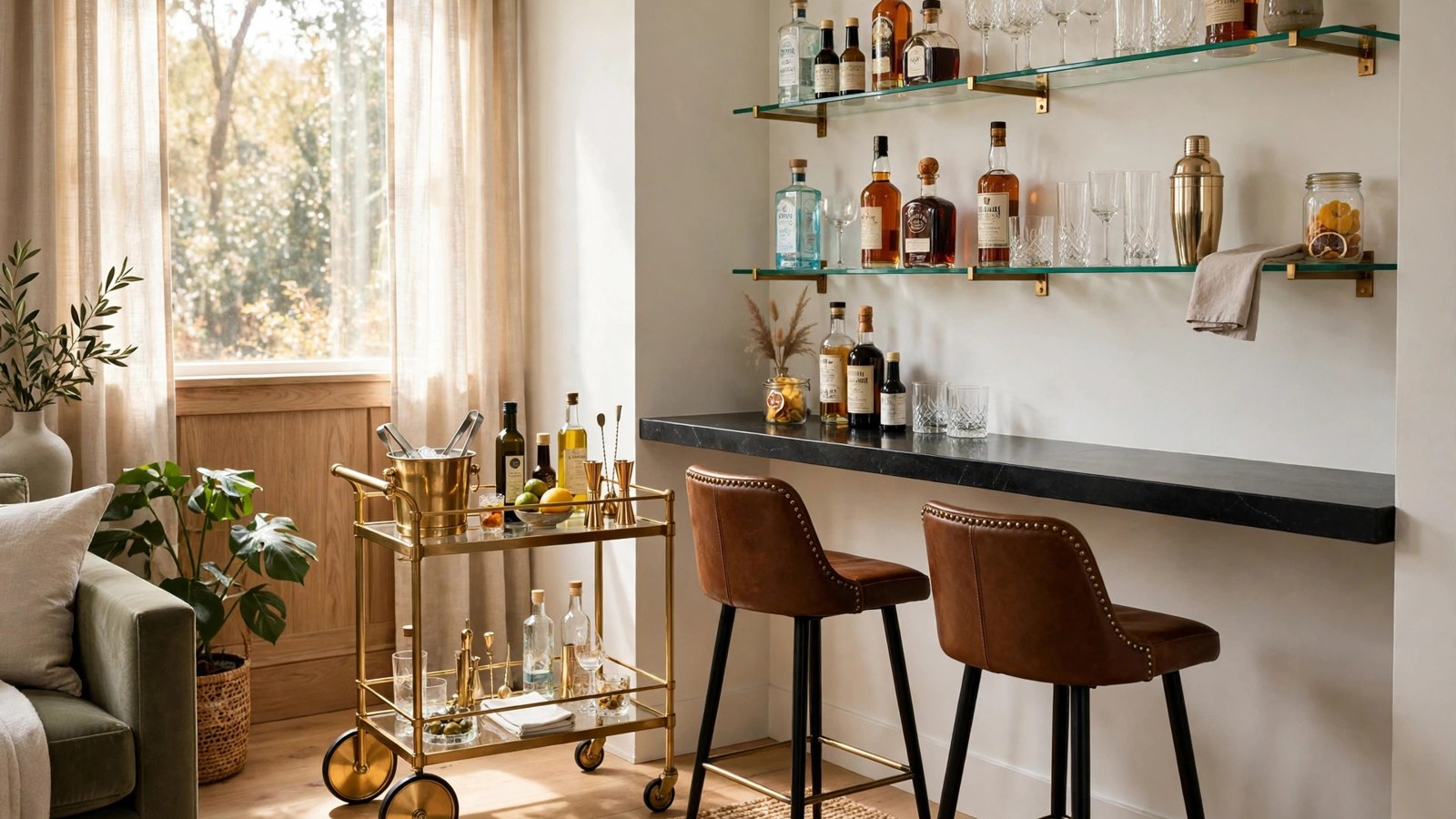
Once the spot is chosen, the layout shapes how the bar feels to use. The classic straight counter works almost anywhere: a work surface about 24 inches deep, storage below, and shelves or cabinets above. Standard counter height is about 36 inches, while a raised bar top usually sits around 42 inches. Taller tops need taller stools, so match stool height to the counter, leaving roughly 10 to 12 inches between the seat and the underside of the top.
An L-shaped layout suits corners and gives the host a defined work zone with guests on the other side. A freestanding island bar works in large, open rooms where both sides get used. For narrow spaces, a wall-mounted fold-down counter creates a mixing surface that disappears when the party ends.
Leave clear working room behind the counter. About 36 inches of clearance lets one person mix comfortably, and more is better if two hosts share the job. Keep the most-used bottles, tools, and glassware in the first reach zone, roughly between knee and eye level, and store rarely used items higher or deeper. Good layouts feel effortless because nothing important hides behind three other bottles.
If your bar will double as a display moment in the room, borrow styling discipline from these shelf styling ideas that make any room look finished, and group bottles by height with breathing room between clusters.
DIY Home Bar Ideas You Can Build in a Weekend
Some of the most satisfying bars start as furniture with a past life. A sturdy bookcase laid on its back, a thrifted dresser, a vintage sideboard, or a console table can all become a bar with a weekend of work. Sand, prime, and paint the piece in a color that suits the room, then add a stone, wood, or metal tray on top to define the mixing zone and protect the surface from rings and spills.
A simple built-in look is also within reach. Stock kitchen cabinets, the kind sold flat-packed or unfinished at home centers, can form a bar base. Top them with butcher block or a pre-cut countertop slab, add two wall shelves above, and the result reads as custom. Typical cabinet depths of about 24 inches keep the proportions right.
Other approachable projects include:
- A bar cart upgraded with a marble-look tray, a rail for towels, and casters that lock
- Floating shelves with under-shelf racks that hold stemware upside down
- A closet converted with shelves, a small counter, and a battery light strip
- A pallet or reclaimed-wood counter for a rustic room, sealed well for easy cleaning
Whatever you build, seal wood surfaces against moisture, anchor tall shelving to wall studs, and test the setup with a real mixing session before the first party. Small annoyances, like a shaker that lives too far from the ice, are easy to fix at this stage.
Small Bar Ideas for Home Corners and Closets
Small bars succeed by going vertical and staying edited. Wall shelves carry the bottles, a narrow console or cart provides the work surface, and a mirror or artwork behind the setup gives it presence without taking floor space. In a closet bar, remove the door or replace it with a curtain, paint the interior a deep, moody color, and let the reveal become part of the fun.
Choose a tight, versatile bottle lineup instead of a deep one. A handful of spirits that cover the classics, one or two mixers you actually enjoy, bitters, and fresh citrus will serve most guests happily. Decant everyday bottles into matching glass containers only if you will keep up with labeling; otherwise, neat rows of original bottles look perfectly good.
Seating can be minimal. Two stools that tuck fully under the counter keep a small bar from eating the room. If there is no room for stools, treat the bar as a serving station and let guests carry drinks to the seating area. That is how many small city apartments handle it, and nobody misses the stools.
Lighting matters even more in a small footprint, because a dim corner reads as forgotten. A plug-in sconce, a small pendant, or an LED strip under a shelf makes the bar glow like a destination. Warm light around 2700K keeps skin tones and amber spirits looking their best.
Home Bar Decor Ideas That Add Personality
Decor is what separates a storage shelf from a bar. Start with a backdrop: paint the wall section a deeper shade than the room, add beadboard or simple trim molding, or hang a large piece of art. A mirror behind the bottles doubles the sparkle of glassware and makes a small bar feel twice as deep.
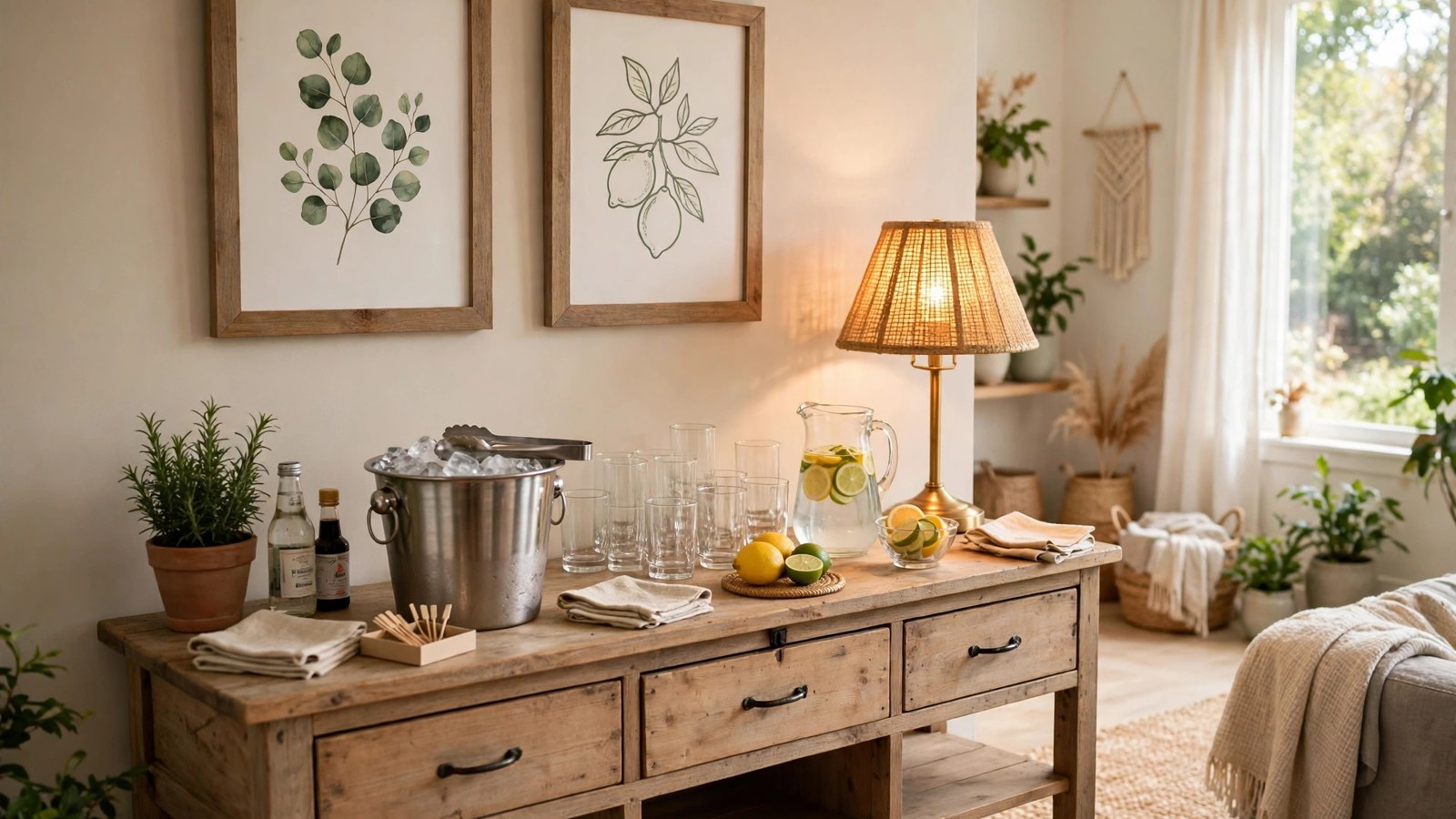
Style the surface in layers. A tray corrals the working bottles. A small plant or a bowl of citrus adds life and color. A stack of cocktail books or a framed menu of two or three house drinks gives guests an easy choice and gives you an easier night. Keep about a third of the counter empty so there is always room to set down a glass and actually mix.
Rotate a few details with the seasons if you enjoy it: linen napkins in summer, a plaid throw over a nearby chair and cinnamon sticks in a jar when the weather cools. The bones stay the same, so each refresh costs little. If you love layered, collected rooms, the same instincts behind cozy living room styling apply here too: texture, warm light, and a few personal objects beat a matched set every time.
Bar Decorating Ideas Home Hosts Actually Use
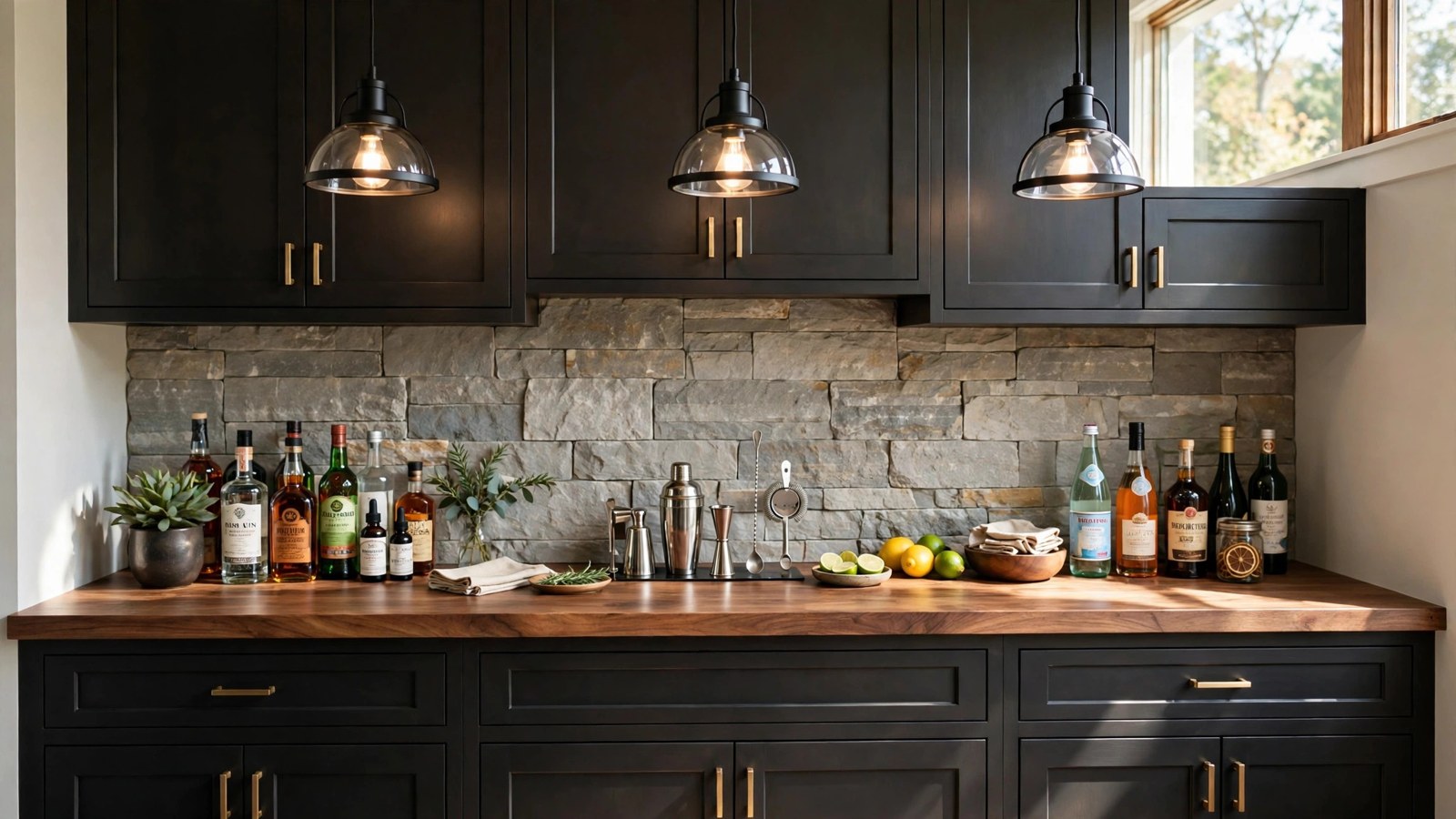
Experienced hosts decorate for the way a party actually unfolds. They put a small rug or washable runner in front of the bar to catch drips and define the zone. They keep a visible home for the essentials: a corkscrew and bottle opener in a crock, a jigger and shaker on the tray, cocktail napkins in a holder guests can reach without asking.
Glassware deserves thought. You do not need a dozen types. A set of rocks glasses, a set of highballs, and a few coupes or wine glasses cover nearly everything. Store the everyday set at the bar and the overflow in the kitchen. Matching glasses look sharp, but a collected mix of vintage pieces can be just as charming if the shapes stay in a similar family.
A quick note on what you are serving: a classic cocktail is simply a spirit mixed with ingredients like juice, syrup, tonic, or bitters, which is why a short, well-chosen bottle list outperforms a crowded one. Two house drinks you make confidently will impress guests more than twenty you make hesitantly.
Finally, add one personal signature: a monogrammed ice bucket, a photo from a favorite trip, or the framed first page of a beloved cocktail book. Guests remember the bar with a story, not the one that looks like a showroom.
Home Bar Ideas on a Budget
A memorable bar does not require a big spend. Budgets stretch furthest when the money goes to the pieces people touch and see: the surface, the lighting, and the glassware. Nearly everything else can be thrifted, borrowed from another room, or added slowly.
A realistic starter setup often lands in these ranges:
- Bar cart or thrifted console, secondhand: roughly $40 to $150
- Tray, ice bucket, and basic tools: roughly $30 to $80
- Two wall shelves with brackets: roughly $40 to $100
- Plug-in light or LED strip: roughly $20 to $60
- First round of bottles and mixers: roughly $75 to $150
That puts a genuinely inviting bar at roughly $200 to $550 all in, and less if you already own furniture that can move. Spend first on a surface at a comfortable height and light that flatters the corner. Bottles accumulate naturally as gifts and trips add to the shelf, so there is no need to buy the full lineup on day one.
Skip the matching bar-accessory sets in gift boxes; individual tools bought separately are usually sturdier. And before buying decor, shop your own home. A plant from the kitchen, a lamp from the guest room, and a tray from the dining hutch can finish a bar for free.
Choosing Bar Height, Counter Depth, and Seating
Comfort at a home bar comes down to a few measurements. A standard counter-height surface sits at about 36 inches, the same as a kitchen counter, and pairs with stools whose seats are around 24 inches high. A raised bar top at about 42 inches pairs with stools around 30 inches high. Mixing the two up is the most common home bar mistake, and it makes guests perch awkwardly or sit too low to rest their arms.
Counter depth of about 16 to 24 inches gives room for bottles, a mixing zone, and a guest’s glass. If the bar has an overhang for knees, aim for roughly 12 inches of knee space at counter height. Behind the bar, keep the work aisle clear, and place the ice and sink, if you have one, within a step of the main mixing spot.
Allow about 24 inches of counter width per seated guest so elbows do not collide. Two stools need roughly 4 feet of bar frontage, three need about 6 feet. In tight rooms, backless stools tuck away cleanly, while stools with low backs are kinder for long conversations. Swivel seats help in narrow spaces because guests can slide in without dragging the stool across the floor.
Stocking the Bar: Bottles, Tools, and Glassware
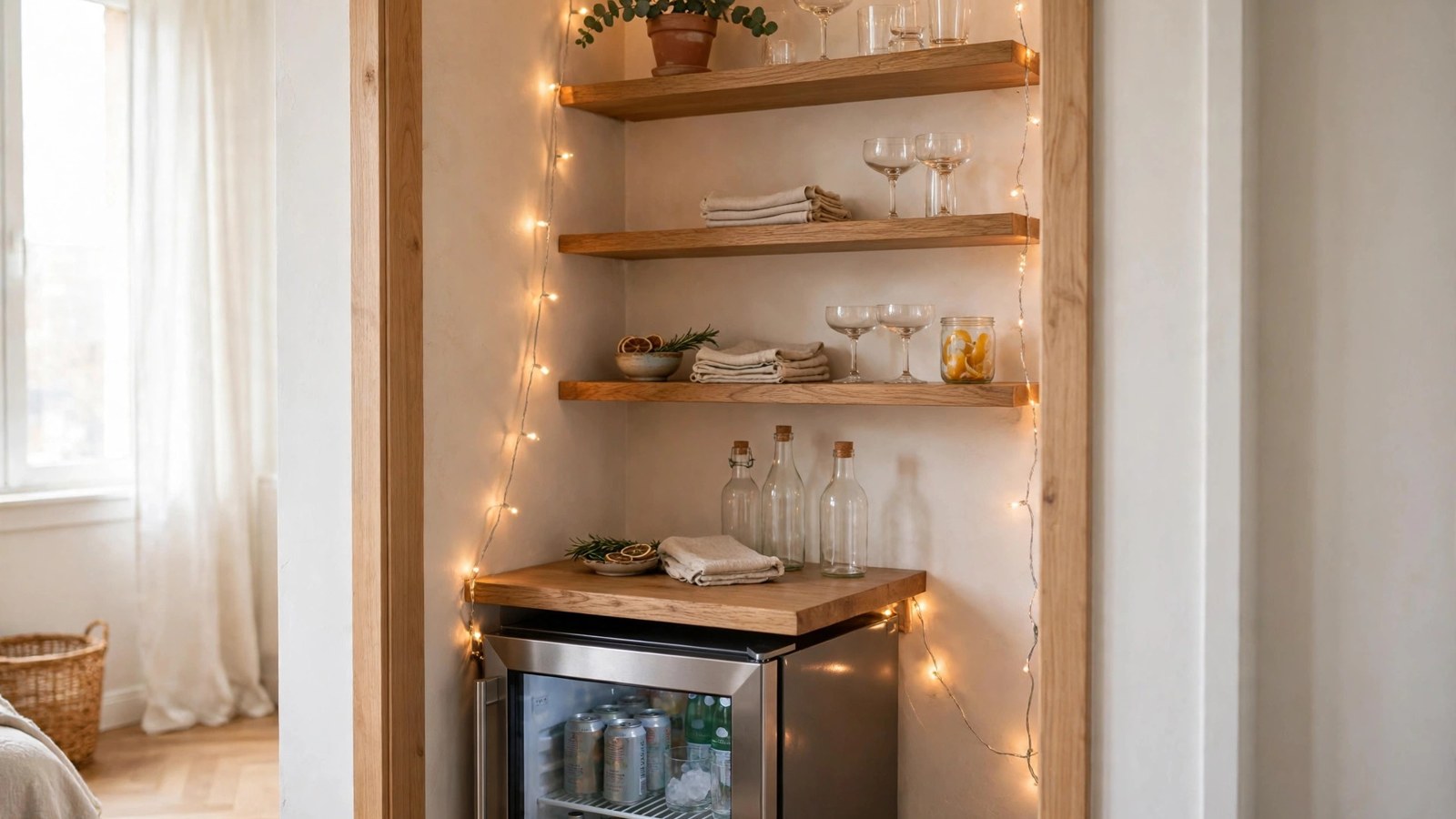
A well-stocked home bar is a working pantry, not a liquor store. Start with the spirits your household and regular guests actually drink, then build outward. A flexible core usually includes a whiskey, a gin, a vodka, a rum, and a tequila, plus sweet and dry vermouth and one or two liqueurs. Add bitters, fresh citrus, a simple syrup you can make in five minutes, tonic, and soda water, and most classic drinks are within reach.
The tool list is short: a jigger for measuring, a mixing glass or shaker tin, a bar spoon, a strainer, a citrus juicer, a paring knife, and a small cutting board. An ice bucket with tongs and a reliable wine opener round it out. Everything should fit on one tray or in one drawer, because tools scattered through the kitchen slow every drink down.
Store bottles away from direct sunlight and heat, which dull flavors over time. Vermouth and other wine-based bottles belong in the fridge after opening. Keep a small notebook or phone list of what you own; it prevents buying a third bottle of something you rarely pour while running out of the staple you use weekly.
Lighting and Finishing Touches
Lighting turns a counter into a bar. Aim for layers: general room light, a focused light over the work surface so you can see measurements, and a soft glow at the shelves so the bottles sparkle. Pendants over a bar usually hang so the bottom of the fixture sits about 30 to 36 inches above the counter, close enough to feel intimate without blocking sight lines.
Dimmers earn their keep here. Bright light works while you set up and clean, and low light makes the same corner feel like an evening destination. If wiring is not an option, plug-in pendants and sconces with cord covers deliver the look without an electrician. Ideas from these lounge lighting ideas for a warm, layered glow translate directly to bar corners.
Finish with the small comforts guests notice: coasters within reach, a small trash or recycling spot tucked nearby, a hand towel on a hook, and a phone-charging cable in a drawer. A Bluetooth speaker at low volume completes the mood far better than a television competing for attention.
Keeping the Bar Ready Between Parties
A home bar stays inviting when upkeep takes minutes, not a Saturday. Wipe the counter and rinse the shaker the same night, while everything is still out; dried syrup and citrus are far harder to clean the next morning. Restock from a short running list on your phone, because the time to discover you are out of tonic is not when guests are holding glasses.
Once a month, do a slightly deeper pass. Check garnishes and syrups for freshness, wash the ice bucket, polish the everyday glassware, and look at the bottle lineup with honest eyes. Anything untouched for a year can move to a pantry shelf or become a gift. A bar edited regularly always looks styled, even between parties, and it greets you like a favorite corner of the house rather than another chore.
Tips and Common Mistakes
A few habits separate bars that get used from bars that gather dust:
- Start where people gather. A modest bar in the living room beats a showpiece in a room nobody enters.
- Measure before you buy. Confirm counter height, stool height, and the swing of nearby doors and fridge doors.
- Edit the bottle lineup. Ten bottles you love beat thirty you dust. Buy the second bottle only when the first runs low.
- Plan for ice. Ice is the ingredient hosts forget. A countertop ice maker, a freezer bin, or two filled trays should be part of the plan from day one.
- Keep water nearby. A carafe and glasses for water make the bar feel generous and keep guests comfortable.
- Avoid clutter creep. Every new bottle or gadget should earn its spot; move overflow to a pantry shelf.
The most common mistakes are simple ones: stools that do not match the counter height, lighting that is either harsh or too dim to mix by, and storage so deep that bottles disappear behind other bottles. Shallow shelves, risers, and a strict one-row rule for the working lineup fix most of it.
Frequently Asked Questions
How much space do I need for a home bar?
A bar cart needs roughly 2 by 3 feet of floor space. A small counter setup with two stools works in about 6 by 4 feet, including room to sit and stand. Closet bars and wall-mounted shelves can work in even less, since the storage goes vertical.
What is the difference between a wet bar and a dry bar?
A wet bar includes a sink with running water, which makes rinsing glasses and dumping ice easy. A dry bar has no plumbing, just a surface and storage. Dry bars cost far less to add and work well near a kitchen, where the sink is only a few steps away.
How high should a home bar counter be?
About 36 inches is standard counter height and suits stools with seats around 24 inches. A raised bar top is usually about 42 inches and pairs with stools around 30 inches. Keep roughly 10 to 12 inches between the seat and the underside of the counter.
What bottles should a starter home bar have?
Begin with the spirits you and your regular guests enjoy, commonly a whiskey, gin, vodka, rum, and tequila, then add sweet and dry vermouth, a favorite liqueur, bitters, tonic, and soda. Fresh lemons and limes plus homemade simple syrup cover most classic recipes.
Can I build a home bar in a rental?
Yes. Freestanding carts, consoles, and bookcase bars move out with you. Use plug-in lighting instead of hardwired fixtures, choose shelves that mount with minimal screws, and keep the security deposit in mind before adding plumbing or built-ins.
Where should a home bar go in a small apartment?
Look for a corner near where guests sit, the end of a dining area, or a stretch of wall beside the sofa. A narrow console with wall shelves above it gives you a full serving station in about a foot of depth, and stools are optional.
How do I keep a home bar looking neat?
Corral working bottles on a tray, keep one row per shelf, and give every tool a home in a crock or drawer. Wipe the surface after each use, return overflow bottles to a pantry, and do a quick five-minute reset before guests arrive.
Conclusion
The right home bar is the one that matches your space, your budget, and the way you actually entertain. Pick the spot where people already gather, choose a layout with comfortable heights and reachable storage, and layer in decor and lighting until the corner feels like a destination. Start simple, host once, and adjust. A bar that evolves with your habits will be mixing drinks, and making memories, for years.
