
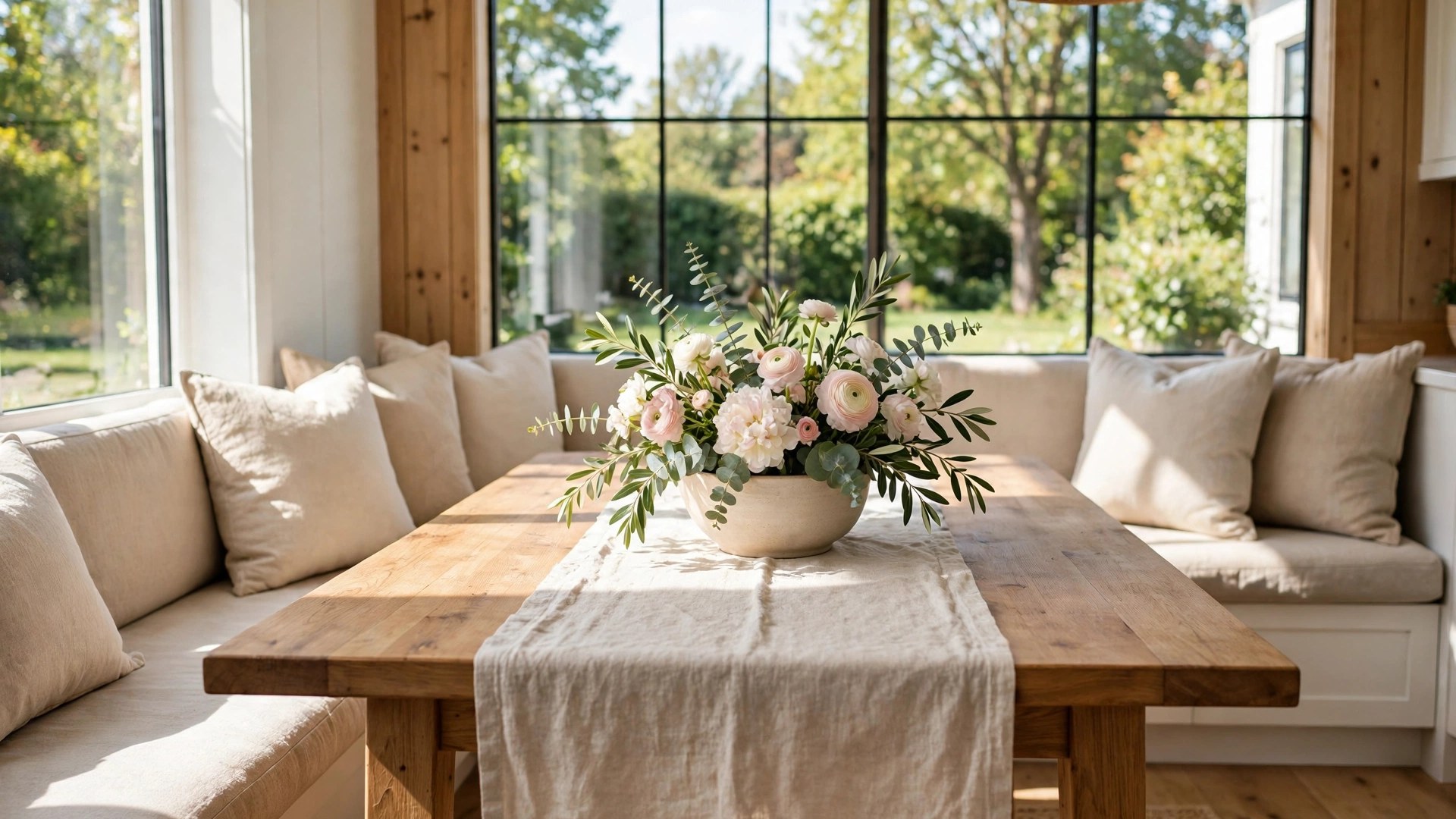

The kitchen table is where homework happens, laptops open, coffee goes cold, and, several times a day, actual meals appear. Because it works so hard, it is usually decorated last, cleared in a hurry and set on autopilot. Yet a few reliable kitchen table decor ideas can make that hardest-working surface look considered every single day, without a centerpiece so precious it has to move before anyone can eat.
The secret is a system, not a shopping trip: a low everyday centerpiece, one good tray, linens that layer, and light that flatters both food and faces. This guide builds that system piece by piece, then shows how to stretch it for small tables, breakfast nooks, and seasonal changes.
Start With the Table You Have: Shape, Size, and Surface
Decorating starts with honest measurements. A round table wants a single central arrangement; a long rectangular table wants either one generous runner with a low grouping or two smaller arrangements spaced along its length. Leave roughly 12 to 15 inches of clear table edge in front of each seat for place settings and elbows, and keep the center decor inside that boundary.
Surface matters too. A beautiful wood table can carry decor directly on its grain, with felt pads under anything scratchy. Glass and high-gloss tables reflect light and objects, so fewer, larger pieces look better than many small ones. A scarred or family-battered table is not a failure; it is an invitation to use runners and placemats as a deliberate design layer.
Height is the third consideration. Everyday decor should stay low, generally under about 12 inches, so people can see each other across the table. Save tall branches and dramatic candlesticks for sideboards, or bring them out for a dinner party and remove them when the food arrives.
The Everyday Centerpiece: Low, Lovely, and Easy to Move
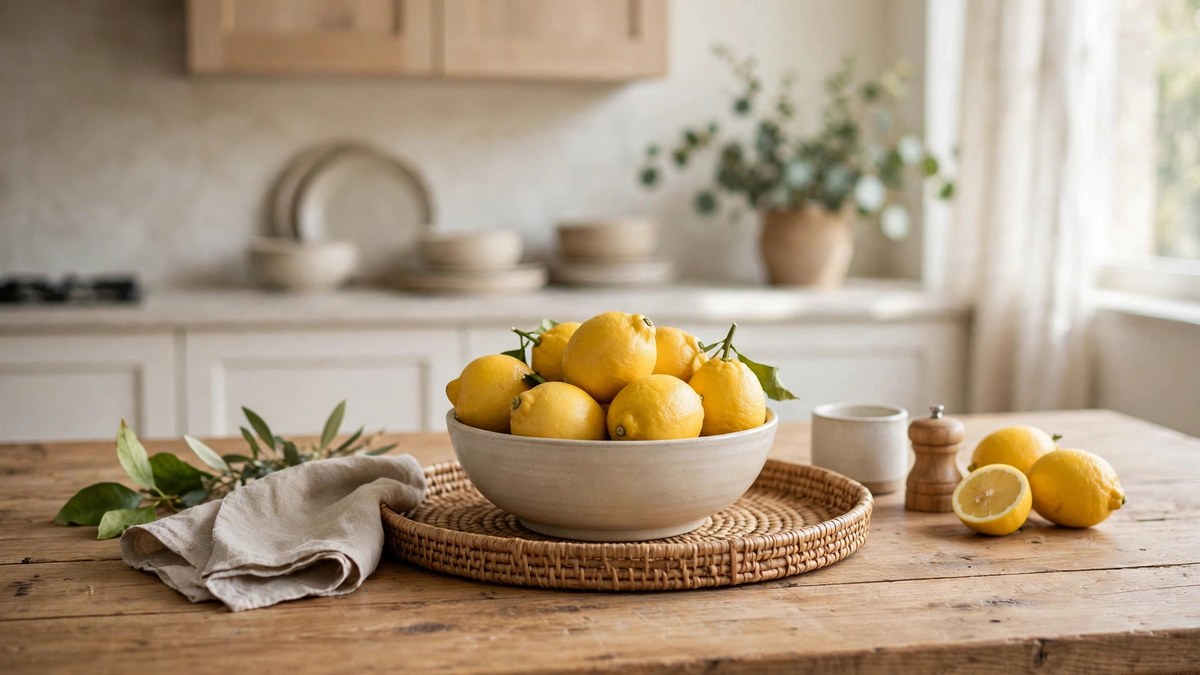
The perfect everyday centerpiece passes three tests: you can see over it, one person can move it in one trip, and it still looks good when half the household stuff has landed around it. A low bowl of fruit, a cluster of three small potted herbs, or a short vase of grocery-store flowers all pass easily.
Build centerpieces in odd-numbered groups. A bowl, a small stack of books or a board, and a candle at different heights make a complete vignette. Repeat one material from the room, the wood of the cabinets, the black of the light fixtures, the brass of the hardware, so the centerpiece belongs to the kitchen rather than visiting from the living room.
If you eat at the table daily, choose a centerpiece that lives on a tray or board. Then “clear the table” takes ten seconds, and “set the table” is the same motion in reverse. This single habit is the difference between a decorated table and a decorated-in-photos table. For deeper guidance on statement arrangements, our roundup of dining table centerpiece ideas covers taller, more formal looks.
Candles belong in the everyday kit, ideally unscented at the table so they never fight the food. Battery-operated candles in real wax are a safe, no-drip alternative for households with kids, pets, or enthusiastic gesturers.
Eat in Kitchen Ideas That Make Weeknight Dinners Feel Special
The eat-in kitchen is the most democratic dining space in the house, and it deserves better than paper towels and mismatched placemats grabbed at speed. A few small rituals elevate weeknight meals without adding chores. Use real napkins, cloth ones live in a basket on the table and go in the wash weekly. Light the candle. Put the water in a pitcher instead of carrying bottles to the table.
Banquette corners deserve special mention. A built-in bench with washable cushions, a wall-mounted light, and a round or oval table that is easy to slide into turns a corner into the seat everyone fights for. Hang one picture or a small shelf above the bench so the nook reads as a destination, not leftover space.
Breakfast nooks near windows have natural advantages: morning light and a view. Keep window-adjacent tables lightly decorated so the outlook stays the centerpiece, and choose decor that tolerates sun, since fabrics and fruit fade and wilt faster in direct light.
Finally, protect the romance with logistics. A small side cart or nearby shelf that holds placemats, napkins, and the candle means setting an attractive table takes under two minutes, which is the difference between a habit that sticks and a resolution that does not.
Trays and Boards: The Secret to a Table That Always Looks Styled
If stylists have one trick, it is containment. Objects scattered across a table look like clutter; the same objects gathered on a tray look like decor. A wooden board, a woven tray, or a metal platter defines a territory, and everything inside that territory reads as intentional.
Choose a tray sized to your table: on a 48-inch round table, a 14- to 18-inch tray anchors the center without crowding place settings. On long farmhouse tables, a runner-length board or two medium trays spaced evenly works better than one small tray lost in the middle.
What goes on the tray follows the bowl-candle-green formula: something to hold (a bowl of fruit or a crock of utensils), something warm (a candle or small lamp), and something alive (a plant, herbs, or cut stems). Change one element seasonally and the whole table feels refreshed for almost no money.
Boards have a bonus: they protect the surface from rings, heat, and candle wax, and they make the daily clear-off genuinely easy. In homes where the table doubles as a desk or craft station, the tray system is what makes the double life possible.
Linens That Layer: Runners, Placemats, and Napkins
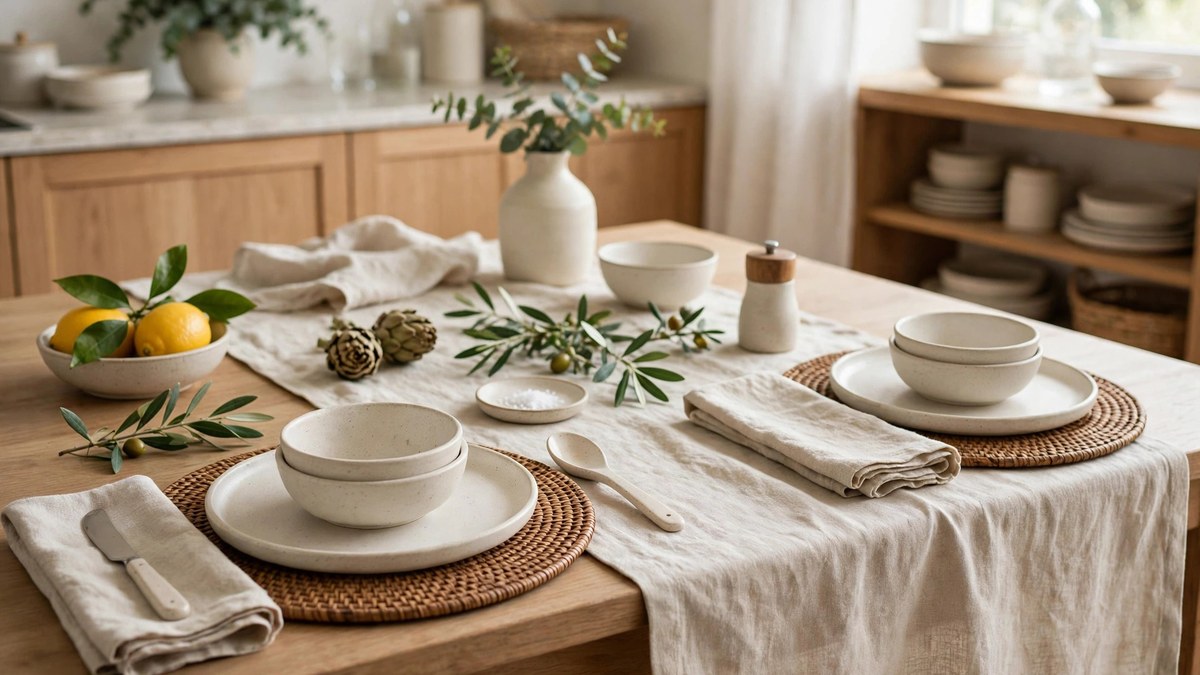
Linens are the fastest way to change a table’s mood. A runner adds a stripe of color or texture down the center and frames the centerpiece. On wood tables, runners show the grain at the edges; on plain tables, they supply the pattern the room might be missing. Placemats define each seat and protect the surface, and round mats soften rectangular tables while rectangular mats tidy round ones.
Layering works when the pieces share a palette but not a pattern. A natural linen runner, woven placemats in a similar tone, and napkins in one accent color looks collected, not matched-from-a-box. Keep one set of truly washable, dark-enough-to-hide-stains linens for everyday, and save the crisp whites for occasions.
Fabric choice is practical before it is pretty. Cotton and linen wash well and soften with age; wipeable coated fabrics and woven vinyl suit households with toddlers. Whatever you choose, buy one extra napkin set and one spare runner: the table that always looks good is the one whose linens are not all in the laundry.
Storage shapes the habit. Keep everyday linens in a kitchen drawer or basket within arm’s reach of the table. If setting the table means a trip to a linen closet down the hall, the placemats will quietly retire.
Greenery and Flowers Without the Fuss
Something living belongs on the table, but it does not have to be a florist arrangement. A small pot of herbs, basil, rosemary, or mint, does triple duty: green, fragrant, and useful mid-recipe. Succulents and trailing pothos tolerate the warm, bright conditions near kitchen windows and forgive irregular watering.
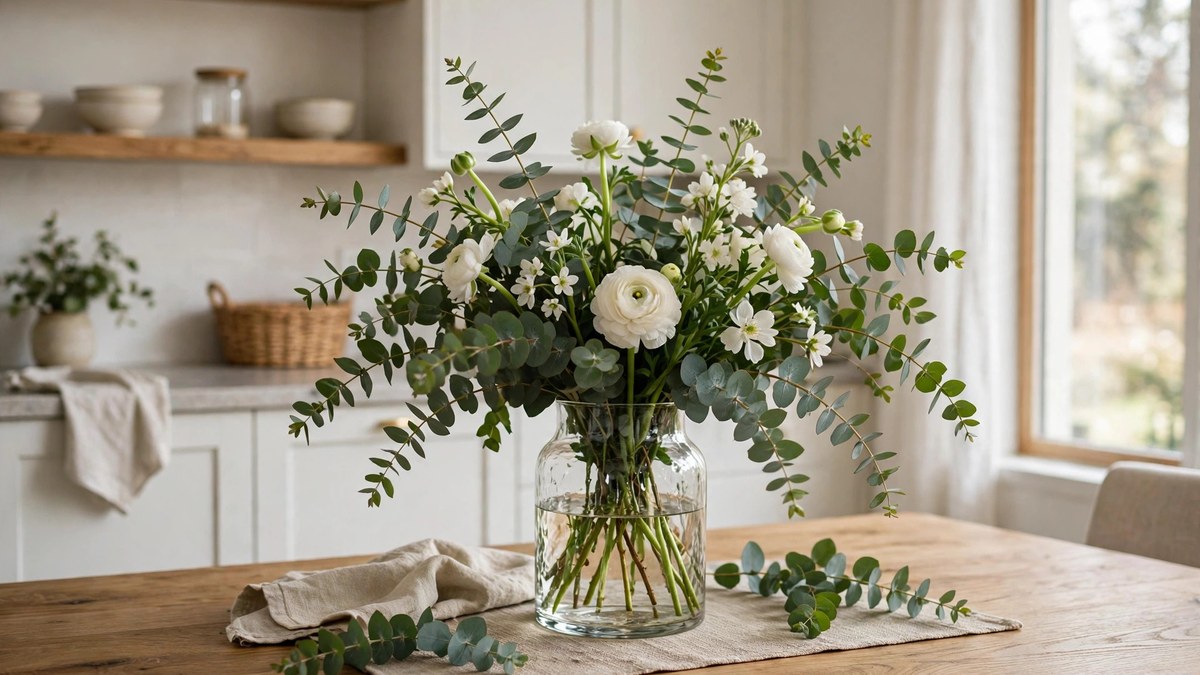
For flowers, think grocery store, not event florist. A single variety in a single color, a bunch of tulips, eucalyptus stems, or branches cut from the yard, looks more designed than a mixed bouquet. Use a vessel with a narrow neck so a cheap bunch arranges itself, and keep the height below eye level for daily use.
Faux greenery has improved enormously and earns its place in low-light kitchens or vacation homes, provided you choose matte, varied leaves and dust them monthly. Mixing one real element, even a bowl of lemons, beside faux stems keeps the arrangement believable.
A final option is edible decor: a pedestal of tomatoes on the vine, a bowl of artichokes, a jar of dried pasta or beans. In a kitchen, food-as-decor is honest, seasonal, and self-refreshing, since the display literally gets eaten and replaced.
Lighting Above the Table: Pendants and Candlelight
The fixture above the kitchen table does more decorating than anything on it. A pendant or small chandelier centered over the table, hung so the bottom sits roughly 30 to 36 inches above the tabletop, defines the eating zone and makes even a plain table look deliberate. If your fixture is off-center or builder-basic, a plug-in swag pendant can fix the position without an electrician.
Scale the fixture to the table: a single pendant over a round table should be roughly one-half to two-thirds the table’s diameter, and a pair or trio over a long table should span the middle third. Exposed bulbs look great and glare terribly; choose frosted glass, fabric shades, or dimmers so dinner light flatters instead of interrogates.
Layer in low light for the evening. Candles, a small rechargeable table lamp, or string lights in a glass vessel give the table a second personality after dark. Many cordless table lamps now hold a charge for days, and one placed on the tray beside the centerpiece makes weeknight dinners feel like an occasion.
Do not neglect daylight. If the table sits by a window, keep centerpieces low and glassware clear or lightly tinted, so light passes through and the table sparkles rather than silhouettes.
Seasonal Rotations: Four Tables a Year
A decorated table stays interesting when it changes with the calendar, and the trick is rotating accents, not replacing the system. Your tray, runner, and centerpiece formula stay put; the fruit, stems, napkins, and candle colors change.
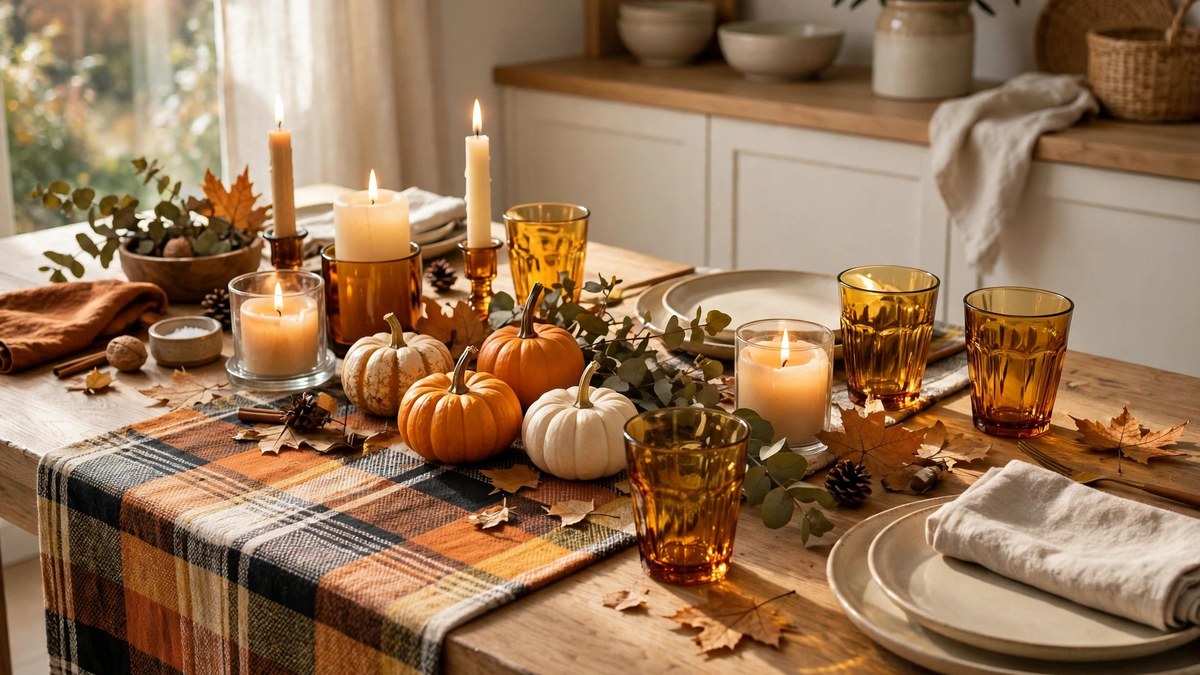
Spring asks for tulips or branches of blossom, pale linens, and a bowl of eggs or lemons. Summer goes simpler: herbs, citrus, woven textures, and glass that catches the light. Autumn is the generous season, small pumpkins or gourds, amber glass, plaid napkins, and branches of turning leaves. Winter wants evergreen, pinecones, metallics, and more candlelight against the early dark.
Holidays slot into the same system without new purchases. For a festive table, keep the everyday tray and runner, swap in metallic napkins and candle holders, add one bowl of ornaments or cranberries, and let the food provide the rest of the abundance. When the holiday passes, the bin system returns the table to normal in minutes, which is exactly why the rotation habit survives January.
Store each season’s accents in one labeled bin each, ideally in or near the kitchen. Rotation then takes fifteen minutes, and the table never goes stale. Our guide to dining room table decor ideas uses the same seasonal approach for more formal dining spaces.
Resist the themed-overload temptation. Three nods to the season read as style; twelve read as a store display. Editing is what separates decor from decoration.
Small Tables and Banquettes: Decor in a Tight Footprint
A small table has no room for a centerpiece plus settings plus serving dishes, so decor must shrink, move, or multitask. A single small vase, a pair of salt and pepper mills in beautiful materials, or a folded stack of two linen napkins with a sprig of herb can be the entire arrangement, and that is enough.
Wall power helps. In a tight nook, decorate the wall instead of the table: one picture ledge with a rotating print and a plant, or a sconce that throws warm light over the table. The table itself stays clear, but the eating area still feels styled.
Choose pieces that serve: a small lidded crock that holds sugar packets or tea, a narrow board that works as both decor and serving piece, a bench cushion in a fabric with enough pattern to be the room’s accent. In eat-in corners of island kitchens, the counter-height styling in our kitchen island decor ideas guide translates directly to small-table settings.
Round pedestal tables deserve a mention: with no corners, they seat more people in less space, and a single central arrangement reads perfectly from every seat. If your nook is cramped and rectangular, swapping the table shape may decorate the corner better than anything you put on it.
Setting the Table: Everyday Places That Feel Considered
Decor is the frame; the setting is the picture. An everyday setting with a placemat, a real plate, a napkin placed on the left or on the plate, and glassware that matches most days will always look more intentional than a gorgeous centerpiece surrounded by paper plates.
The classic rules are simpler than their reputation. As the traditional table setting layout goes, forks sit to the left of the plate, knives and spoons to the right, with the knife blade facing the plate, and glasses above the knife. You do not need five pieces of flatware for a Tuesday; you need the pieces you will use, placed the same way every time. Consistency is what the eye reads as elegance.
Add one small upgrade at a time: cloth napkins, then water glasses instead of bottles, then a bread board in the middle. Each habit raises the whole table’s polish without a single purchase of “decor.”
Teach the system to everyone who eats there. A table that only looks good when one person sets it is a hobby; a table anyone can set in two minutes is a household standard.
Decor That Survives Kids, Pets, and Real Life
A kitchen table that only looks good in an empty house is a failed design. Real tables host toddlers in booster seats, teenagers doing homework, cats with opinions, and the occasional science project, and the decor has to coexist with all of it. The good news: family-proof and beautiful are not opposites, they just require honest materials.
Choose centerpieces that are heavy enough not to tip and sturdy enough not to shatter. A wooden bowl, a stone crock, a metal tray, and potted herbs survive bumps that crystal vases do not. Keep candles flameless where small hands or curious whiskers roam, and skip the tabletop items with sentimental or monetary value that would actually hurt to lose.
Linens should be the washable kind, full stop. Dark or patterned placemats hide the evidence of spaghetti night, and a spare runner means the table never sits bare while laundry cycles. If a booster seat or high chair claims one spot permanently, style the remaining seats as the “setting” and let the family gear be part of the honest picture.
Most importantly, give homework, mail, and devices a landing zone that is not the table: a basket on the counter, a small shelf by the door. Tables stay decorated when the clutter has somewhere better to go, and a ten-second tidy before dinner becomes a ritual everyone can manage, even the teenagers.
Common Kitchen Table Decor Mistakes
The tallest mistake is literal: towering arrangements that turn conversation into peekaboo. Keep everyday decor below sight lines, and let tall pieces live on counters or sideboards. The second mistake is permanence, a centerpiece so elaborate it never moves, slowly collecting dust and mail. If it cannot clear in one tray-lift, it is too much.
Scented candles at the table are a third: however lovely, fragrance competes with food. Keep scented candles for after dinner and use unscented at meals. Fourth is the plastic invasion, bottles, packets, and containers migrating to the table and staying. A lidded basket or crock gives those necessities a designed home.
Finally, do not decorate against the light. Dark, heavy arrangements under a dim fixture make food look dull and faces tired. When in doubt, lighten the palette, lower the profile, and add one source of warm light at table height.
Frequently Asked Questions
What is the simplest kitchen table centerpiece?
A low bowl of fruit or a small potted herb on a tray or board. It is attractive, useful, easy to move, and refreshes itself as the contents get eaten and replaced.
How much of the table should decor cover?
Keep decor within the center strip and leave roughly 12 to 15 inches of clear edge at every seat for settings and arms. On most tables, the arrangement should occupy no more than the middle third of the width.
Can I leave a centerpiece on the table all the time?
Yes, if it is low, contained on a tray, and easy to lift away for cleaning or a big meal. Everyday centerpieces should be part of the table’s working life, not obstacles to it.
What decor works on a small kitchen table?
One small vase or candle, beautiful everyday objects like wooden salt and pepper mills, and styling moved to the wall above, a ledge, a sconce, or a picture, so the surface itself stays clear.
How do I decorate a kitchen table on a budget?
Shop your own house first: a board, a bowl, a candle, and something green probably already exist in your kitchen. Add linens in one accent color, rotate them seasonally, and let fruit and herbs double as decor.
Should kitchen table decor match the dining room?
It should relate, not match. Repeating one color, metal, or wood tone between the two spaces makes the home feel cohesive while letting the kitchen table stay more casual and practical.
How often should I change my table decor?
A light refresh each season is plenty. Swap stems, fruit, napkins, and candle colors inside the same tray-and-centerpiece system, and the table feels new four times a year for very little money.
Final Thoughts
A kitchen table does not need to be styled like a magazine to feel welcoming; it needs a low centerpiece that moves easily, linens within reach, light that flatters, and a place for everyday things to land that is not the middle of the table. Build that system once, rotate its accents with the seasons, protect it with a landing zone for everyday clutter, and the hardest-working surface in your home will quietly become the best-looking and most welcoming one in the whole house too.
