
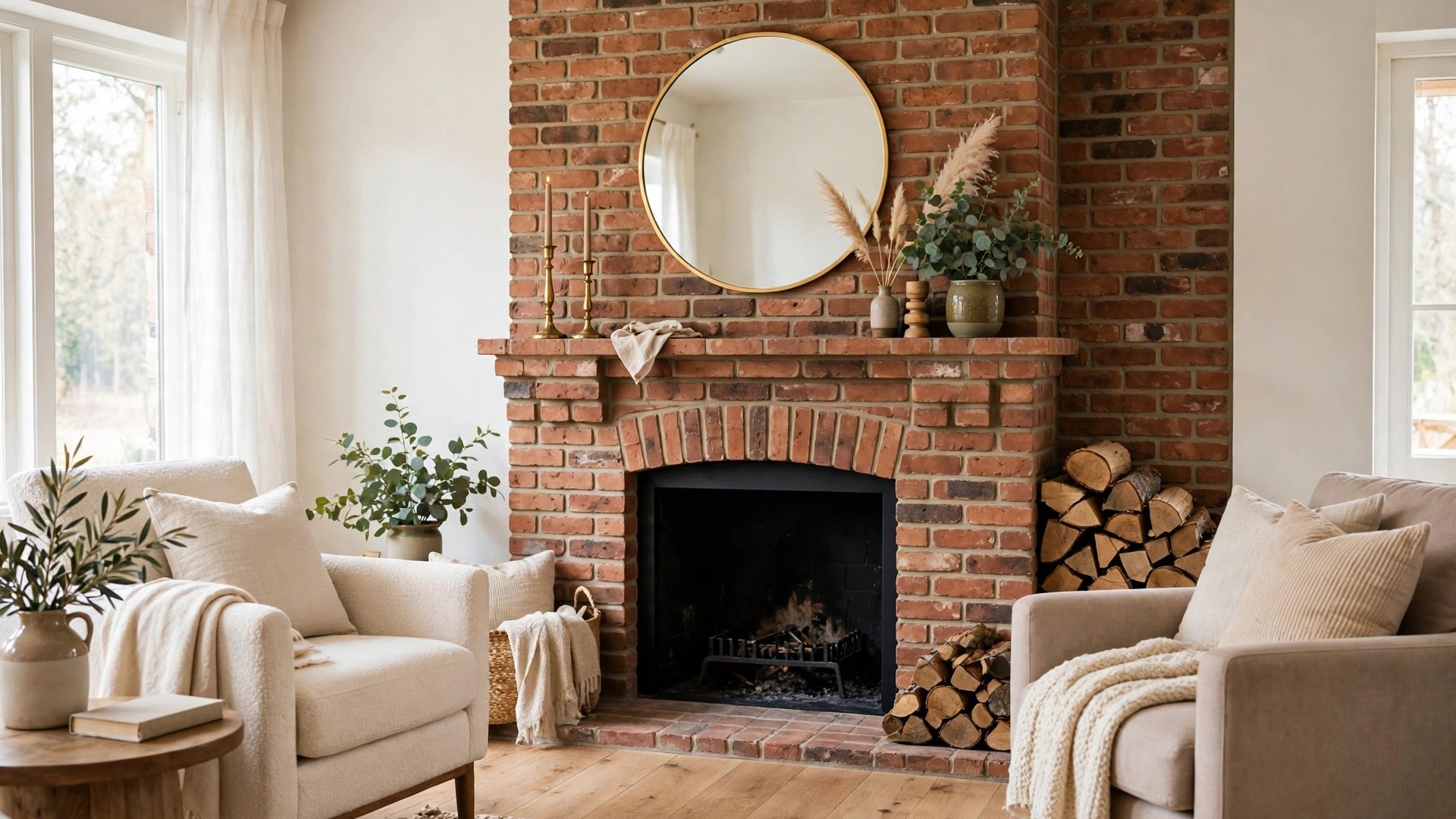

A fireplace is the only piece of furniture that is also architecture, and it comes with its own gravity. Chairs turn toward it without being asked. Guests drift to it. Even in summer, the room organizes itself around the hearth as if it remembers winter. That is why living room fireplace design ideas matter so much: style the fireplace well and the whole room reads as composed; neglect it, and the room’s most powerful feature becomes a black hole surrounded by furniture.
The good news is that every kind of fireplace can be a triumph: the wood-burning masonry classic, the gas insert, the electric unit in a rental, and even the bricked-up relic that will never hold a flame again. This guide covers the surround, the mantel, the wall, the hearth, and the inside of the firebox itself, closing with the safety rules that govern all of it. Start with the fireplace you actually have, and build from there.
Start With the Fireplace You Actually Have
Decorating advice fails when it assumes a different fireplace than yours. So begin with an honest inventory. A working wood-burning fireplace needs heat-safe materials near the firebox, a screen or doors, and clearances kept religiously. A gas fireplace, direct-vent or ventless, offers a cleaner face and more styling freedom close to the surround, but its glass and vents still get hot and its manufacturer’s clearances rule. An electric fireplace or insert can go almost anywhere and be styled nearly like furniture, with the most forgiving rules of all.
Then diagnose the design problem, because each type has one. Traditional masonry fireplaces often have a surround that fights the room’s style: dated brass, pink marble, brick painted an unfortunate color. Gas units often look flat and builder-basic, all black box and no architecture. Non-working fireplaces tend to be treated as embarrassments, when with the right approach they become the most charming display niche in the house, as the firebox section below will show.
Match your ambitions to your category. Paint, tile, and mantel changes are realistic weekend projects. Moving a firebox or opening a sealed chimney is a contractor conversation with permits attached. Everything in this guide is achievable without the contractor, and most of it without spending much at all.
Wall Fireplace Ideas for Modern and Media Walls
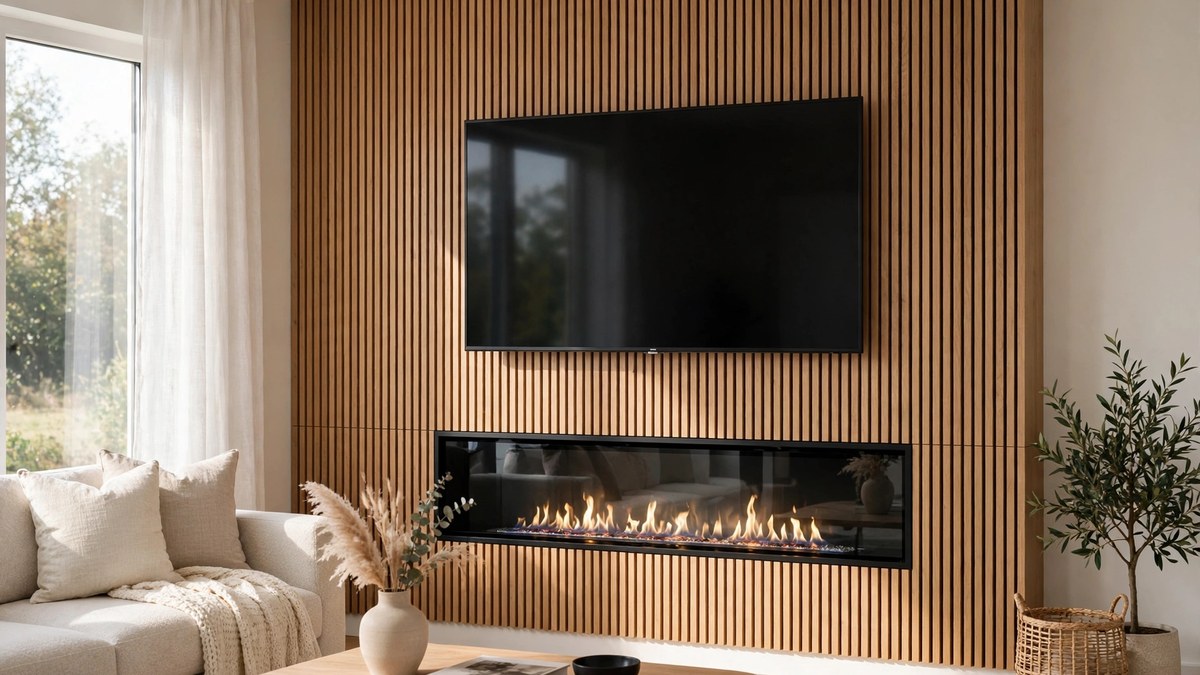
The fireplace wall is the room’s largest composition, and the best wall fireplace ideas treat the entire wall, floor to ceiling, as one designed surface rather than a box with things around it. The boldest approach is a full-height surround: stone, tile, plaster, or wood paneling carried from floor to ceiling, which makes even a modest firebox feel monumental and gives the wall a single, calm material story.
For contemporary rooms, a linear gas fireplace set into a minimalist wall with a floating bench hearth and concealed storage on either side is the defining look of the decade. The bench, usually the same material as the surround, extends the hearth line across the wall and doubles as extra seating and a display surface. Pair it with one oversized piece of art or a mirror above, or leave the wall bare and let proportion do the work.
Tile deserves its own word among the surround materials, because it offers the widest range per dollar. Large-format porcelain in a stone look gives a sleek, modern face; handmade-look zellige-style tiles bring shimmer and irregularity that suits transitional and Mediterranean-leaning rooms; classic subway tile in a deep color splits the difference. Whatever the tile, carry the decision to the grout: grout in a matching tone reads calm and monolithic, while contrasting grout turns the same tile graphic and busy. Choose on purpose, not by default.
The media question sits on this wall too. Mounting the TV above the fireplace is common and contested; if you do it, use a mount that pulls the screen down to viewing height when in use, or accept a lower-profile fireplace so the screen can hang at a sane height. Better yet in many rooms: the fireplace keeps the main wall, and the TV takes an adjacent wall or an art-frame disguise. Whichever you choose, decide the wall as one composition. Our formal living room ideas show the traditional, symmetrical version of this wall at its most polished.
Decorating Ideas for Fireplace Surrounds and Mantels
If the full-wall treatment is beyond this year’s budget, the surround and mantel are where decorating ideas for fireplace transformations concentrate. Paint is the mighty first move. Brick that drags a room down can be whitewashed for a soft, limewashed look, painted a clean white for brightness, or painted a deep charcoal or black for instant drama that makes brass and wood glow. Stone can be painted too, though it surrenders its natural texture, so test the decision mentally twice.
A mantel swap changes the architecture. A chunky reclaimed-wood beam warms a modern box; a slim marble or painted shelf sharpens a traditional one. If your fireplace has no mantel at all, adding a floating shelf at the right height creates the display surface the room has been missing. Keep proportions in mind: the mantel shelf should relate to the firebox width, usually extending a few inches beyond it on each side.
Tile and stone veneer on the surround face deliver the biggest material change short of a rebuild, and modern large-format tiles make the job cleaner than it used to be. Whatever material you choose, let the surround’s color story talk to the room: pull a tone from the rug or the upholstery, and the fireplace stops being an inherited problem and becomes the palette’s anchor.
Fireplace Wall Decor Ideas Above and Around the Mantel
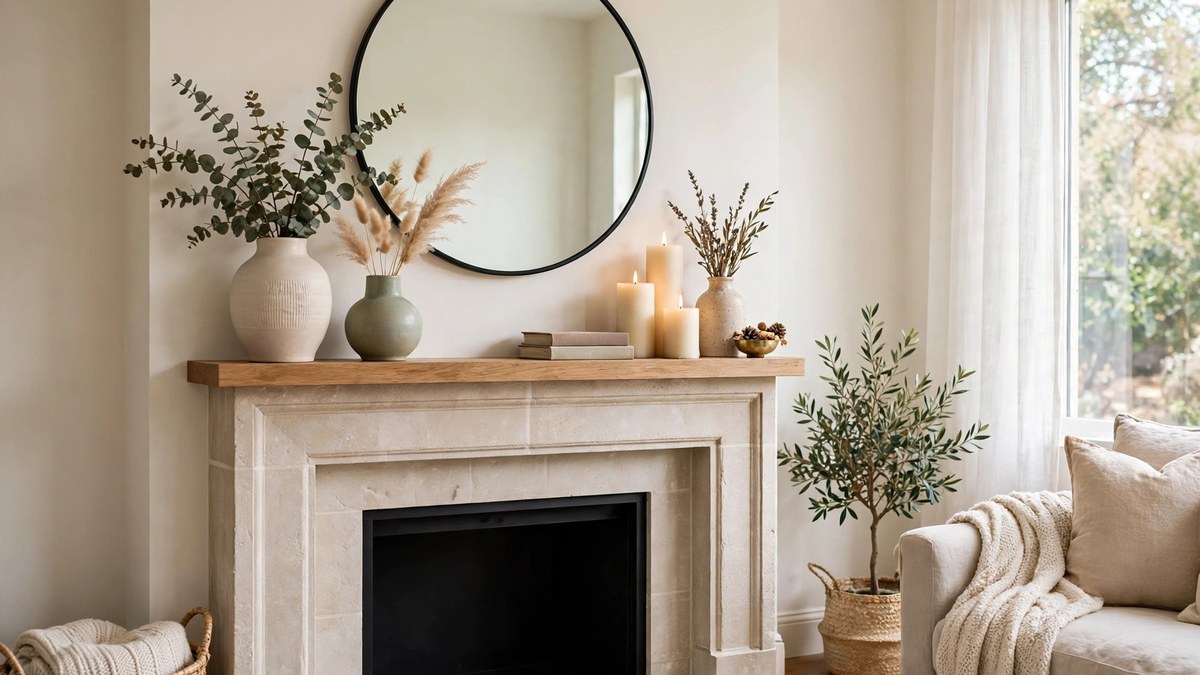
The space above the mantel is prime real estate, and fireplace wall decor ideas succeed or fail there. The classic anchors are a large mirror or a single substantial piece of art, sized at roughly two-thirds to three-quarters of the mantel’s width. A mirror reflects the room’s best light and any candles on the mantel; art brings color and personality. Either should hang or lean with its bottom edge a few inches above the mantel shelf, close enough to read as one composition.
Layering is the mantel’s native language. A large anchor at the back, a smaller framed piece leaned against it off-center, then objects in front at varied heights: candlesticks, a small plant, a stack of books, a sculptural object. Work in odd numbers and triangles of height, tall at one end, low in the middle, medium at the other end. Symmetry in pairs (matching sconces, matching urns) suits formal rooms; the relaxed, layered lean suits everyone else.
The walls flanking the fireplace deserve a decision too. Built-in bookcases or cabinets are the traditional, glorious answer, and they turn the whole wall into architecture. Without built-ins, balance the two sides with a chair and floor lamp on one side and a plant or basket on the other, keeping their visual weights comparable. Our guide to living room wall art ideas covers the heights, spacing, and hardware for the art side of this wall in full detail.
Decorative Fireplace Ideas for a Non-Working Firebox
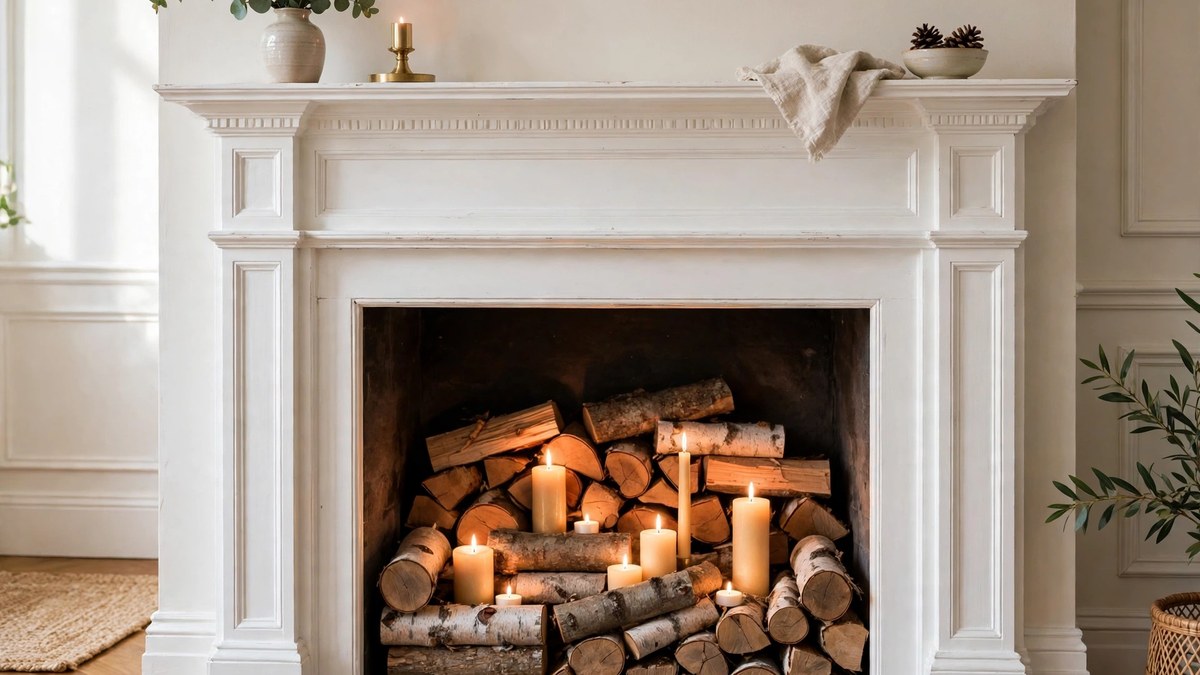
A fireplace that no longer burns is not a defect; it is a display case with excellent bones. The decorative fireplace ideas for these fireboxes start with a thorough cleaning, after which the interior can be painted matte black for a clean, shadowy depth, or painted the wall color for a softer, architectural look. Sealing the flue against drafts and debris comes first if it has not been done.
Then fill the space with intention. The most beloved treatment is a cluster of pillar candles at staggered heights on a tray or directly on the firebox floor; lit in the evening, they give the room genuine firelight with none of the chimney requirements. Battery-operated pillars on timers deliver the same glow for households that cannot do open flame. A close second is a stack of birch logs or a basket of logs, which reads as promise rather than absence, especially in rustic and Scandinavian rooms.
Beyond candles and logs, the firebox happily hosts a plant that tolerates low light, a stack of art books, a woven basket of blankets, or a small sculpture. What matters is that the space looks chosen. An empty black hole swallows the room’s light and attention; a styled firebox returns both. In rental homes with sealed fireplaces, this entire section is your permission slip: the hearth can be the prettiest square foot of the apartment.
Decorate Fireplace Hearth Areas With Intention
The hearth, the floor-level extension in front of the firebox, is the most overlooked styling surface in the room. When you decorate fireplace hearth space deliberately, you give the whole composition a finished base. The hearth’s first job in a working fireplace is safety, a noncombustible surface catching sparks and ash; in every fireplace, working or not, its second job is to ground the arrangement visually.
Style it asymmetrically. One side takes a tall element: a basket of logs, a pair of fireplace tools standing in their stand, a potted plant, or a lantern. The other side stays lower or empty, which keeps the composition from turning into two competing displays. A stack of beautiful firewood is both storage and sculpture; keep it neat, uniform in length if you can, and off the floor’s traffic path.
Materials matter underfoot. A hearth that matches the surround reads classic; a contrasting slab of slate, stone, or tile defines the zone crisply in modern rooms. If your hearth sits flush and invisible, a low border or a change of material at floor level can create the hearth line the room lacks. And keep the center of the hearth clear in a working fireplace, both for safety and so the fire itself remains the picture.
Inside Fireplace Decorating Ideas: The Firebox as a Display
Zoom in one level further, because inside fireplace decorating ideas treat the firebox interior as its own tiny room. For working fireplaces, the interior still matters nine months of the year and in every photograph: a handsome andiron set, a well-built log stack rather than a jumble, and a grate that suits the room’s style make the working hearth look composed even unlit. Painted firebrick or a cleaned natural brick interior frames the flame beautifully when winter comes.
For the off-season of a working fireplace, borrow the non-working playbook but keep it removable: a candle cluster on a tray that can be lifted out in one motion, or a plant that vacations elsewhere when the first cold snap arrives. Never leave anything flammable staged inside a firebox you might light on impulse; the off-season display must exit completely, every time, without exception.
For permanently non-working fireboxes, the interior can take paint, tile, or even a mirrored back panel that multiplies candlelight astonishingly well. Small LED string lights woven among logs give renters a fire-glow with a switch. However you style it, light is the ingredient that transforms the firebox from void to jewel, so give the little room its own source and let it glow after dark. If the cozy direction is your goal, our cozy living room ideas show how a glowing hearth anchors the whole room’s warmth.
Seasonal Styling: One Fireplace, Four Looks
The fireplace is the easiest place in the house to mark the seasons, because its structure stays fixed and only the dressing changes. Build a small seasonal kit for each quarter and store them labeled; the swap takes twenty minutes and the room feels newly decorated four times a year.
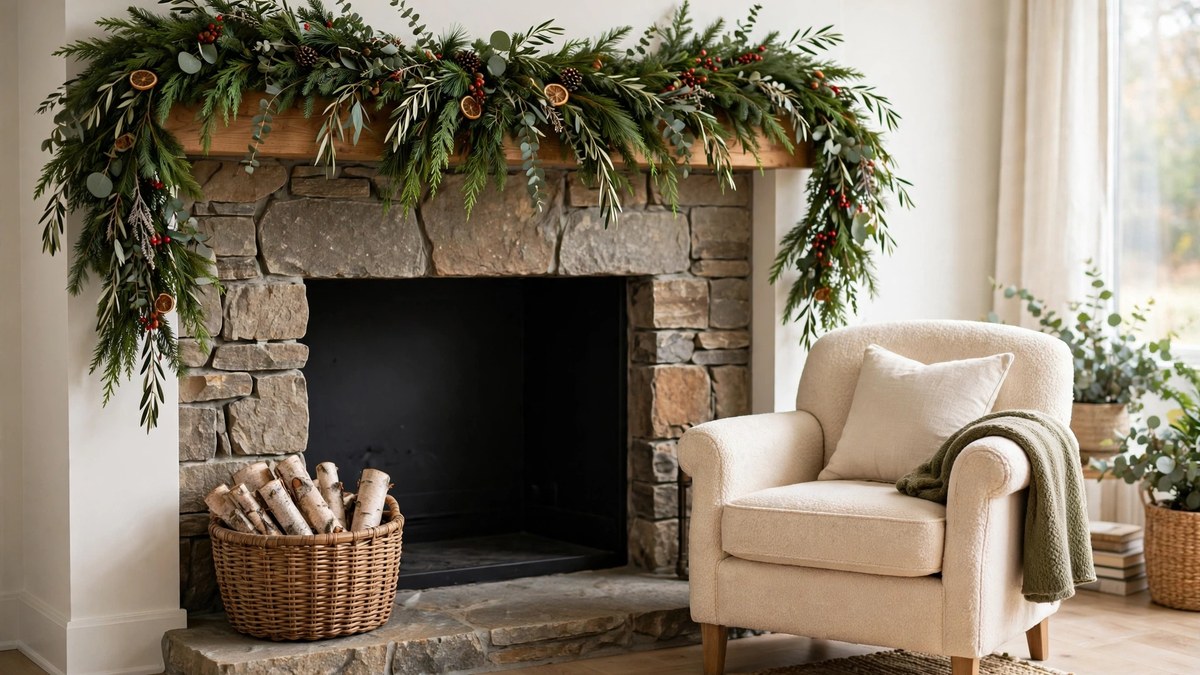
Spring wants air: a lighter garland or a simple vase of branches and early blooms on the mantel, candles in pale colors, the log basket swapped for a plant. Summer is the fireplace’s rest season: a styled firebox display, a screen treated as an object, botanical art above, and the mantel at its most edited. Autumn is the hearth’s home turf: layered textiles nearby, a fuller mantel with books, brass, and foliage tones, and the first real fires. Winter is maximal: garland, stockings if your household hangs them, candlelight everywhere, and the fire itself as the room’s evening entertainment.
Photograph each season’s version once you love it, and keep the photos in the storage bin with that season’s kit. Memory is an unreliable stylist, and the photo turns next year’s decorating into a quick copy instead of a fresh puzzle. Note what guests commented on and what felt like too much; the fireplace is a small enough composition that one season of notes will dial it in permanently.
The discipline is in the base. Keep the anchor piece, mirror or art, and the surround constant all year. Only the mantel dressing, the hearth accents, and the firebox contents rotate. That rotation is what makes each season’s version feel fresh rather than like a different room struggling to emerge from storage bins.
Safety Rules That Never Change
Style stops where safety starts, and the rules are few, clear, and non-negotiable. Keep anything that can burn, furniture, curtains, throws, baskets, and decorations, at a respectful distance from a working fire; common fire-safety guidance puts combustibles at least 3 feet from an open flame, and more for upholstered pieces near a wood fire that can throw sparks. A sound screen or glass doors are not decor choices for a wood-burning fireplace; they are equipment.
Garlands and stockings on the mantel must never drape into the firebox opening or hang where heat and rising sparks reach them, and the wise habit is to take stockings down before lighting a fire at all. Candles inside a non-working firebox should be treated with the same respect as candles anywhere: stable, contained, and never left burning unattended. Have the chimney inspected and swept on the schedule your local professionals recommend, typically annually for regular wood use, and keep a working carbon monoxide detector in the home if anything in it burns fuel.
Finally, know your specific appliance. Gas and electric units carry manufacturer clearances for the materials and objects around them, and those numbers outrank any photograph’s styling. Decorating inside those lines is not a limitation; it is what makes the pretty room a safe one to actually live in.
Common Fireplace Decorating Mistakes
The first mistake is the mantel as a shelf of everything: a dozen small objects in a row, each too little to see, together reading as dust-collecting clutter. Edit to a few larger pieces at varied heights. The second is scale failure above the mantel, a small mirror or picture stranded on a large chimney breast; size to the mantel, roughly two-thirds of its width or more.
Third is ignoring the firebox for most of the year, leaving a black void at the room’s center from April to October. Fourth is the TV default, mounting the screen above the mantel without a plan for viewing height, then designing nothing else on the wall. And fifth is forgetting that the fireplace is a system: surround, mantel, wall, hearth, and firebox styled in five different decades. Choose one era and palette story and let every part speak it.
Frequently Asked Questions
What can I put in a fireplace that does not work?
Clean and seal it first, then treat it as a display niche. The classic treatments are a cluster of pillar candles at varied heights, a neat stack or basket of birch logs, a low-light plant, or a stack of books. Paint the interior matte black for depth, or add a mirrored back panel to multiply candlelight.
How do I decorate a mantel without it looking cluttered?
Start with one large anchor, a mirror or artwork at about two-thirds the mantel’s width. Add a smaller leaned piece off-center, then a few objects at varied heights in odd-numbered groups. Leave bare space between groups. If you cannot see the mantel shelf itself in several places, there is too much on it.
Is it safe to hang a garland on the mantel?
Yes, if it stays on the shelf and clear of the firebox opening, and is kept away from heat and sparks. For a working wood fireplace, the safer habit is garland on the mantel’s front edge only, nothing draped near the opening, and stockings removed before any fire is lit. Battery lights avoid cord and heat issues in the greenery.
How high should art or a mirror hang above a mantel?
Its bottom edge should sit a few inches above the mantel shelf, typically about 3 to 6 inches, so the art and mantel read as one composition. Size the piece at roughly two-thirds to three-quarters of the mantel’s width. Leaning a large piece on the mantel achieves the same relationship without hardware.
Can I mount a TV above the fireplace?
You can, with caveats. Heat and a high viewing angle are the honest problems. Keep the screen as low as the mantel allows, consider a pull-down mount that brings it to eye level for viewing, and check the TV manufacturer’s heat guidance for your fireplace type. In many rooms, an adjacent wall or frame-style TV art mode is the happier solution.
What is the cheapest fireplace makeover with the biggest impact?
Paint. Whitewashing or painting dated brick, or painting a tired surround a deep charcoal, transforms the room for the cost of a can of paint and a weekend. Add a styled firebox with candles and a properly scaled mirror above the mantel, and the fireplace reads as a full renovation.
How do I style a fireplace in summer?
Give it the season off from fire duty and style it as a display: candles or a plant in the firebox, a screen treated as a decorative object, botanical or light-toned art above the mantel, and the log basket swapped for greenery. Keep the anchor pieces constant so the winter composition returns easily.
Final Thoughts
A fireplace rewards being treated as the room’s main composition: wall, surround, mantel, hearth, and firebox each styled in the same story, at the right scale, inside the safety lines. Working or not, modern or traditional, it can be the most beautiful square footage in your home. Start with the firebox and the space above the mantel; those two moves alone will change how the whole room feels.
