
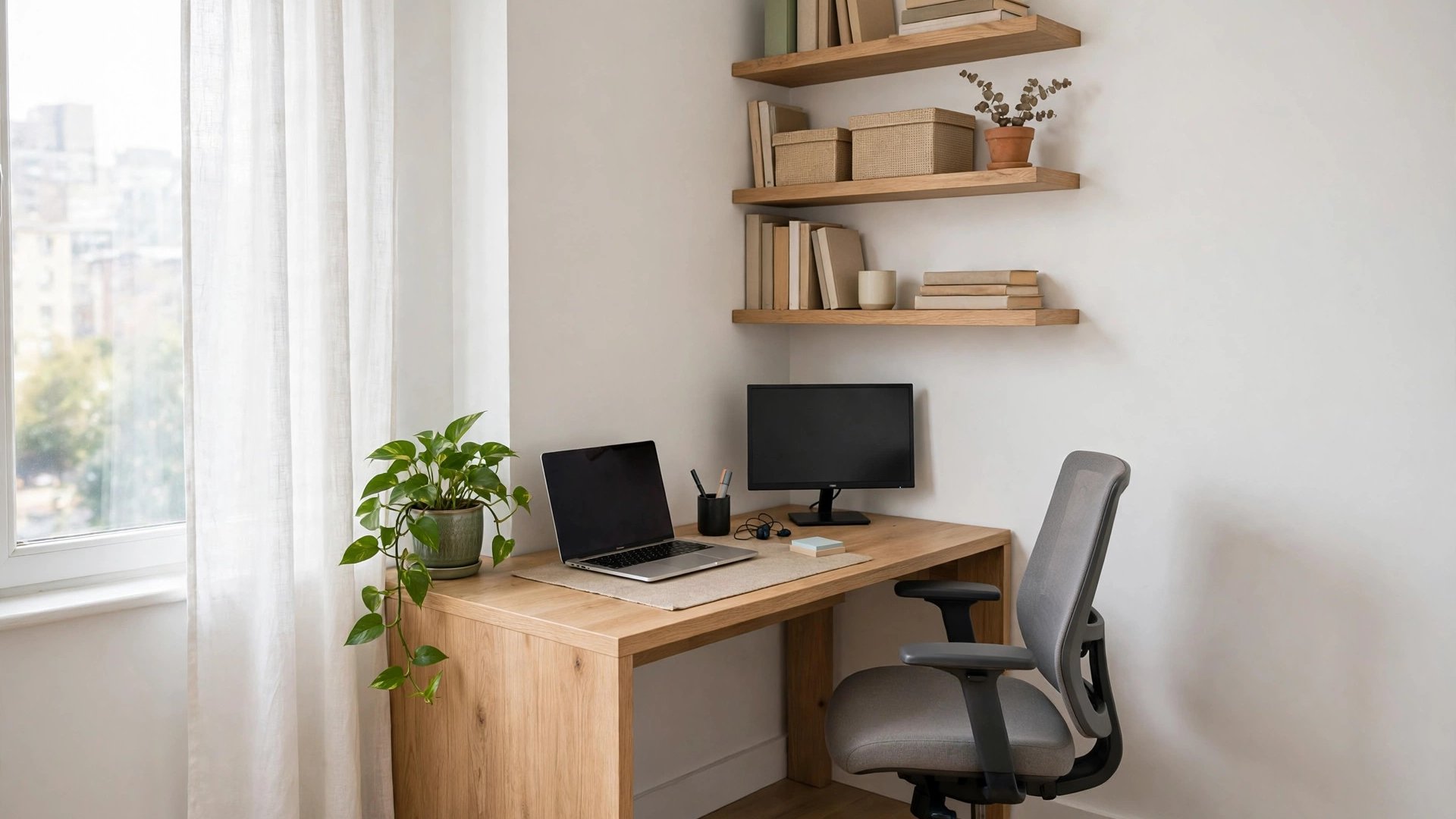

Working from home in a small apartment or a house without a spare room can feel like a daily compromise. You clear the dining table every evening, balance a laptop on the arm of the sofa, or take calls from a corner of the bedroom and never quite switch off. The good news is that square footage is not what makes a home office work. A well-planned workspace of even 15 or 20 square feet can feel calm, focused, and completely separate from the rest of your home.
The trick is to stop shopping for furniture first and start planning first. The best home office ideas small spaces can rely on share the same foundation: a defined footprint, furniture that earns its place, storage that goes up instead of out, and light that flatters the room. This guide walks through each of those pieces, from choosing your spot to hiding the cables, plus workable alternatives for homes where a dedicated office simply is not an option.
Start With the Space You Have, Not the One You Want
Before you buy anything, spend a few days noticing where you naturally work and where a desk could realistically live. A home office is simply a space set aside in a home for working, and it does not need four walls and a door. What it needs is consistency: the same spot, every day, so your brain learns that sitting there means focusing.
Measure the candidate spots honestly. A functional desk zone needs roughly 24 inches of depth for a worktop and about 36 inches of clearance in front of it for your chair and legs, though a wall-mounted drop-leaf desk can work in less. Note where the outlets are, where the windows fall, and which direction you will face. Facing a wall feels focused; facing the room feels social; facing a window is lovely but can mean glare on your screen in the afternoon.
Also check the unglamorous details. Is there a heating vent blasting the spot in winter? Does the afternoon sun turn it into a greenhouse? Is the Wi-Fi signal strong there? Ten minutes with a tape measure and a notepad now will save you from a desk that fits on paper but fails in real life.
Office Design Ideas for Small Office Layouts That Actually Flow
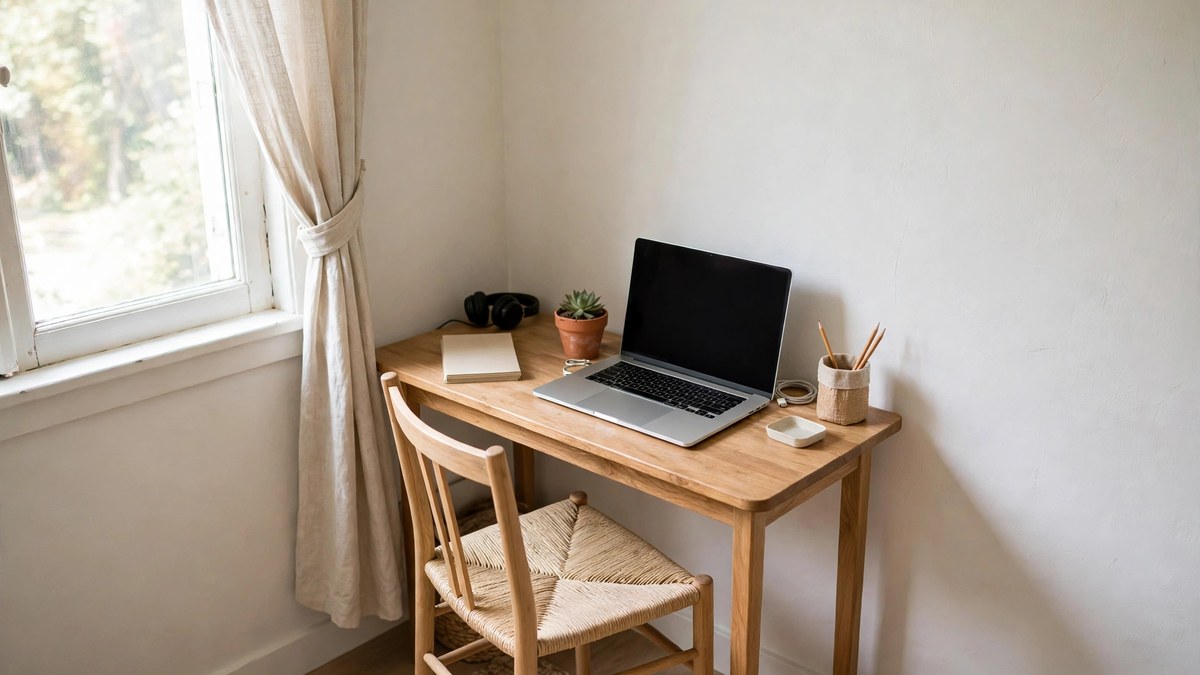
Once you know your footprint, layout is everything. The most reliable of all the office design ideas for small office setups is the single-wall layout: desk, chair, and one tall storage piece arranged along one wall, leaving the rest of the room open. It suits living rooms and bedrooms because the office reads as one tidy zone rather than furniture scattered everywhere.
A corner layout is the other small-space winner. An L-shaped or corner desk turns two walls into workspace and naturally creates a sense of enclosure, which helps concentration. Place the short return of the L where your printer, files, or a second monitor lives, and keep the main run clear for your laptop and notebook.
Whichever layout you choose, respect the flow of the room around it. Leave walking paths at least 24 to 30 inches wide, keep the office zone out of the main traffic line between door and sofa, and try to give yourself a view that is not the back of a door. Our guide to office decor ideas that transform workspaces goes deeper on styling the zone once the layout is set, and it pairs well with the planning here.
Pick a Desk That Earns Its Footprint
In a small office, the desk is the room. A standard desk is about 30 inches deep, but compact desks at 20 to 24 inches deep hold a laptop and monitor comfortably while giving you back precious floor space. Width matters more than depth for most people: 40 to 48 inches wide is a realistic sweet spot for one person working on a laptop with a notebook beside it.
Consider these desk styles, which consistently perform well in tight rooms:
- Wall-mounted drop-leaf desks fold flat when the workday ends, so the room returns to normal in seconds.
- Ladder desks lean against the wall and stack shelves above the worktop, combining desk and storage in one narrow footprint.
- Secretary desks close up completely, hiding papers, chargers, and clutter behind a fold-down front.
- Corner desks use the dead space where two walls meet and often offer more surface than a straight desk of the same width.
- Slim console tables double as desks in living rooms and look like furniture, not office equipment, after hours.
Whatever you choose, check the height. Most desks sit around 29 to 30 inches high, which suits most adults with an adjustable chair. If you are tall or petite, a height-adjustable desk, even a small manual one, is worth the modest extra cost because you will sit at it for thousands of hours.
Set Up Your Tech for Comfort in a Tight Space
Technology shrinks more easily than furniture, so choose gear that gives floor and desk space back. A monitor arm is the highest-impact upgrade: it lifts the screen to eye level, frees the patch of desk underneath for writing, and lets you push the screen back against the wall when you need the surface for paperwork. If a monitor is out of the question, a laptop stand plus a separate keyboard and mouse achieves most of the same posture benefits for much less money.
Posture matters more in a small office, not less, because a cramped setup tempts you to hunch over a laptop on the sofa or at the dining table. The essentials are simple: screen top roughly at or just below eye level, elbows at about 90 degrees, feet flat on the floor or on a footrest. A small cushion or a rolled towel behind your lower back can stand in for a lumbar pillow while you save for a proper chair.
Keep daily tech to a short list and store the rest. Headphones, a charger, and your laptop are the permanent residents; the second monitor cable, the webcam box, and backup drives can live in a drawer or a labeled box on the shelf. In a small space, every item you evict from the desk makes the whole office feel calmer.
Go Vertical: Shelves, Rails, and Wall Storage
Floor space runs out fast in a small office; wall space usually does not. Moving storage upward is the single change that makes a tiny workspace feel twice its size, because the floor stays clear and the room breathes.
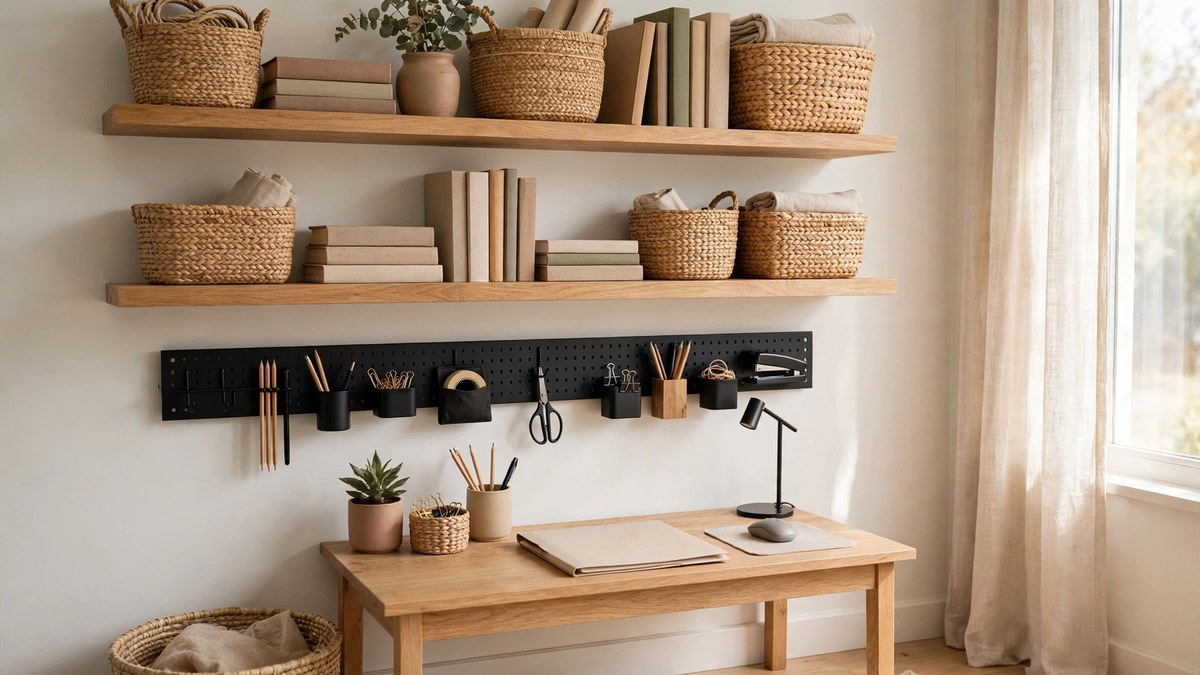
Floating shelves above the desk hold reference books, boxes, and the printer if it is compact. Install the lowest shelf about 18 to 20 inches above the desktop so you can work without ducking, and keep the heaviest items on the lowest shelf. A pegboard or rail system on the wall beside the desk keeps headphones, scissors, chargers, and notebooks visible but off the work surface.
Tall, narrow bookcases are another secret weapon. A case just 12 inches deep and 24 inches wide stores a surprising amount and can stand in the gap beside a desk or door. Use matching boxes or baskets on open shelves so the storage reads as decor rather than clutter, and leave one shelf partly empty for breathing room — a small plant, a framed photo, and nothing else.
Do not forget the two storage zones people overlook: under the desk and on the back of the door. A slim rolling cart or a stack of shallow drawers under the desk holds paper, chargers, and supplies within arm’s reach without touching your legroom much. An over-door rack with clear pockets swallows notebooks, cables, and stationery on the door of the room or the closet, completely outside the office footprint.
Lighting That Makes a Small Office Feel Bigger
Small rooms often have one overhead light, and working under it all day is tiring and unflattering on video calls. Layer your lighting instead. Aim for three sources: general light from the ceiling or a nearby lamp, task light aimed at your desk, and a little ambient light to soften shadows.
A slim desk lamp with an adjustable arm takes up almost no room and puts light exactly where you read and write. If the desk is too small even for that, a clamp-on lamp or a wall-mounted sconce above the desk does the same job with zero footprint.
For video calls, the goal is light on your face, not behind you. A small lamp or ring light positioned behind your laptop screen, at roughly eye level, makes a dramatic difference. Natural light is wonderful, but position your screen perpendicular to the window rather than facing it or backing onto it, so you get the brightness without the glare or the silhouette effect.
Colors and Finishes That Keep the Room Calm
Color will not add square feet, but it changes how big and calm a workspace feels. Light, low-contrast colors on walls and large furniture pieces make a small office recede visually, which is why so many successful small offices use warm white, pale greige, or soft sage as a base.
That does not mean the room has to be bland. Choose one accent — a deep green desk chair, a rust-colored cushion, navy storage boxes — and repeat it two or three times so the scheme feels deliberate. Matching finishes matter too: if your desk is white oak, choosing shelf brackets and a lamp in the same black metal ties the zone together instantly.
A small rug under the desk and chair is another quiet zoning device. It softens the sound of chair wheels, warms the floor in winter, and draws an invisible boundary that tells everyone — including you — where the office begins and ends. Choose a low-pile rug slightly wider than the desk so the chair rolls without catching an edge, and pick a pattern busy enough to disguise the occasional coffee drip.
If your office shares a room, paint is a clever zoning tool. Painting the wall behind your desk in a deeper shade, or even just the inside of a closet office, marks the territory without a divider. Our roundup of office paint color ideas includes several small-room-friendly shades if you want to explore that route before committing.
Hide the Clutter: Cables, Paper, and Everyday Supplies
Nothing shrinks a small office faster than visual clutter. A desk covered in cables, sticky notes, and paper piles makes the whole zone feel chaotic, and the mess is always in your eyeline.
Start with cables. A cable management tray screwed under the desk holds the power strip off the floor, and a few Velcro ties corral the cords. Route everything to one side so a single bundle drops to the outlet — one tidy line instead of a spiderweb. Wireless peripherals, where your budget allows, remove two or three cables entirely.
For paper, go nearly paperless if you can, and give what remains one home: a single inbox tray or a slim vertical file holder, not a stack. Apply a simple rule — paper lands in the tray, gets actioned or filed on Friday, and the tray empties weekly. Supplies live in a drawer, a lidded box on the shelf, or a rolling cart you can tuck under the desk at night. The goal is a five-minute reset that returns the desk to a clean rectangle every evening.
Home Office Alternatives When There Is No Spare Room
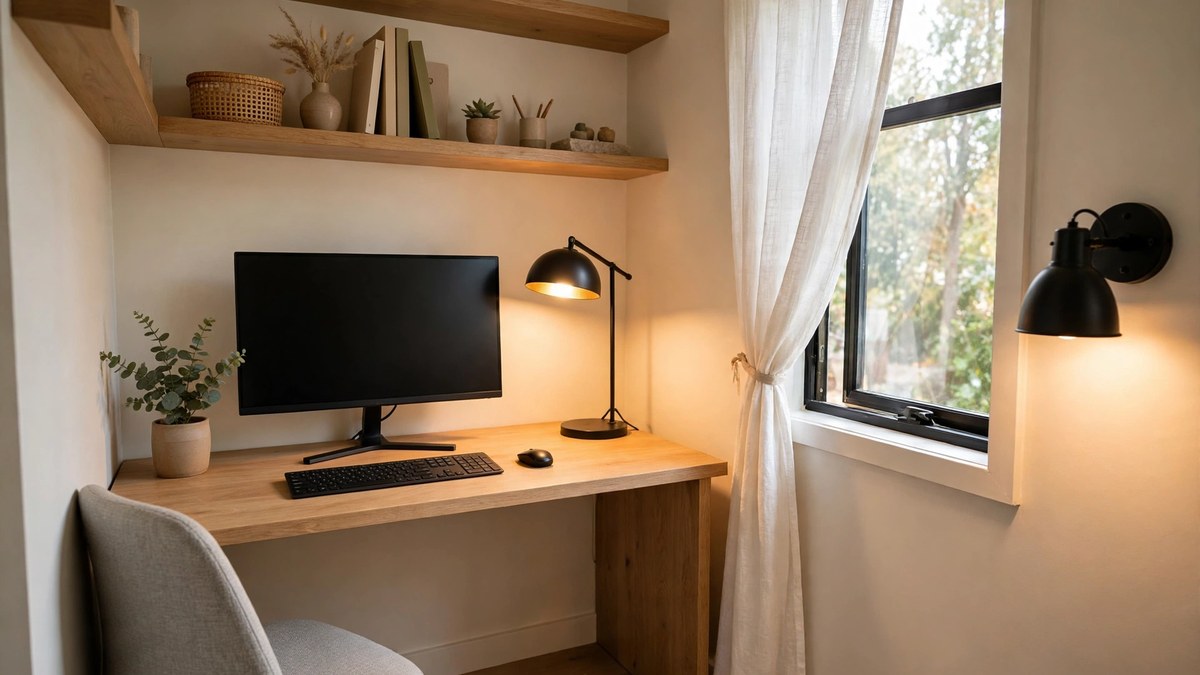
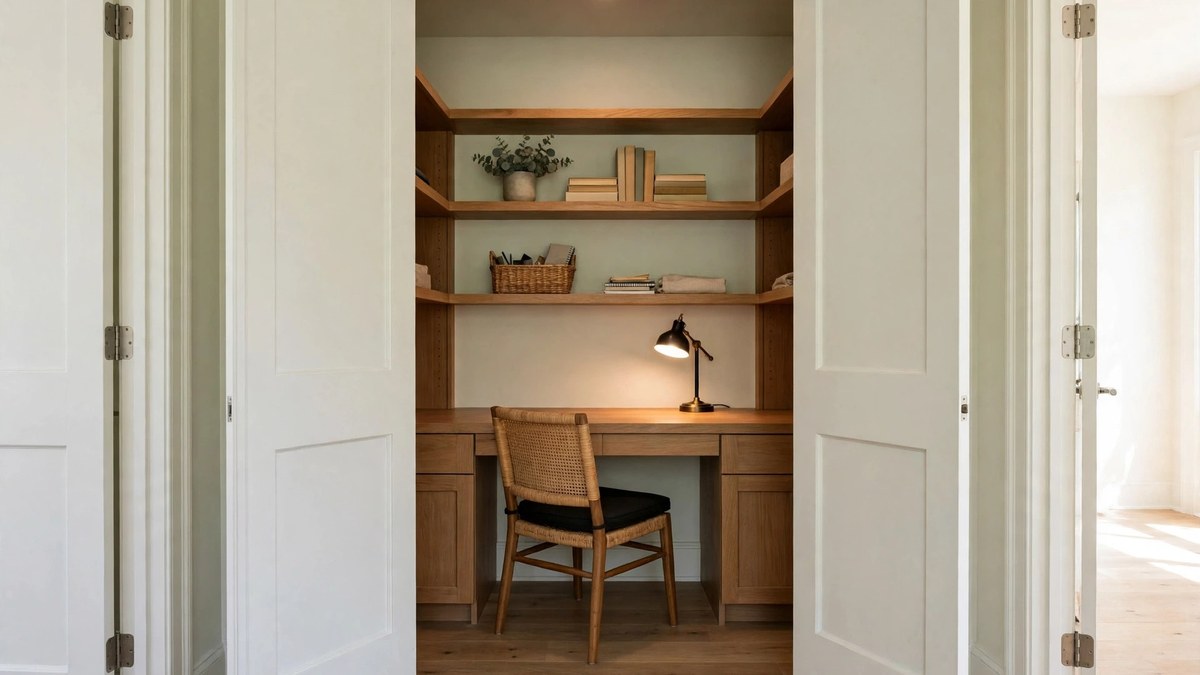
Sometimes there is genuinely no corner to claim, and that is where home office alternatives earn their place in this guide. The most famous is the closet office, or “cloffice”: remove the closet doors or keep them, fit a worktop at desk height across the width, add a shelf above and a clamp lamp, and you have a workspace that closes away at night. A standard reach-in closet is often 24 inches deep, which is exactly desk depth.
Other alternatives work surprisingly well. A wide hallway landing can hold a slim desk if it does not block the route. The space under a staircase takes a compact desk and shelves beautifully in many homes. A spare corner of the kitchen near a window can serve as a morning office if you style it like the room it is in. Even a large wardrobe or armoire can be converted: worktop inside, laptop on a shelf, doors closed at six o’clock.
The principle behind every alternative is the same as for a full room: a fixed spot, a work surface at the right height, somewhere for supplies, and a way to signal that work is over — closing doors, folding a leaf, or draping a cloth over the monitor all work.
Small Office Ideas for Every Budget
A small workspace is actually an advantage when money is tight, because there is simply less to buy. Here is how the spending usually breaks down, using typical price ranges rather than promises:
- Under about $100: a clamp lamp, cable tray, wall shelf, and a secondhand chair cushion can transform an existing table into a workable office.
- Around $100–$300: add a compact or wall-mounted desk and one tall bookcase, buying the bookcase used if possible.
- Around $300–$600: step up to a better ergonomic chair (often the smartest spend of all), a monitor arm, and a second screen if your work needs it.
- Above $600: a height-adjustable desk and enclosed storage turn the zone into a long-term, professional setup.
Notice what is missing from that list: decor comes last. In a small office, function is the decor, because a workspace that works beautifully also tends to look calm and intentional. Save the framed prints and plants for the finishing pass, once the desk, chair, light, and storage are right. If you are mapping the whole room rather than one corner, our home office layout ideas guide can help you test arrangements on paper first.
Common Mistakes to Avoid in a Small Home Office
The first mistake is buying a desk that is too big because it looked reasonable in a showroom. Measure your space, tape the desk’s outline on the floor with painter’s tape, and live with the outline for a day before ordering. The second is ignoring the chair: a dining chair is fine for a week, but months of eight-hour days will punish your back. If the budget forces a choice, spend on the chair before the desk.
Lighting mistakes are just as common. Working with a bright window directly behind you makes you a silhouette on every call, and a single harsh ceiling light creates shadows that tire your eyes. A third mistake is letting the office spread: the printer migrates to the kitchen counter, files colonize the coffee table, and soon the whole home feels like work. Keep everything inside the zone you defined, even if it means one more shelf.
Finally, do not skip the end-of-day reset because the office is small. Two minutes of clearing the desk is what keeps a small workspace pleasant instead of oppressive — and it is the closest thing a corner office has to a commute home.
Frequently Asked Questions
How much space do I really need for a small home office?
Less than most people expect. A desk 40 to 48 inches wide and 20 to 24 inches deep, plus room for a chair, fits into roughly 15 to 25 square feet. A closet, a hallway nook, or one wall of a bedroom can hold that comfortably if the rest of the setup stays compact and vertical.
What is the best desk for a very small office?
Wall-mounted drop-leaf desks and slim ladder desks are hard to beat because they minimize floor footprint and add storage. If you prefer a freestanding desk, choose one around 24 inches deep with open legs rather than solid panels, so the room feels lighter and you can tuck a rolling cart or file box underneath.
How can I make a small home office in a rental without drilling holes?
Use clamp-on lamps and shelves that grip the desk edge, tension-rod shelving inside closets, over-door organizers, and freestanding ladder shelves that lean rather than mount. Command strips and picture-hanging strips handle light frames and pegboards in many rentals, but always check your lease and test strips in an inconspicuous spot first.
Where should I put a small office in a one-bedroom apartment?
The living room corner farthest from the television is usually the best candidate, because it separates work from sleep. A wide entryway, a dining nook you rarely use, or a bedroom closet are strong backups. Avoid the bedroom itself if you have any alternative, since blurring sleep and work areas affects rest for many people.
How do I keep a small home office from looking cluttered?
Limit the desktop to what you use daily, move storage to the walls, and corral cables into one tray or bundle. Use closed storage — lidded boxes, a cabinet, a desk with a door — for anything unsightly, and repeat one or two colors across accessories so the zone looks planned rather than accumulated.
Is a monitor worth it in a tiny workspace?
For most desk jobs, yes. A single monitor on an arm actually saves space compared with a laptop on a stand, because the arm lifts the screen off the desk and frees the surface beneath it. If space is truly extreme, a laptop stand plus a wireless keyboard gets you most of the ergonomic benefit in less room.
Can two people share one small home office?
It works best with staggered hours or one person using a secondary spot, such as a fold-down desk in another room, for calls. If you truly share the same hours, an L-shaped corner desk with clearly divided sides, two task lamps, and a house rule about headphones will keep the peace surprisingly well.
Conclusion
A small home office succeeds through planning, not square footage. Define one consistent spot, choose a desk that fits it honestly, push storage up the walls, layer your lighting, and keep the whole zone tidy enough to reset in minutes. Add the alternatives — a closet, a landing, an armoire — and almost any home can offer a workspace that feels separate, calm, and genuinely yours. Start with the tape measure today, and let the furniture follow the plan.
