
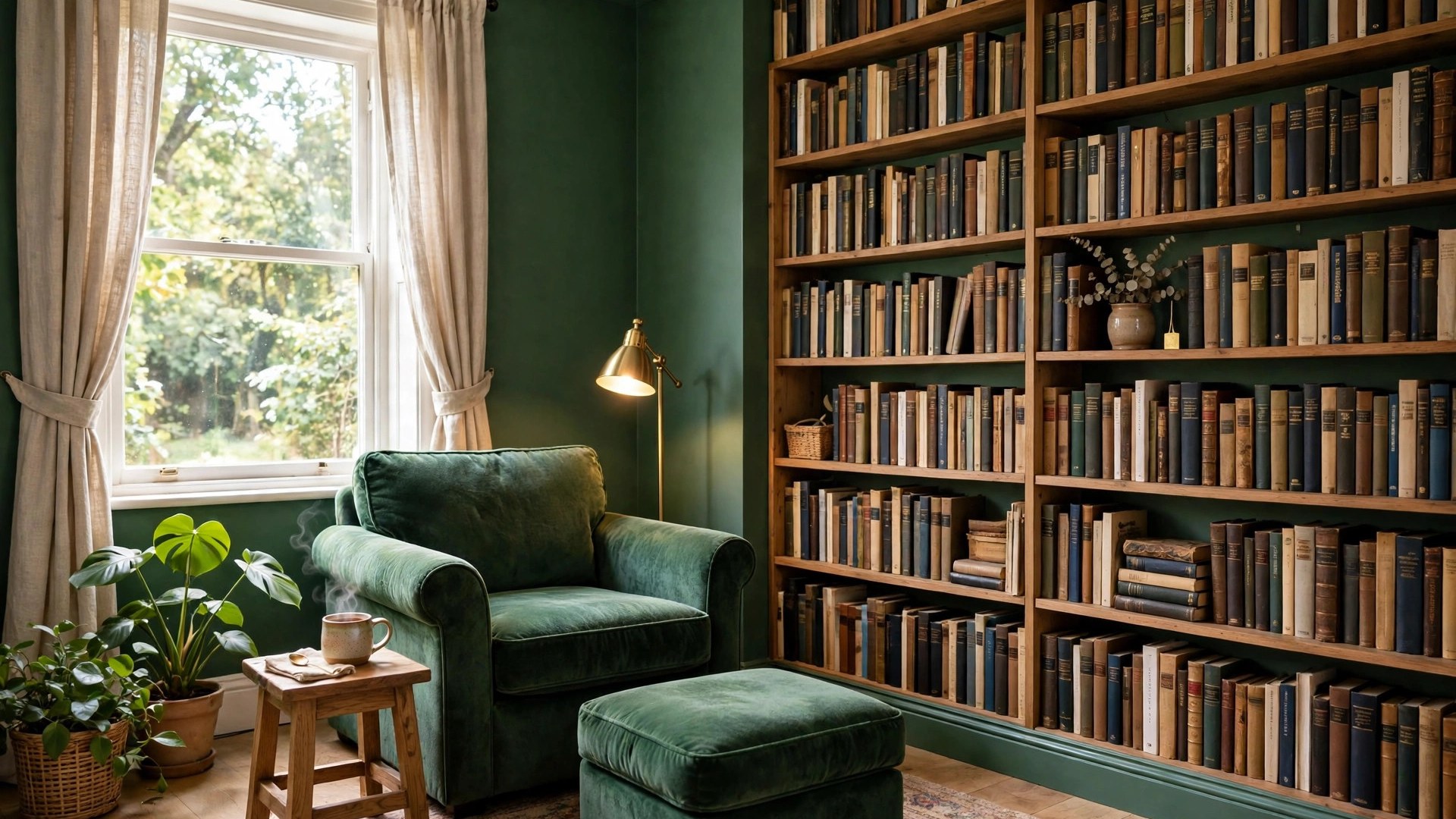

Every house seems to have one: the little room that is too small for a bedroom, too out of the way for an office, and currently employed as a storage unit for things nobody has decided about. That room is a den waiting to happen — and a den, done well, is often the most loved room in the home precisely because it is small, enclosed, and unapologetically comfortable.
The word itself tells the story: a den is a small room for relaxing, reading, watching, and retreating — a burrow, not a showroom. Decorating a small den is therefore a different exercise from decorating a living room. Comfort outranks impressiveness, cozy is a feature rather than a flaw, and every piece must fit both the floor plan and the mood. This guide walks through choosing the den’s job, the furniture that fits, the colors and light that make it glow rather than gloom, and the finishing touches that will have you closing the door with a sigh of contentment.
Decide What Your Den Is Really For
A small den cannot be everything, and the rooms that disappoint are the ones that try. Choose one primary job and let everything else be a bonus. The usual candidates: a reading and quiet room, a television and film room, a music room, a games room, a hobby and craft room, or a hybrid retreat for whoever claims it after dinner.
Let the primary job drive the first purchase. A reading den starts with the chair and the lamp. A film den starts with the screen and seating distance. A games den starts with the table. This sounds obvious, yet most failed dens began with a sofa someone got free, around which the room never quite organized itself.
Also decide who the den is for. A family den needs washable everything and seating for sprawling. A personal retreat can be more precious: the good armchair, the delicate lamp, the shelves of first editions. And agree on the screen question early — a den without a television is a genuinely different, quieter room, and many people discover it is the one they actually wanted.
Write the decision down as a one-line brief — “a reading and music room for two, no screens, evenings” — and tape it inside a cupboard door. It sounds precious, but that sentence will settle a dozen shopping arguments over the coming months, because every candidate purchase can be tested against the room’s stated purpose instead of against someone’s passing enthusiasm.
Measure First: The Small Den Planning Checklist
Small rooms forgive nothing, so measure before you dream. You need the room’s length and width, the ceiling height, the door’s position and swing, window sizes and positions, and the location of outlets and any radiators or vents. Sketch it on graph paper, one square per foot, and cut out paper furniture to scale — it is faster and cheaper than returning a sofa.
Run through this checklist before buying anything:
- Seating footprint: does the main chair or sofa fit with at least a few inches to spare on each side?
- Viewing or working distance: is there room for the screen at a comfortable distance, or the desk at a comfortable depth?
- Walkway: can you cross the room and open the door fully without sidling?
- Storage wall: which wall can take shelves without crowding the seating?
- Light plan: where will the lamp live, and is there an outlet within reach of it?
Tape the main furniture outlines on the floor and live with them for a day. In a small den, three inches is a meaningful measurement — the difference between a room that flows and one you squeeze through sideways.
Furniture Ideas for Small Living Room Dens That Earn Their Place
The furniture ideas for small living room dens that actually work share three traits: honest scale, legs that let the floor show, and at least one double job per piece. Start with seating — it is most of the room. A loveseat around 60 to 72 inches usually beats a full sofa; an apartment-sized sofa with slim arms beats both if the room is very tight.
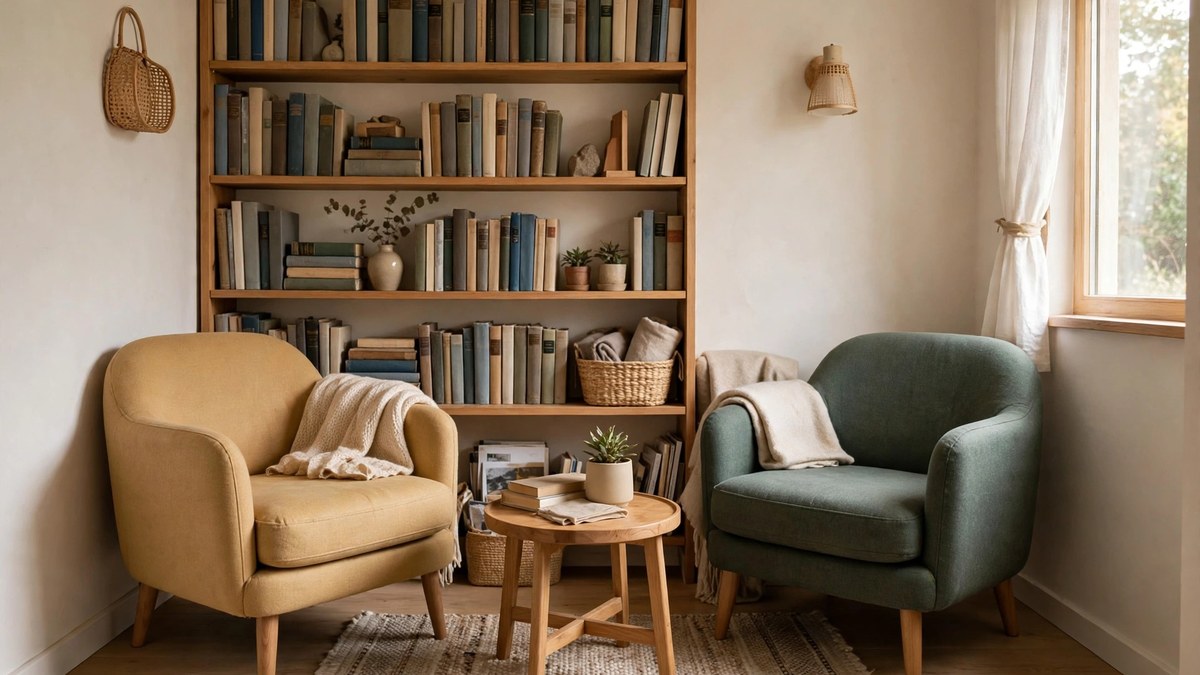
Alternatively, skip the sofa entirely. Two excellent armchairs with a small table between them can seat conversation better than a loveseat, feel more den-like, and rearrange easily. A chaise or a reading chair with an ottoman suits the solo retreat beautifully. Whatever you choose, sit in it before buying if you possibly can — a den chair is a long-term relationship.
For surfaces, think nesting tables, a slim console behind the seating, or a storage ottoman that serves as coffee table, footrest, and blanket box in one. A small desk or writing table can claim one wall if the den doubles as an occasional office; choose one that looks like furniture, not equipment. And take a cue from the tv room furniture ideas in our collection — media furniture in small rooms should be low, shallow, and closed, so screens and gear never dominate the space.
Seating That Invites You to Stay Awhile
In a den, seating is not furniture; it is the entire point. Prioritize depth and softness over style points: a chair you can curl into sideways, with a cushion that supports reading for an hour. Add the layers that turn a seat into a nest — a throw within arm’s reach, a cushion for the lower back, a footrest or ottoman at the right height.
Position seating for the room’s job and its best feature: facing the screen for film, angled toward each other for conversation, turned to the window for reading light and the view. Leave one seat with a lamp directly beside it; that will become the room’s throne, and every household member will quietly compete for it.
If the den must occasionally seat more people than it holds chairs for, solve it with furniture that borrows well: a bench or a pair of floor cushions that live in a closet, or the ottoman pressed into service. Do not permanently furnish for the maximum crowd — furnish for the daily two or three, and let guests be a pleasant squeeze.
Test the main seat like you mean it. Sit in your chosen chair in the shop for a full ten minutes with a book if you can; short sits lie. At home, the chair test is simpler — if you find yourself choosing it over every other seat in the house, including the sofa, the den has its anchor and the rest of the room can be arranged in orbit around it.
Color and Lighting for Cozy, Not Cave-Like
Here is the small den paradox: the pale colors that make other small rooms feel bigger can make a den feel unfinished, while deep colors often make it feel intentional, cocooning, and luxurious. A den is the room to be brave in — deep green, navy, warm charcoal, oxblood, or a rich warm neutral on all four walls, ceiling included if you are feeling bold.
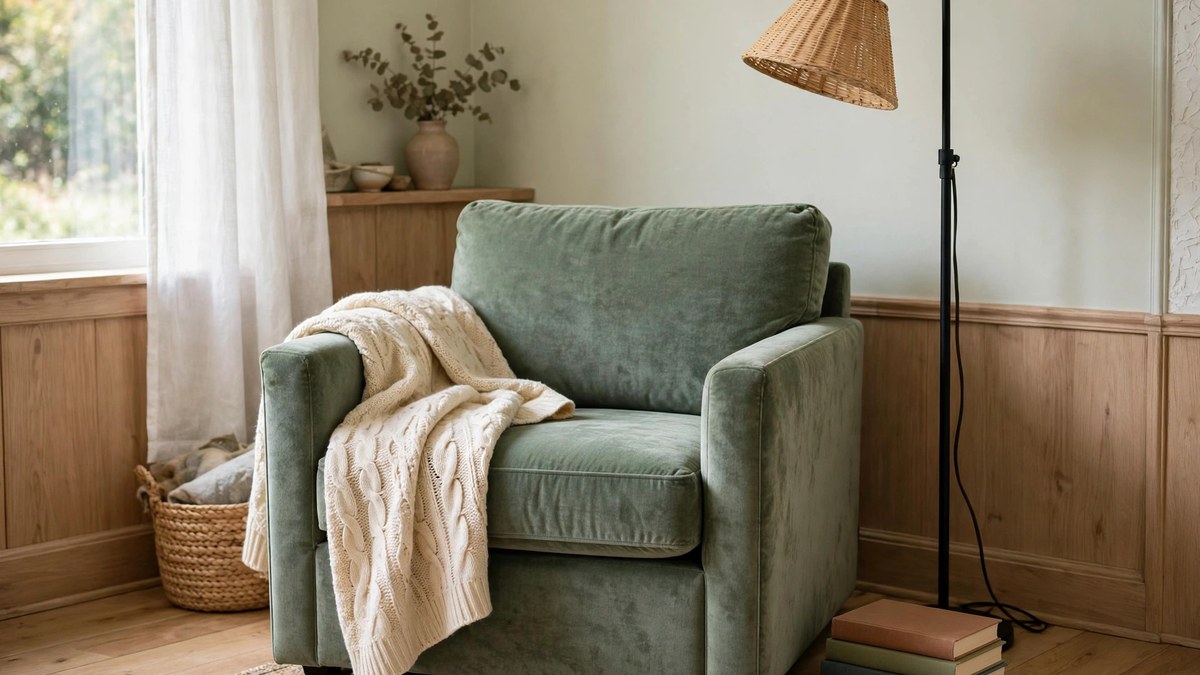
The trick to keeping dark cozy rather than cave-like is light and contrast. You need warm lamplight in at least two places, at different heights, plus lighter textiles to lift the scheme: cream cushions, a pale throw, a rug with warmth in it. Gloss or satin paint finishes bounce a little light and make deep colors glow; flat matte can look chalky under low light.
Layer the lighting like this: one soft ambient source (a ceiling light on a dimmer or a shaded floor lamp), one task light beside the reading seat, and one accent — a picture light, a small lamp on the bookshelf, candles for the evening. Keep bulbs warm, around 2700K. A den should feel like dusk at its best: golden, low, and kind. The cozy living room ideas on this site use the same palette logic at family-room scale if you want to carry the mood through the house.
Storage and Surfaces in a Room With No Spare Inches
A small den stays serene only if everything in it has a home. Begin with the wall of storage: a bookcase, built-in or freestanding, on the wall that can spare the depth. Books are the den’s natural decor — they insulate sound, warm the look, and give the room its personality — so let them be the wallpaper of at least one wall.
Then close the storage for everything less lovely: remotes, chargers, games, craft supplies, the router. A cabinet, a lidded basket per person, or drawers in the media console will do. Surfaces should hold almost nothing by default: the current book, the current drink, one beautiful object. A den coffee table buried in stuff stops being relaxing in direct proportion to the pile.
Use the forgotten inches: hooks inside the door for throws or headphones, a magazine sling beside the chair, shallow shelves in the gap beside the window, a tray that corrals the small daily items into one movable unit. The rule is that tidying the den should take three minutes, because everything returns to a home within arm’s reach of where it is used.
Decorating the Walls, Windows, and Ceiling
Den walls can carry more than living room walls can, because the room is a retreat rather than a thoroughfare. A full wall of bookshelves is the classic. Beyond that, consider a gallery of personal things — framed maps, family photos, album covers, art you love that matches nothing else in the house. The den is where taste can be eccentric.
Wood paneling, or a convincing panel-effect with trim and paint, suits dens beautifully and adds the architectural weight small rooms lack. If that is too much commitment, one wall in a textured wallpaper or a deep color, with the others a warm neutral, gives most of the effect.
Windows in dens usually want softness and control: lined curtains that close fully for film-watching, or blinds plus curtains for both privacy and glow. Hang curtains close to the ceiling to lend the little room some height. And do glance up: a ceiling painted the wall color or a shade deeper completes the cocoon, while a bright white ceiling can visually chop the room. Small dens, like small sitting room decor ideas, live or die on these enveloping details.
Dens That Double as Guest Rooms or Offices
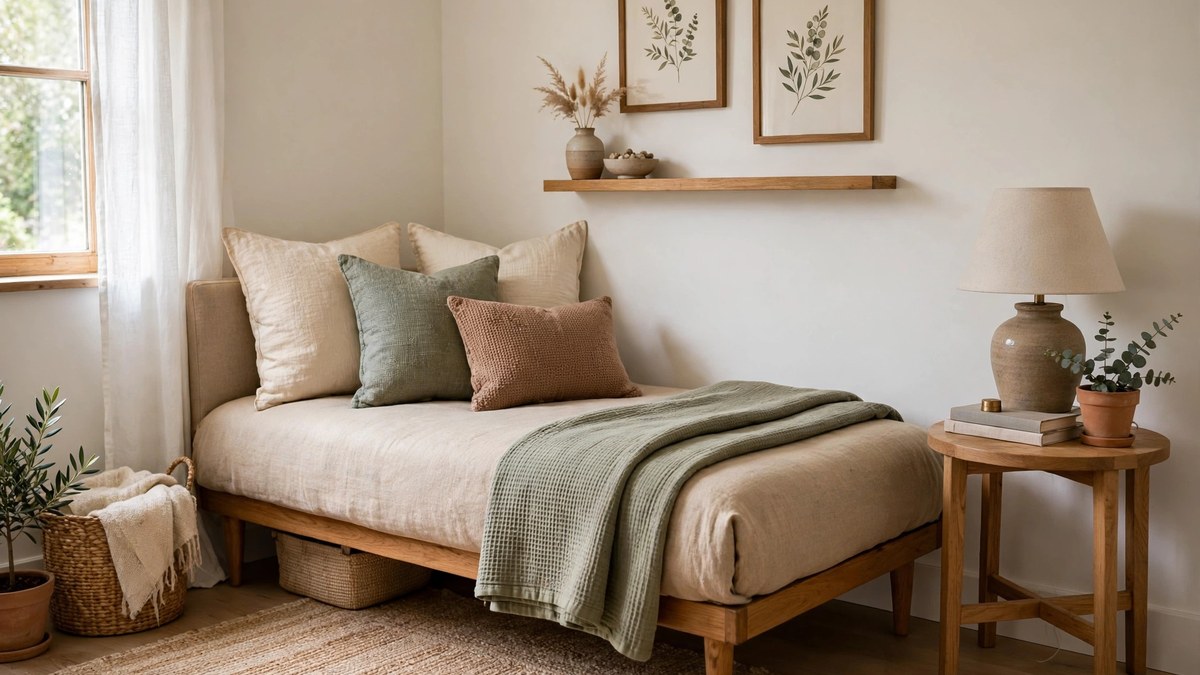
Many small dens must moonlight, and the trick is furniture that changes jobs gracefully. For guests, a quality sofa bed or a daybed with a proper mattress topper beats an air mattress on the floor by a wide margin, and a small set of guest supplies — folded towels, a spare charger, an empty drawer — can live in a labeled basket in the closet.
For office duty, a writing desk or a secretary that closes up keeps work from colonizing the retreat. If you work in the den daily, be strict: work equipment gets one zone and one closed home, and it shuts away at the end of the day so the den can be a den again by evening. Zones matter more, not less, when a room has two jobs.
What does not work is the permanent pile — the desk buried under craft supplies, the guest towels living on the reading chair. Dual-purpose rooms survive on quick conversions: if switching the room’s job takes more than ten minutes, you will stop switching, and one of the jobs will quietly die. Design for the ten-minute changeover.
Styling Touches That Make It Feel Finished
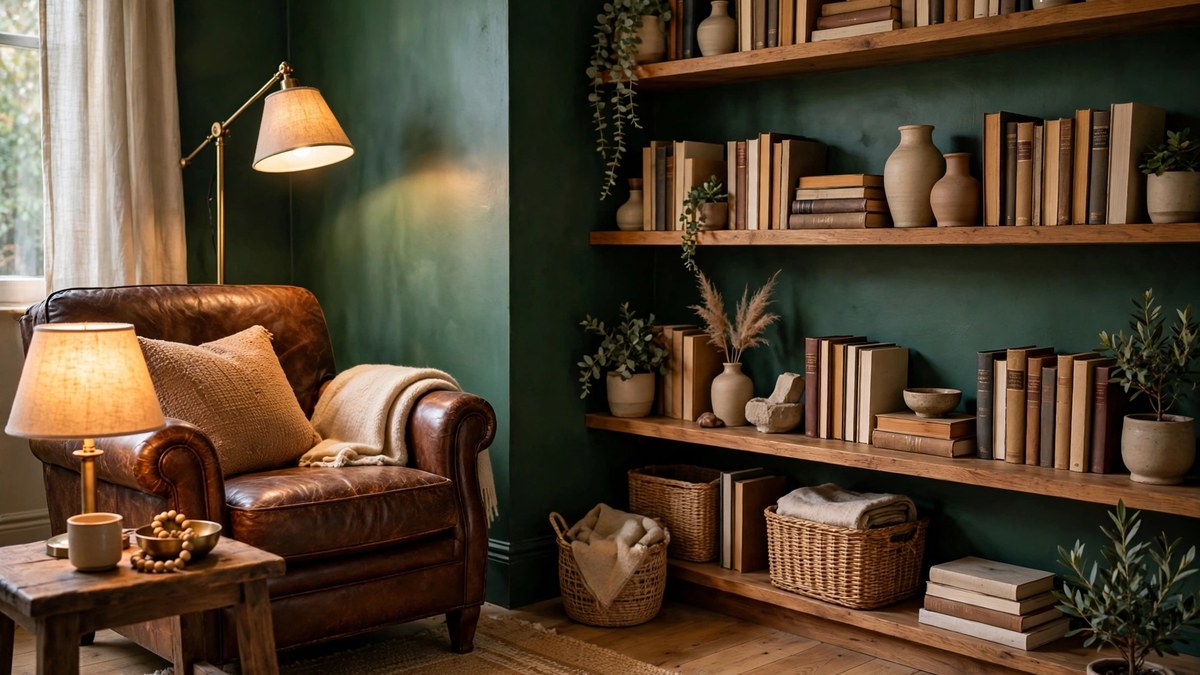
The last layer is what turns a fitted room into a loved one. Add something alive: a plant that tolerates the light you have, or a vase that gets fresh stems occasionally. Add something personal and specific: the framed ticket stub, the inherited lamp, the map of the place you met. Dens should be autobiographical.
Attend to the senses beyond sight. A rug thick enough to feel good under bare feet. A throw with real weight. A candle or a small speaker for the evening soundtrack. A side table at exactly elbow height for the drink. These are not decorations so much as comforts, and in a den comfort is the entire aesthetic.
Finally, give the room a scent and a sound signature if you can: the candle you always light, the playlist that means the day is done. Walking into a room that smells and sounds like rest is the whole promise of a den, kept.
One last styling habit: rotate a little. Swap the throw for a lighter one in summer, move a different stack of books to the table, change the art seasonally if you enjoy it. A den that evolves slightly never goes stale, and its owner keeps noticing — and loving — it, which is the entire point of having one.
Budget Den Ideas: Comfort Without the Splurge
A den is the cheapest room in the house to do well, because so much of its magic is atmosphere rather than merchandise. Paint is the first bargain: one or two gallons of a deep color will transform the room more completely than any furniture swap, and dens forgive bold choices that would overwhelm a living room.
Secondhand furniture shines here, too. Armchairs, bookshelves, side tables, and lamps are the easiest pieces to find used in excellent condition, and a den’s eclectic, personal mood forgives — even celebrates — a collected look. Spend your real money in exactly two places: the main seat, because you will live in it, and one good lamp, because light is half the room.
The finishing comforts cost almost nothing: a stack of library books, a throw you already own moved from another room, candles, a plant split from one you have. People routinely spend hundreds decorating a den and miss that its most important ingredient — a door that closes on a comfortable chair, warm light, and quiet — was nearly free.
Common Small Den Mistakes to Avoid
The biggest mistake is overscaling the sofa — a giant sectional in a tiny den leaves room for nothing else, including the people. Second is treating the den as the house’s overflow storage; a retreat cannot share walls with the hoard. Clear it completely before you decorate, and let nothing move back in without a job in the room.
Third is lighting it like a kitchen, with one bright ceiling light and no lamps; dens die under overhead glare. Fourth is skipping soft surfaces: a small hard room echoes, and echo is the opposite of cozy — rugs, curtains, cushions, and books are acoustic treatment wearing a prettier name.
Fifth is furnishing for imaginary crowds or habits: the eight-person games table in a room where two people read. Decorate the den for the evenings you actually have, and it will be used every day instead of admired twice a year.
Frequently Asked Questions
How small can a den be and still work?
A room around 8 by 10 feet can make a lovely den for one or two people: one great chair or a loveseat, a small table, a lamp, and shelves. Even smaller spaces — a wide alcove, a landing, a converted closet — can work as reading dens if the chair fits and the light is kind. The job matters more than the square footage.
What is the best color for a small den?
Deep, warm colors are the classic den choice — forest green, navy, warm charcoal, burgundy, or a rich taupe — because the room’s purpose is cocooning, not impressing. Balance them with warm lamplight and pale textiles so the room glows rather than glooms. If dark walls worry you, try them on one or two walls first with the others a warm off-white.
Should a small den have a TV?
Only if watching is genuinely one of the den’s main jobs. A television brings black-screen dominance, seating fixed in one direction, and a stream of gear to store. Many of the happiest dens are deliberately screen-free — books, music, games, conversation — and feel more restful for it. If you do include one, size it to the viewing distance and hide the peripherals in closed storage.
What furniture is essential in a small den?
One truly comfortable seat per regular user, a surface beside each seat for a drink and a book, one good lamp per reading seat, and storage for the room’s activities — shelves for books, closed storage for gear. Everything beyond that list is negotiable; everything on it is not.
How do I make a small den feel cozy?
Layer light and texture: warm lamps at different heights instead of one ceiling light, a rug, curtains, cushions, throws, and books as decor. Choose deep or warm colors, keep surfaces nearly clear, and add one living or personal element — a plant, a framed memory. Cozy is mostly the absence of glare, echo, and clutter.
Can a small den work as a guest room too?
Yes, with a quality sofa bed or daybed, a basket of guest supplies, and a layout that converts in under ten minutes. Keep your den gear in closed storage so guests do not feel they are sleeping in your hobby pile, and leave them a clear surface, a lamp, and an empty drawer — small kindnesses that make a small room feel generous.
How do I keep a small den tidy?
Give everything a home within arm’s reach of where it is used, default surfaces to nearly empty, and build in closed storage for the unattractive essentials. A three-minute reset — books shelved, throws folded, cups out — after each use keeps the room perpetually ready, which is what makes people actually use it.
Conclusion
Decorating a small den is the most forgiving project in the house, because the room’s smallness is its charm. Choose one job, measure honestly, pick furniture that fits and invites lingering, wrap it in deep color and warm lamplight, and finish with the personal touches that make it unmistakably yours. Do that, and the spare little room nobody knew what to do with becomes the door everyone closes behind them with relief.
