
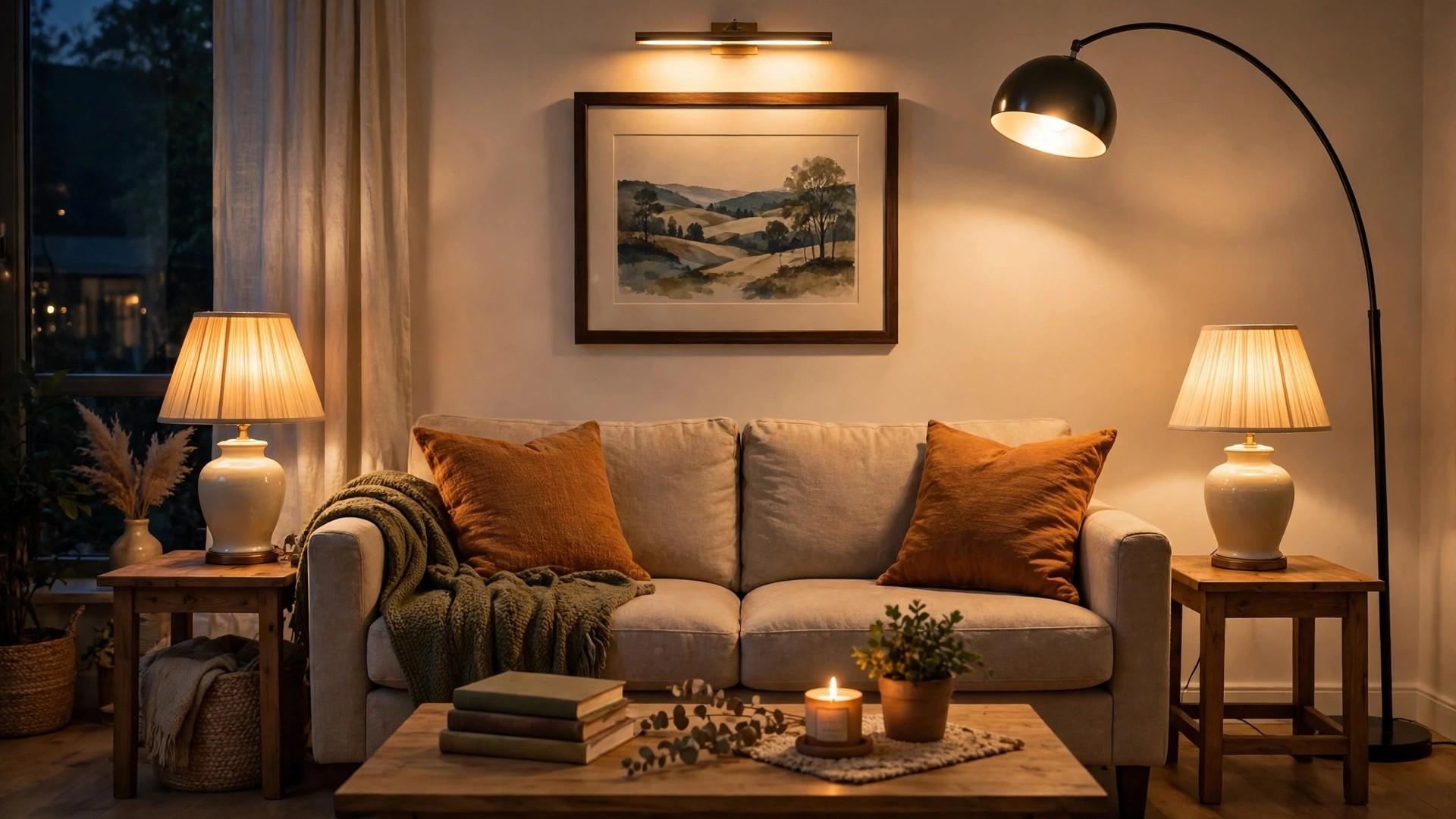

If your living room feels flat, harsh, or oddly unwelcoming after dark, the problem is rarely the furniture — it is the light. Most lounges rely on a single ceiling fixture that blasts every corner with the same brightness, and no sofa can survive that. The right lounge lighting ideas fix the mood by layering several gentler light sources at different heights, so the room can shift from bright and social to low and cinematic in seconds.
The good news is that you do not need an electrician or a renovation to get there. A thoughtful mix of ceiling lights, floor lamps, table lamps, and a few accent tricks will transform how the room looks and how it feels to sit in. This guide breaks the process into layers, fixtures, and controls, with the common mistakes flagged along the way.
Why Layered Light Matters in a Lounge
Professional designers talk about lighting in three layers: ambient light for general visibility, task light for specific activities, and accent light for highlights and drama. The Wikipedia overview of lighting uses the same classification, because it describes how people actually use rooms rather than how fixtures are sold.
A lounge needs all three layers more than almost any other room. In a single evening it might host reading, a board game, a nap, two laptops, and a film. One ceiling light can only serve one of those moods, and it usually serves the least relaxing one.
Layering also fixes proportions. Light at several heights — ceiling, eye level, and low — draws the eye around the room and makes the space feel larger and more finished. When every light sits on the ceiling, the furniture below falls into shadow and the room reads as a waiting area.
Think of it the way you would a conversation. A room lit by one overhead source is a lecture: one voice, one level, no warmth. A layered room is a group of friends talking — different voices at different volumes, each one interesting. The fixtures are just the speakers; what you are really designing is the conversation between them.
Start With Ambient Light: Ceiling Fixtures That Set the Base
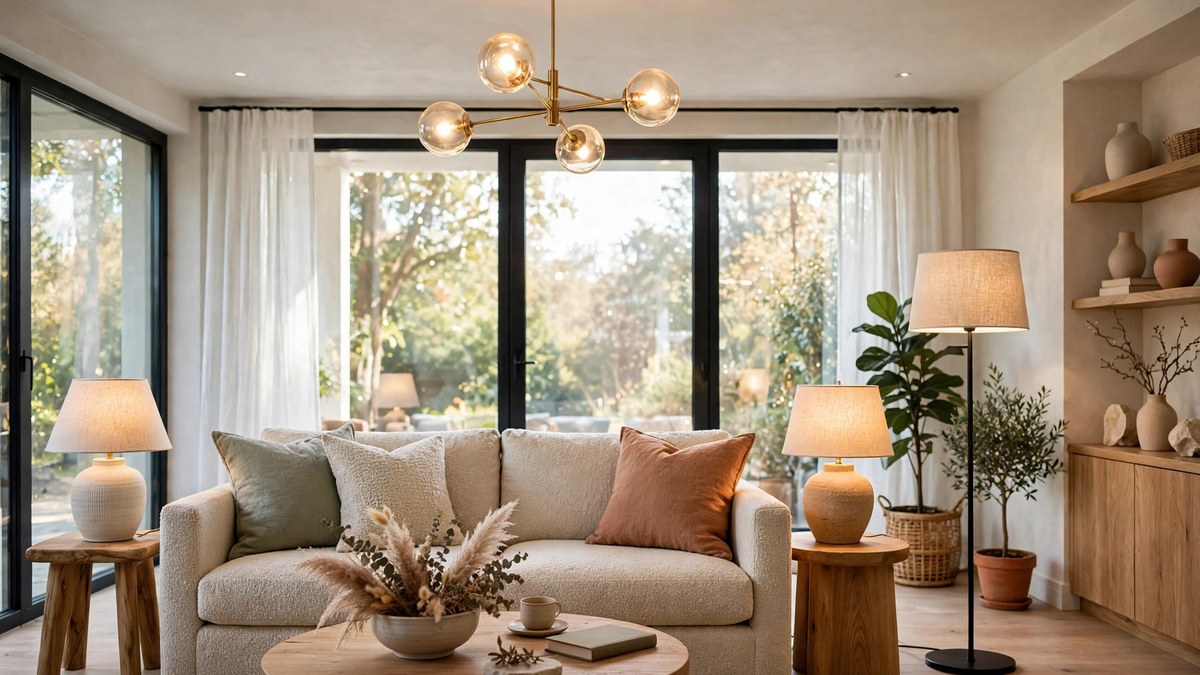
Ambient light is your foundation: soft, general illumination that lets people move around comfortably. In a lounge, that might be a semi-flush ceiling fixture, recessed downlights on a dimmer, or a fabric drum pendant that diffuses light instead of throwing it in one direction.
Whatever you choose, diffusion is the key word. Bare bulbs and clear-glass fixtures create glare and hard shadows in a room meant for relaxing. Frosted glass, linen shades, and uplight designs that bounce light off the ceiling all give the gentle base layer a lounge needs.
Ceiling fans with light kits deserve an honest mention: they are practical in warm climates, but their light is often the harshest in the house. If yours is the main ambient source, choose a kit with a covered dome or add wall-washing lamps elsewhere so the fan light is not working alone.
A useful test for any ambient scheme: stand in the doorway at night with only the ceiling lights on and squint. If you can see the bulbs themselves clearly and the seating below looks grey, the base layer is too harsh or too high. Lower the brightness, add diffusion, or shift some of the ambient job to uplighting lamps and sconces, and the same room will feel calmer without getting darker overall.
Task Lighting for Reading, Games, and Hobbies
Task lighting is focused light exactly where an activity happens. In a lounge that usually means a good reading lamp beside the favorite chair, a floor lamp arched over the sofa corner where someone knits or scrolls, and enough light over the coffee table for games and puzzles.
The classic mistake is relying on ambient light for tasks, then cranking the whole room up to office brightness so one person can read. A dedicated lamp solves it at a fraction of the wattage and keeps the rest of the room mellow.
Look for adjustability. Swing-arm floor lamps, pharmacy lamps, and table lamps with movable heads let each seat aim its own pool of light. Our dedicated guide to living room lamp ideas goes deeper on shapes and sizes for every seat in the room.
Brightness for tasks runs higher than for ambience — reading comfortably typically wants a clearly brighter pool of light than the surrounding room, which is exactly why a lamp beats turning everything up. Position the light over the shoulder of the reader, slightly behind and to the side, so the page is lit without shadows from the head or glare bouncing back into the eyes.
Accent Lighting That Makes Art and Architecture Glow
Accent light is the layer most homes skip, and it is the one that makes a lounge look designed rather than assembled. Its job is to highlight what deserves attention: a painting, a bookcase, a fireplace, a textured wall, or even a handsome plant.
Simple tools do most of the work. A small uplight behind a plant throws leaf shadows on the ceiling. LED strip lights tucked along a bookcase shelf edge make collections glow. A pair of sconces flanking the fireplace adds symmetry and a hotel-like finish that costs very little to run.
Keep accent light subtle. It should register as a glow, not a spotlight, and it should never shine into the eyes of someone seated. If you notice the fixture before the object it lights, aim it again or dim it down.
Accent lighting is also where a lounge gets its evening personality. In daylight, the room’s color and furniture do the talking; after dark, the accents take over. A bookcase that glows, a painting that floats in its own pool of light, a fireplace picked out by sconces — these small highlights are what make a room feel expensive even when every individual piece was a bargain.
Picture Frame Lighting: Show Off Your Art Like a Gallery
Of all the accent tricks, picture frame lighting has the most gallery-like payoff for the least effort. A slim picture light mounted above a frame washes the artwork in even light, removes glass glare from most viewing angles, and instantly makes a modest print look important.
Modern picture lights are easy to live with. Battery-powered LED versions stick on or screw to the frame or wall, run for weeks between charges, and need no wiring at all — a genuine option for renters. Plug-in and hardwired versions suit permanent pieces you never plan to move.
Size the light to the frame: a fixture roughly half to two-thirds the width of the artwork usually spreads light evenly without spilling past the edges. Warm white light around 2,700K flatters most art, and a dimmer or remote turns the whole arrangement into evening mood lighting.
Picture lights are not only for paintings. The same trick elevates a gallery wall, a large mirror, a woven textile, or even the top of a bookcase where you display ceramics. Anywhere your eye is meant to land in the evening, a small dedicated light tells visitors — and your own brain — that this spot matters. It is the cheapest way to make ordinary decor feel collected.
Family Room Lighting That Flexes From Movie Night to Homework
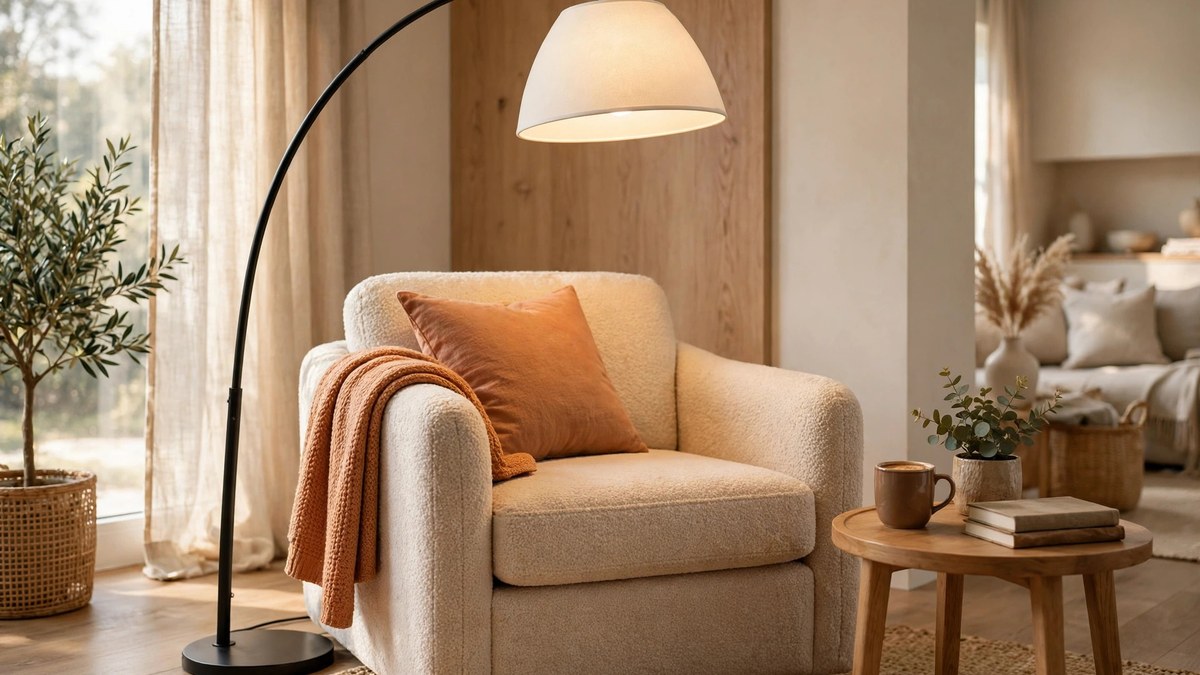
The family room version of the lounge has the hardest job in the house, and family room lighting succeeds when it can change personality on demand. Bright and even for homework and crafts at 4 p.m.; low and warm for a film at 8 p.m. The fixtures can be identical to a formal lounge — the controls make the difference.
Plan zones instead of one circuit where you can. Put the seating-area lamps on one switch or smart plug, the ceiling lights on a dimmer, and accent lights on another control again. Then “movie mode” is one action: ceiling off, accents low, a single lamp glowing behind the sofa to keep the room navigable.
Families argue about light more than they admit — someone always wants it brighter. Zoned layers end the argument, because the reader gets a strong lamp while the screen-watchers keep their gloom. Everyone wins, and nobody touches the thermostat of the whole room’s brightness again.
Floor Lamps: The Hardest-Working Lounge Light
If you buy only one additional light for a lounge, make it a floor lamp. It needs no table, no wiring, and no permission from a landlord, yet it fills the deadliest gap in most rooms: the dark corner beside the sofa where conversation goes to die.
Arc floor lamps reach over seating and deliver near-ceiling light with a footprint of one square foot — ideal behind sectionals. Torchiere uplights bounce light off the ceiling for soft ambient fill. Classic shaded floor lamps give the most familiar, homey glow and pair with almost any style.
Height and shade shape decide where the light lands. A shade whose bottom edge sits roughly at eye level when you are seated keeps glare out of your eyes while spreading light over laps and books. Place lamps where people sit, not where the floor plan has gaps.
Watch the cord, too — it decides real-world placement more than style does. Map your outlets before falling for a lamp position; a beautiful lamp that needs an extension cord across a walkway will end up moved or unplugged within a month. If the perfect corner has no outlet, that is the spot for a sconce or a cordless rechargeable lamp instead.
Table Lamps and Symmetry on Side Tables
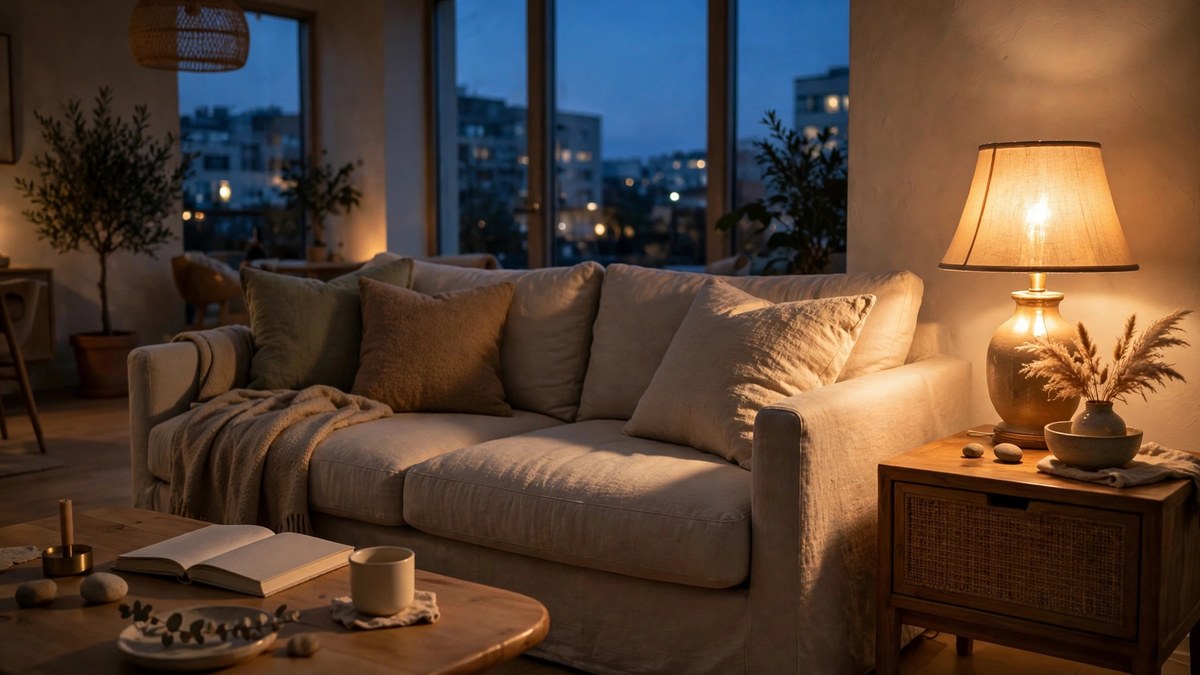
Table lamps are the lounge’s jewelry: small, decorative, and surprisingly powerful at setting a style. A matching pair flanking a sofa is the oldest trick in the book because it works — it frames the seating, balances the room, and puts light exactly at conversational height.
That said, symmetry is a choice, not a rule. A single sculptural lamp on one side table and a floor lamp on the other can look fresher, especially in eclectic rooms. What matters is that both sides of the main seating have access to light, so nobody sits in the dim seat.
Scale the lamp to the table and sofa: a common guideline is that the lamp’s bottom of shade should sit around eye level when you are seated, and the whole lamp should not tower over the sofa back. Too-small lamps are the usual error — they read as clutter instead of lighting. For more ways to make a seating area feel snug, see our favorite cozy living room ideas.
Shade material quietly controls the mood here. Linen and paper shades diffuse light in every direction and glow themselves, which suits relaxed lounges. Metal and dark fabric shades push light up and down in pools, giving a moodier, more directional effect that works over side tables but leaves faces shadowed. Stand in the shop, switch the lamp on, and look at what the shade does — not just how it looks off.
Sconces and Wall Lights for Small Lounges
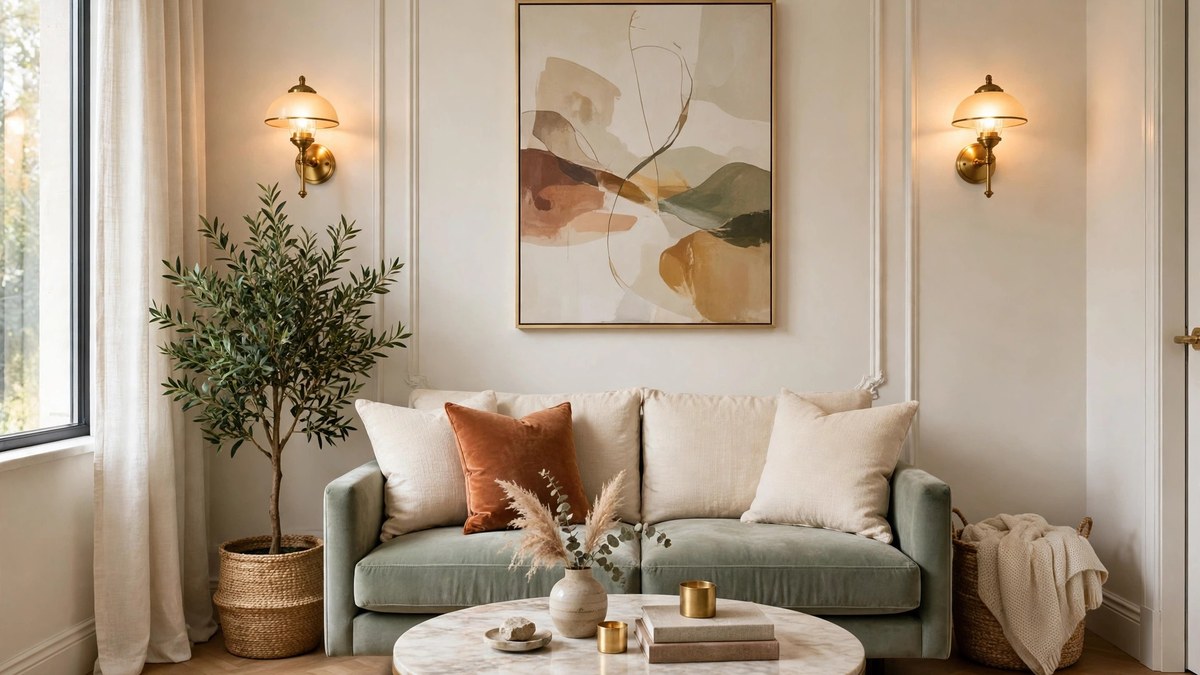
Floor space is precious in a small lounge, and that is where sconces earn their keep. Wall-mounted lights free up tables and floor corners while placing light at the flattering mid-height most rooms lack. Flanking a sofa, fireplace, or media console, they add architecture to plain walls.
Plug-in sconces have removed the last excuse not to use them. They mount with two screws, hide their cord in a channel or cover, and plug into an ordinary outlet — no electrician, no opened walls. Swing-arm versions double as excellent reading lights beside a chair or sofa end.
In a small room, two sconces can genuinely replace a ceiling fixture as the main ambient source when their shades throw light up and down. Combined with one good lamp, that is a complete layered scheme in under ten square feet of visual space.
Height placement decides whether sconces flatter or glare. As a typical guideline, the center of the fixture sits around 60 to 66 inches from the floor in a room with standard ceilings — high enough to spread light, low enough to keep the bulb out of direct sight when you are standing. Beside a sofa or chair, align them with the back of the furniture rather than centering them on the empty wall, so the light serves the seat.
Color Temperature and Dimmers: The Mood Controls
Two lounges with identical fixtures can feel completely different because of bulb temperature. Warm light around 2,700K is the lounge standard for a reason: it flatters wood, fabrics, and faces, and it matches the glow of candlelight our brains associate with evening. Incandescent bulbs naturally sat around 2,800–3,000K, which is why older rooms felt cozy by default.
Cooler bulbs — 4,000K and up — make a lounge feel like a showroom or a clinic. If a room feels harsh despite nice lamps, check the bulbs before blaming the fixtures. Swapping bulbs is the cheapest lighting renovation there is.
Dimmers complete the system, and in the ceiling-light position they are close to non-negotiable. Note the lesson from dedicated dining spaces, where a dimmed pendant changes dinner entirely — the same thinking behind over dining table lighting ideas applies over your sofa too. Confirm LED compatibility to avoid flicker, and put lamps on smart plugs if rewiring switches is not an option.
One more bulb detail worth standardizing: color rendering. Bulbs with a CRI of 90 or above show fabric colors, wood tones, and artwork much more faithfully than the basic 80-CRI bulbs in most multipacks. In a room where you chose the rug and cushions carefully, that small upgrade makes the colors you picked actually appear under evening light.
Smart Bulbs and Simple Controls That Pull It All Together
You do not need a full smart-home system to make layered lighting effortless, but a few inexpensive controls remove the friction that stops people using their layers. Smart plugs on the two main lamps let you switch the room’s evening scene from the sofa. Smart bulbs in the ceiling fixture add dimming where no dimmer switch exists.
Scenes are the real prize. Program a bright “daytime” scene for cleaning and play, a medium “evening” scene for conversation, and a low “movie” scene that leaves only the accent lights and one lamp. When a whole mood is one tap or one voice command, people actually use it instead of defaulting to the big overhead light.
Keep the manual option alive, though. Guests, grandparents, and future buyers should still be able to walk in and flip a switch that does something sensible. The best setups layer smart control on top of ordinary switches rather than replacing them with an app nobody else can operate.
Common Lounge Lighting Mistakes to Avoid
Most lounge lighting problems trace back to a short list of habits:
- One light source for the whole room. A single ceiling fixture flattens everything. Add at least one lamp at seated height and the room transforms.
- All the light on the ceiling. Recessed lights alone leave faces in shadow and furniture in gloom. Mix heights — ceiling, wall, table, floor.
- Bulbs that do not match. Mixing warm and cool bulbs in one room looks like a mistake even when nobody can name why. Standardize on one temperature.
- Glare in the sightline to the TV. Bare bulbs and shiny shades reflecting in the screen ruin film night. Angle lamps away and use opaque shades near the screen.
- Forgetting the corners. Dark corners shrink a room visually. A small uplight or lamp in the emptiest corner makes the whole space feel bigger.
- No control at seated level. If you must stand up and cross the room to change the light, you will stop changing it. Smart plugs and remote dimmers fix this cheaply.
Fix even two of these and the room improves immediately; fix them all and guests will ask what you renovated.
Frequently Asked Questions
How many light sources does a lounge need?
A good working target is five to seven light sources in an average lounge, spread across the three layers: one or two ambient, two or three task, and two accent. Smaller rooms can manage with four; large open-plan spaces may want more.
What is the best color temperature for lounge lighting?
Warm white around 2,700K suits most lounges, giving a relaxed evening glow that flatters skin and wood tones. If the room doubles as a daytime workspace, choose dim-to-warm bulbs that cool slightly at full brightness and warm as you dim.
Should lounge ceiling lights and lamps match?
They should coordinate, not match exactly. Repeating one metal finish or shade color across fixtures ties the scheme together, while identical fixtures at every position look like a showroom package. Variety within one finish family is the sweet spot.
Where should a floor lamp go in a lounge?
Beside the seat it serves — next to the reading chair or at the end of the sofa — rather than centered on a wall. An arc lamp belongs behind or beside seating so its head hangs over the lap or coffee table edge, not over walkways.
Can I improve lounge lighting without an electrician?
Absolutely. Plug-in sconces, battery picture lights, LED strip lights, smart bulbs, and lamps on smart plugs can rebuild the whole scheme with zero wiring. The only jobs that truly need an electrician are new ceiling fixtures and hardwired switches.
How do I light a lounge with a TV?
Keep light sources out of the screen’s reflection zone: place lamps beside or behind the seating rather than opposite the TV, use shades that block side glare, and consider a low bias light behind the screen itself, which eases eye strain during films.
Are LED strip lights a good idea in a lounge?
Used indirectly, yes — hidden along a shelf edge, behind a media console, or under a floating unit, they add a soft accent glow. Exposed strips with visible dots look unfinished, so always hide the strip and let the light, not the hardware, be seen.
Conclusion
Great lounge lighting is not about a single perfect fixture; it is about small, well-placed lights working in layers. Set a soft ambient base, give every seat its own task light, add a whisper of accent glow, and put the whole scheme on warm bulbs and dimmers. Start with one corner and one lamp if the full plan feels big — the first layer you add will convince you to finish the rest.
