
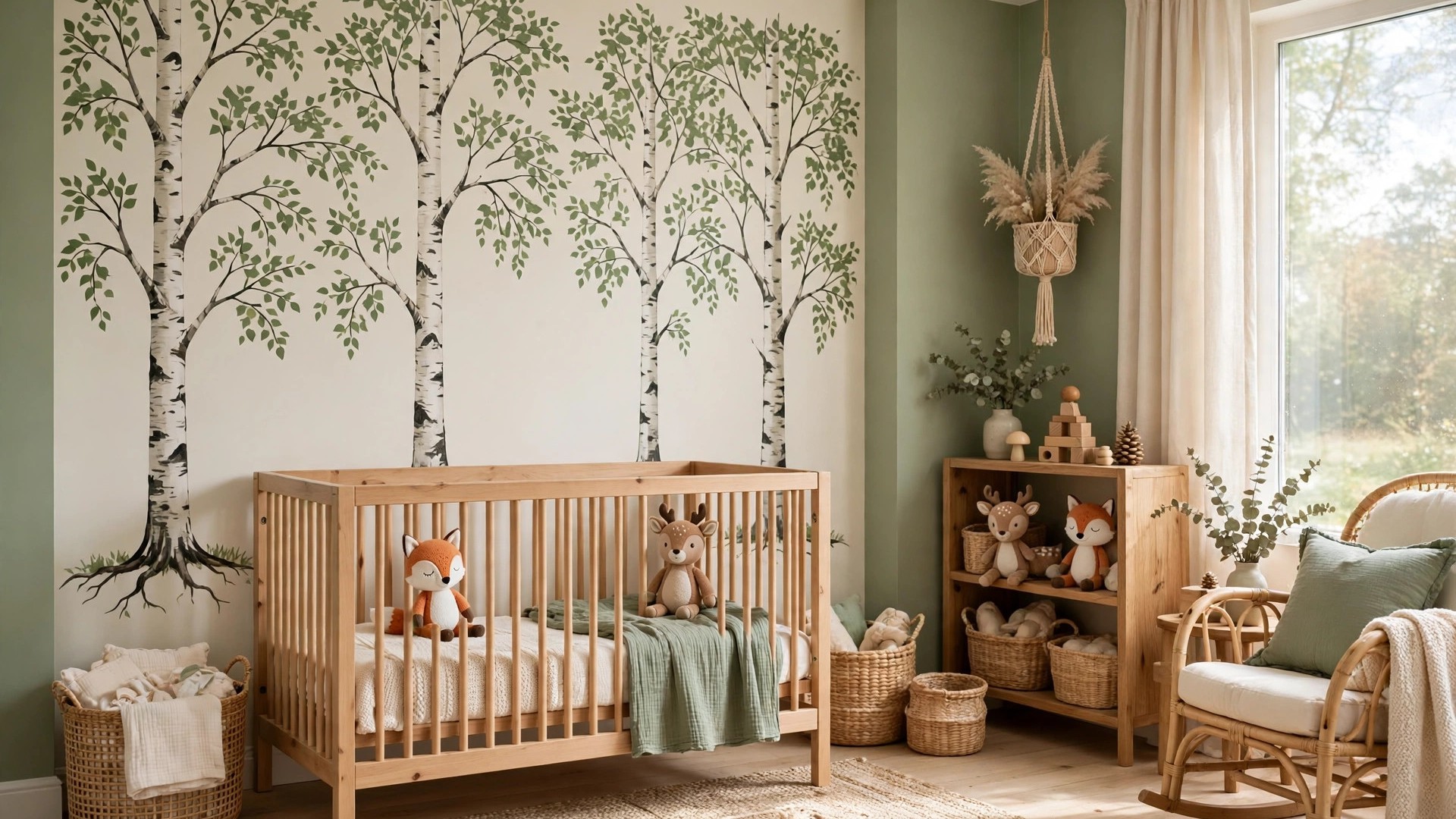

Some nursery themes are trends; the woodland theme is closer to a folk tale — it keeps being retold because it works. Forest colors calm everyone who walks in, animal characters give a baby friendly faces to grow up with, and natural textures make even a brand-new room feel warm and lived in. These woodland nursery ideas will help you build a forest retreat that is cozy now and still charming when your baby is a kindergartner.
The secret is layering, not buying a matched set. Real woods feel rich because of variety — tall trees, soft ground, dappled light, quiet animals — and a nursery copies that recipe with wall treatments, natural materials, textured textiles, and a small cast of animal friends. Here is how to build it, layer by layer.
Why the Woodland Theme Endures
Woodland nurseries tap into something older than decorating fashion: the feeling of shelter a forest gives. Enclosed, green, soft underfoot, dappled with light — a well-done woodland room recreates that shelter at nursery scale, and babies and parents both respond to it instinctively. It is no accident that so many children’s stories begin in a forest.
The theme is also uniquely practical. It suits any baby, flatters every skin tone in photos, hides the everyday scuffs of family life in its earthy palette, and — as a true woodland is a layered habitat of canopy, understory, and floor — it gives you a natural framework for organizing the whole design.
Finally, it grows. Foxes and owls delight a newborn, accompany a toddler’s first stories, and become a “camping and forest” big-kid room with a bedding swap. Few themes travel that far without a full redecoration.
There is also a storytelling dividend no other theme pays quite as well. A woodland room hands you ready-made characters for bedtime tales — the fox by the dresser, the owl above the shelf — and children raised among them tend to invent the stories themselves by age three. The decor becomes a cast, and the room becomes the family’s first theater.
The Woodland Color Palette: Forest Tones That Soothe
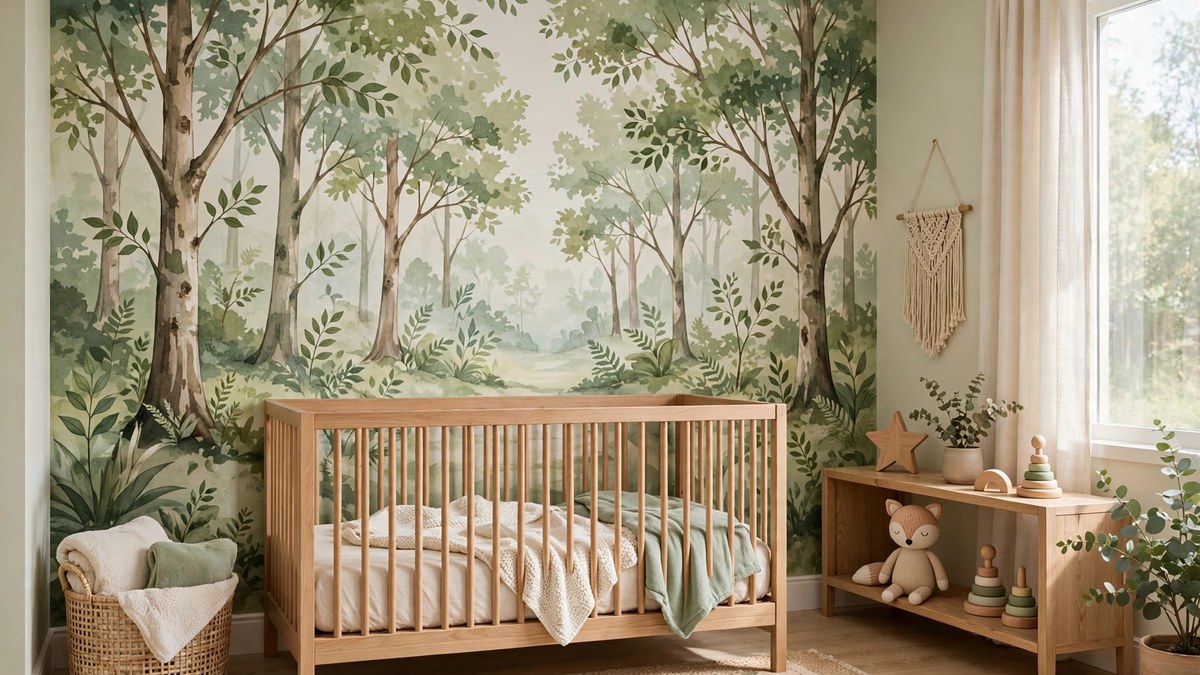
Start with the forest’s own colors, softened for a nursery: sage and moss greens, warm bark browns, cream and oatmeal, and touches of rust, mustard, or dusty orange borrowed from autumn leaves. This palette is calm without being pale, and it photographs beautifully in natural light.
Use the 60-30-10 approach as a guide: about 60 percent soft neutral (walls in warm white or pale sage), 30 percent supporting green or wood tones (furniture, rug, curtains), and 10 percent accent (rust cushions, a mustard throw, animal art). The forest feeling comes from the proportions, not from painting everything green.
Flooring and existing wood set your starting point. If the room already has warm oak floors, lean the palette slightly cooler in the greens so the room does not turn orange; over grey-toned floors, warmer creams and rusts restore the coziness. The forest has to harmonize with the ground it grows on.
Keep one eye on light. North-facing rooms cool colors down, so warmer greens and creamier whites keep them cozy; sunny rooms can handle deeper forest tones on an accent wall. Order paint samples and live with them through a full day before committing — forest colors shift more between morning and evening than almost any other family.
Walls: Tree Murals, Decals, and Wallpaper
The wall behind the crib is where the woodland theme makes its statement. A tree mural — painted, wallpapered, or decaled — instantly turns a plain room into a forest clearing. Birch-tree designs are the classic choice because their pale trunks suit small rooms and pair with any accent color; pine and mountain-scene murals read bolder and more adventurous.
Wallpaper gives the richest result, from delicate scattered sprigs to full scenic forests. Removable peel-and-stick versions have changed the game for renters and commitment-phobes alike: one accent wall, an afternoon, and a completely removable forest. Choose the crib wall so the baby — and the camera — get the full effect.
Decals are the budget and flexibility champions. A set of trees, some birds, and a few woodland animals can compose a whole scene, rearrange as the furniture moves, and come down cleanly when the theme evolves. Compose them as a landscape with a horizon line rather than scattering them sticker-style, and they will read as art.
Whichever wall treatment you choose, test it against the room’s light first. Deep greens and busy forest scenes drink light; in a small or north-facing nursery, keep the mural on one wall and the remaining walls pale, or choose the lightest version of the design. A forest clearing is bright in the middle — let your room be, too.
Woodland Animals: Choosing Your Cast
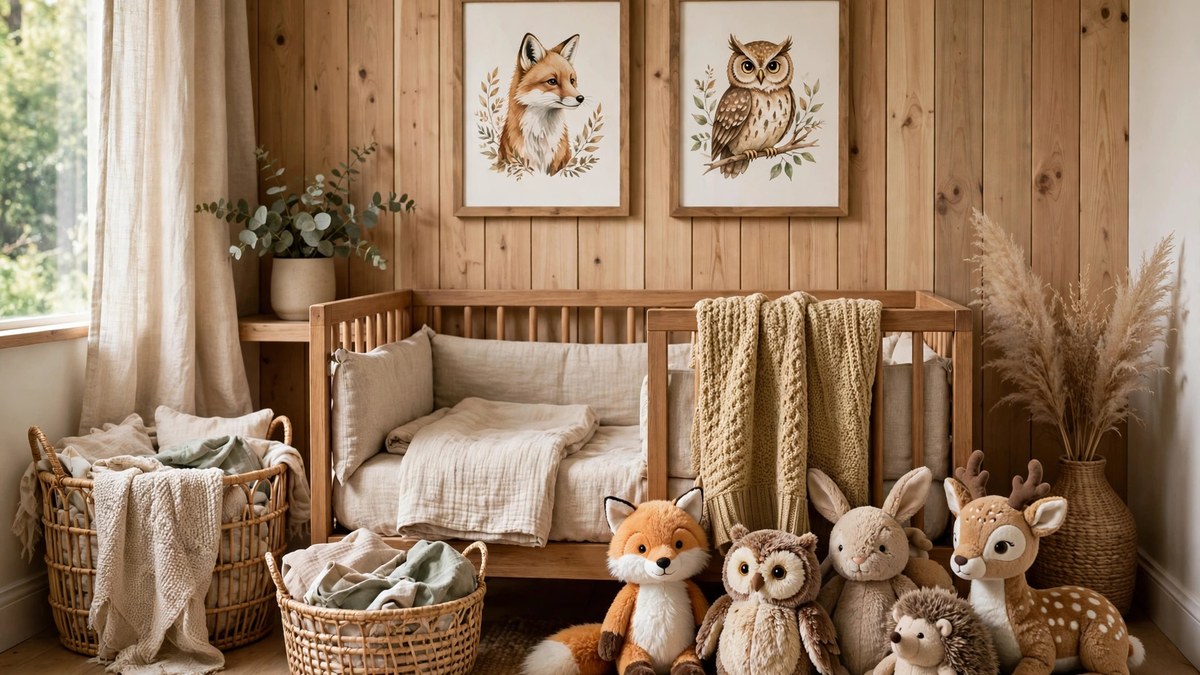
Every woodland room needs a cast, and the discipline is choosing few characters and repeating them. The classic lineup — fox, owl, deer, bear, rabbit, hedgehog — works because each brings a distinct color and personality: the fox’s rust, the owl’s wisdom, the fawn’s gentleness. Pick three or four favorites and let them recur in art, a cushion, a soft toy, and the mobile.
Watercolor-style animal art suits the theme best; its soft edges match the forest mood and it ages gracefully into a child’s room. Coordinate with your wider art plan — our nursery wall art guide covers sizing and safe hanging — and give one animal the hero spot above the dresser or crib.
Resist the full menagerie. Ten different animals in ten styles reads as a toy shop; four animals in one consistent illustration style reads as a story. If grandparents gift off-cast creatures, welcome them as toys and keep the decor cast disciplined.
Scale your animals to the furniture: one large, gentle portrait — a fawn or a bear — makes a stronger focal point than a dozen small prints, and babies focus on large, clear faces best. Save the small creatures for shelf vignettes and the mobile, where close-up viewing happens during changes and play.
Furniture in Natural Materials
Wood is the woodland furniture language — warm oak, walnut, pine, or a painted crib paired with wood accents elsewhere. A natural-wood crib or dresser anchors the room instantly and stays stylish long after the theme retires. Mixed wood tones are fine and even desirable, as in a real forest, as long as they share a warm undertone.
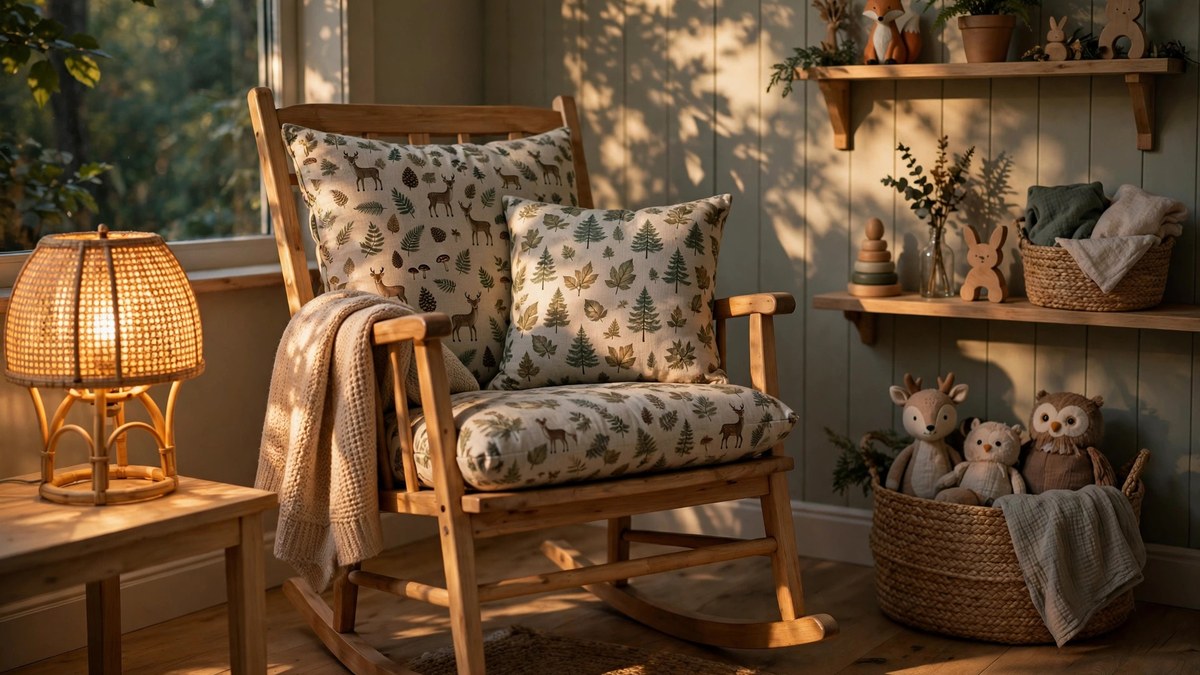
Rounded, organic shapes suit the theme better than sharp modern lines, and woven or rattan pieces — a laundry basket, a pendant shade, a small side table — add the understory texture that makes the room feel gathered rather than bought. Vintage and secondhand furniture fits naturally here; a refinished old dresser has more forest soul than anything flat-packed.
Keep safety invisible but absolute: furniture anchored, finishes non-toxic and intact, and the crib itself up to current standards. If you are furnishing from the ground up, our baby room decor guide lays out the core pieces every nursery needs before the theme layer begins.
One furniture note specific to this theme: log-style and rustic pieces look wonderful but check them like a hawk for splinters, rough edges, and wobble. Smooth, sanded, and sealed is the standard anywhere small hands will explore — which, within a year, is everywhere.
Textiles: Layering the Forest Floor Feeling
Textiles turn a themed room into a cozy one. Think of the forest floor: layers of softness in earthy tones. A rug in cream, sage, or a subtle leaf pattern anchors the furniture; knitted and waffle-weave blankets drape the chair; linen or cotton curtains in a natural tone filter the light like canopy shade.
Pattern works in whispers here — tiny sprigs, mini mushrooms, small scattered stars — on sheets and changing-pad covers, where scale suits the baby. One bolder textile, usually the rug or a quilt hung as art, can carry a larger motif. Everything washable, always: forest theme, yes; forest maintenance, no.
Touch is the nursery’s real luxury. A baby experiences the room through skin — the rug under tummy time, the blanket during feeds — so natural fibers and soft weaves earn their place functionally, not just visually. Budget for one truly lovely blanket; it will appear in a thousand photos.
Do not overlook the window layer. Curtains in a natural linen tone with blackout lining give you the forest’s dim green shade at nap time and a soft glow the rest of the day. If the budget allows one patterned textile splurge, a curtain with a tiny sprig print is the sweetest place to spend it.
Lighting Like Dappled Sunlight
Forest light is filtered light, and nursery lighting should copy it: soft, warm, and layered rather than one bright overhead source. A woven or rattan pendant diffuses the ceiling light into gentle patterns; a warm lamp by the chair handles evening feeds; a tiny night-light in amber tones covers the night shift.
Fairy lights deserve an honest mention: strung high along a shelf or inside a glass jar on the dresser (battery-powered, cords secured, well out of reach), they give exactly the firefly sparkle the theme begs for. Keep them decorative and distant from the crib, and plug-in sets belong nowhere near little hands.
Dim everything you can. Dappled light is dim light, and a dimmer on the overhead fixture lets the room shift from bright play to twilight calm in seconds — the woodland version of sunset, on demand.
Bulb temperature completes the illusion: warm bulbs around 2,700K mimic late-afternoon forest light, while anything cooler reads as office glare and flattens the greens. It is the cheapest effect in this entire guide — one bulb swap — and the difference at the evening feed is immediate.
Woodland Storage and Organization
A forest floor is tidy because everything has a layer, and nursery storage can borrow the principle. Woven baskets in several sizes corral blankets, toys, and laundry while looking like part of the landscape. A low bookcase or forward-facing book display keeps the storybook collection — half the woodland theme’s charm — visible and reachable; our guide to nursery book shelves shows how to set that up safely.
Wooden crates, a hollow-log-style toy basket (they exist, and children adore them), and hooks shaped subtly like branches keep the system on-theme without trying too hard. Closed storage for the unlovely necessities — wipes stockpiles, spare parts, outgrown clothes — keeps the clearing serene.
Label by picture for the toddler years ahead: a fox sticker on the book basket, a leaf on the blanket crate. The system that a two-year-old can operate is the system that survives.
Keep one storage rule sacred: the changing station restocks itself nightly from a back-stock basket kept in the closet. Running out of wipes mid-change in a beautiful room is still running out of wipes. Woodland calm is built on boring logistics done well.
DIY Woodland Touches on a Budget
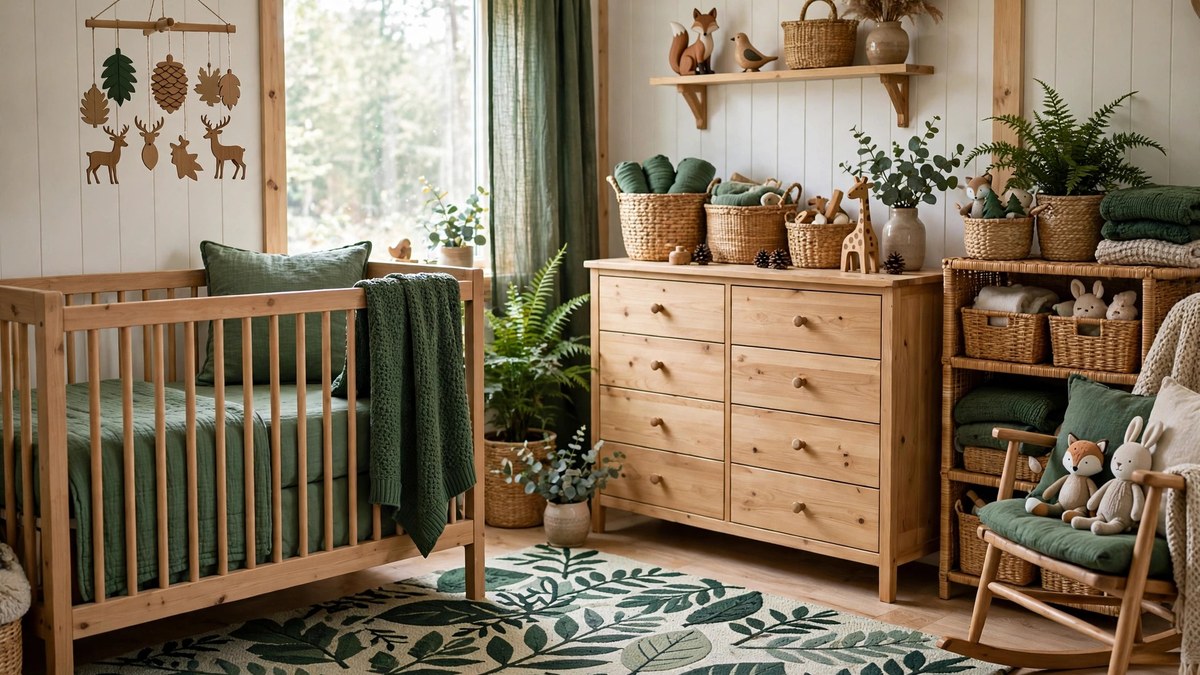
The woodland theme is a gift to DIYers because nature supplies the palette and half the materials. A branch — cleaned, sealed, and mounted securely high on the wall — becomes a mobile hanger or a display for tiny knitted animals. Framed pressed leaves and fern prints cost almost nothing and look like boutique art.
Paint does heroic work here: a simple tree silhouette is within reach of anyone who can use painter’s tape, and a rolling-hills horizon in two greens takes an afternoon. Stencils exist for every skill level between the two. One painted wall plus white elsewhere often beats a whole room of wallpaper for both budget and impact.
Secondhand stores are woodland treasure ground: wooden animal figures, woven baskets, plaid blankets, and old nature field guides (wonderful framed, and even better read later) all arrive for pocket change. The theme rewards gathered pieces, so thrifting is not a compromise — it is the aesthetic.
One more nearly-free project: a name sign cut or painted as a wooden plaque, hung on the door or above the dresser. Craft stores sell plain wood rounds for very little; a steady hand or a simple stencil turns one into the room’s signature piece, and it moves to the big-kid room door when the nursery years end.
Making It Grow: From Baby Forest to Big-Kid Woods
Plan the second act now and the room evolves instead of expiring. The mural or wallpaper, if you chose gentle trees rather than cartoon scenes, stays. Swap the crib for a bed with forest-green or plaid bedding, trade the mobile for a reading lamp, and the nursery becomes a woodland bedroom in a weekend.
Toddlers add the interactive layer: a small tent or teepee reading nook, a nature table for collected treasures, glow stars joining the ceiling trees. School-age children lean into the adventure version — maps, a compass, camping gear on display — all growing naturally out of the same walls.
What expires is only the baby-specific layer: the changing setup, the tiniest art, the softest toys. Because the woodland bones were never babyish, out they go without a paintbrush in sight.
The reading nook deserves special planning because it becomes the room’s heart. A floor cushion, a small tent or canopy, the forward-facing book display, and a warm lamp turn one corner into the place your child will remember the room by. Build it once, in the corner with the best light, and it serves from board books to chapter books.
Woodland Nursery Safety Notes
Nature themes invite a few specific cautions. Real branches, pinecones, and natural finds must be cleaned, sealed, and kept out of the crib and out of mouthing reach — decor, not teething supplies. Mobiles and garlands follow the standard rules: secure mounting, nothing dangling within reach, and removal once the baby can push up.
Plants in a nursery should be non-toxic varieties and placed well out of reach, or choose convincing faux greenery for zero risk. The forest look survives faux plants beautifully; a baby’s curiosity does not negotiate.
And the golden rule of every nursery applies double in a themed room: the crib stays bare. No plush forest friends, no draped garlands, no decorative pillows in the sleep space — the cast of animals lives on the walls, shelves, and floor, watching over a clean, safe crib.
Common Mistakes to Avoid in a Woodland Nursery
- Buying the complete matching set. Identical foxes on every surface reads as merchandise, not a forest. Mix pieces that share a palette and style instead.
- Painting everything dark green. A whole room in deep forest tones gets cave-like fast. Keep walls light and let green layer in through textiles and art.
- Too many animals. A crowded menagerie loses the story. Choose three or four characters and repeat them with discipline.
- Forgetting the parent’s chair. The theme will not rock a baby at 3 a.m. Spend on the chair first, decorate second.
- Theme pieces in the crib. Plush toys, garlands, and bumpers stay out of the sleep space, whatever the product photos show.
- Ignoring the grow-up path. Cartoonish murals and baby-only furniture expire quickly. Gentle trees and real furniture carry the room for years.
Steer around these and your forest will feel hand-gathered and calm — the whole point of the theme.
Frequently Asked Questions
What colors work best for a woodland nursery?
Soft forest tones: sage and moss greens, warm browns, cream and oatmeal, with small accents of rust, mustard, or dusty orange. Keep walls light and layer the deeper greens through textiles, art, and furniture so the room stays calm and bright.
Is a woodland nursery suitable for a girl or a boy?
Completely — the theme is naturally neutral, which is one reason for its popularity. Lean softer with blush and cream accents or bolder with rust and navy; the forest itself welcomes every version.
How do I add a woodland theme without wallpaper?
Use decals for the tree scene, or paint a simple horizon of hills in two greens. Then layer the theme through textiles, animal art, woven storage, and natural wood furniture. The walls are only one layer of five.
What animals should I feature?
Choose three or four — fox, owl, deer, bear, and rabbit are the classic cast — and repeat them consistently in one illustration style. A small, consistent cast reads as a story; a crowd reads as clutter.
Can I create a woodland nursery on a budget?
Yes — this theme is unusually budget-friendly. Paint or decals for the wall, thrifted wood furniture and baskets, framed book pages or pressed leaves for art, and one or two quality textiles carry the whole look for very little.
How does a woodland nursery grow with my child?
Keep the trees and natural furniture, then evolve the soft layer: toddler bedding, a reading tent, nature collections, and eventually maps and adventure gear. The gentle forest backdrop supports every stage without repainting.
Are real plants a good idea in a woodland nursery?
Only non-toxic varieties placed far out of reach — or skip the risk with good faux greenery, which suits this theme particularly well. Either way, plants belong on high shelves and dressers, never within grabbing distance of the crib.
Conclusion
A woodland nursery succeeds the way a real forest does: in layers. Soft green and cream walls as the canopy light, natural wood furniture as the trees, textured textiles as the forest floor, and a small cast of animals as the story. Build it with safety as the foundation and growth in mind, and these woodland nursery ideas will give your child a room that feels like the beginning of a favorite story — because it is.
Start with the wall and one perfect animal portrait, and let the room gather around them slowly. Forests are not built in a day, and the nurseries with the most soul rarely were either — they were collected slowly, one walk in the woods at a time, by people who loved them into being.
