
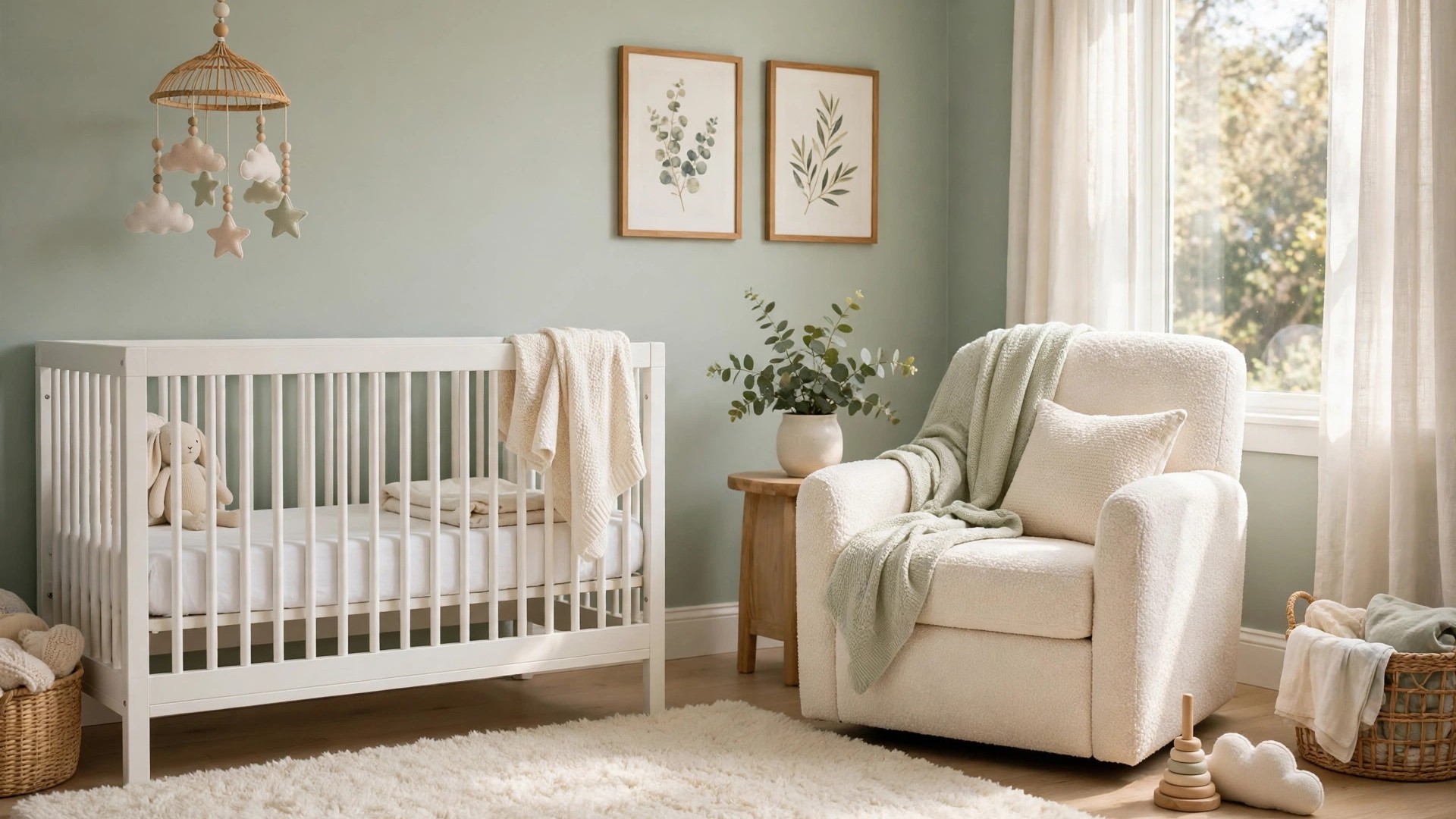

Designing a nursery is one of the sweetest projects in a home, and also one of the easiest to overdo. The secret to baby room decor that actually works is remembering the room has two residents: a baby who needs calm and safety above all, and a tired parent who will spend half the night there and needs the room to feel like a deep breath.
This guide balances both. You will find themes that grow instead of expiring, color and light choices that genuinely soothe, storage that keeps the calm intact at 3 a.m., and clear safety rules — including why the prettiest crib styling photos are the ones you should never copy exactly.
Start With Safety: The Decor Rules That Matter Most
Every nursery decision sits on top of one foundation: the sleep space stays bare. Current US guidance from the American Academy of Pediatrics is clear — babies sleep on their backs, on a firm, flat surface, with nothing soft in the crib: no pillows, no loose blankets, no stuffed animals, and no crib bumpers. The Wikipedia summary of infant bed safety walks through the standards behind these rules, including the 2011 US ban on drop-side cribs and the 2021 law banning padded crib bumpers.
That sounds restrictive until you reframe it: the decor lives on the walls, the rug, the curtains, and the furniture — and the crib itself becomes a clean, calm focal point. A fitted sheet in a lovely color or print is the one styling move a crib needs, and it makes laundry-day changes fast, which at 2 a.m. is the only luxury that matters.
Anchor everything. Dressers, bookcases, and shelving units must be strapped to the wall before the baby ever pulls up on them — which happens months earlier than first-time parents expect. Cords from blinds, lamps, and monitors get secured out of reach, and anything small, breakable, or paint-peeling stays out of the room entirely.
Also worth knowing: the American Academy of Pediatrics recommends room-sharing — baby sleeping in the parents’ room, in a separate crib or bassinet — for at least the first six months. Many families still decorate the nursery fully and use it for feeds, changes, play, and naps, then move the baby in when the household is ready. Decorating early is never wasted; the room simply phases in.
Nursery Design Themes That Grow With Your Baby
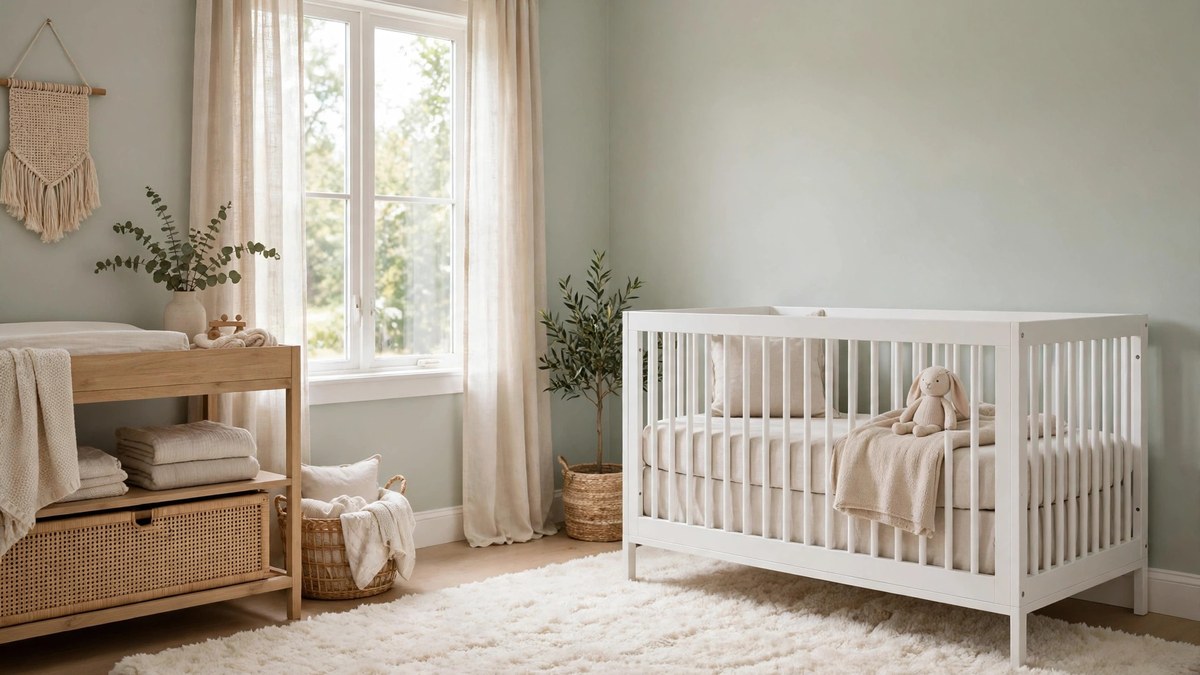
The best nursery design themes share one trait: they can shed the “baby” layer without a full redecoration. A woodland theme becomes a forest bedroom with bigger bedding. A celestial theme — moons, stars, soft navy — sails happily into the preschool years. A color-story theme (sage and cream, terracotta and sand) never expires at all.
Achieve the theme with the removable layer: wall decals, art prints, bedding, a rug, and soft toys. The permanent layer — wall color, furniture, curtains — stays classic and neutral. When the theme changes in three years, you replace a few hundred dollars of accessories, not the whole room.
Popular starting points include woodland animals, under-the-sea, safari, rainbow (in muted, modern tones), vintage storybook, and Scandinavian minimal. Whichever calls to you, buy the rug and the largest art piece first; those two set the theme’s color palette, and everything else can follow. Our companion guide to nursery wall art goes deeper on sizing and arranging the art layer.
A word about gendered themes: the softest modern nurseries increasingly skip the pink-versus-blue script entirely. Nature themes, color stories, and storybook schemes work for any baby, photograph timelessly, and hand down to siblings without anyone feeling the room was “meant” for someone else. If you love pink or blue, use them — just know the palette door is wide open.
Calming Nursery Decor: Colors and Light That Soothe
Calming nursery decor starts with color psychology you can actually feel. Soft, desaturated tones — warm whites, pale sage, dusty blue, blush, gentle greys — lower the visual temperature of a room, for the baby and for the adult rocking at midnight. High-contrast color is wonderful on a play mat or a mobile, where stimulation belongs; on every wall, it keeps everyone slightly wired.
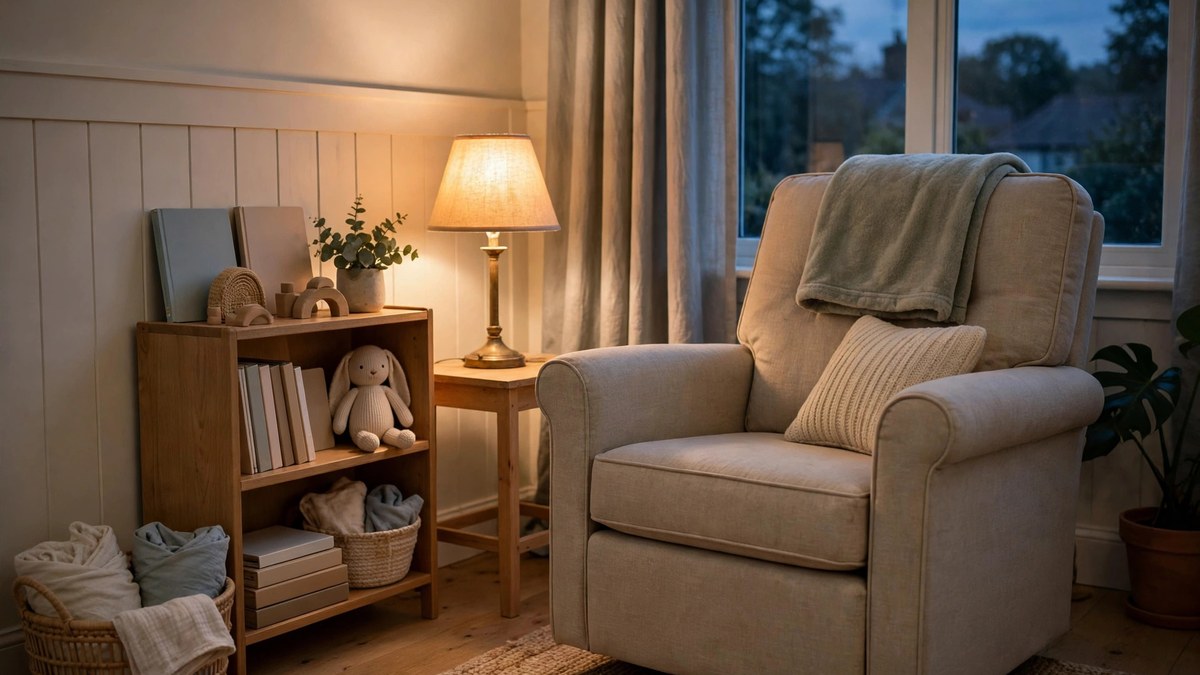
That does not mean the room must be bland. Depth comes from texture instead of brightness: a woven wall hanging, a nubby rug, linen curtains, a knitted throw over the nursing chair. A calm palette with rich texture reads designed, not empty, and photographs beautifully for those first-week pictures.
Light deserves equal care. Blackout curtains support daytime naps, while a warm, dim night-light or a low lamp preserves night vision during feeds. Aim for layers you can adjust one-handed, in the dark, half asleep — because that is the real user experience of this room.
Sound is the other half of calm. A soft-close door habit, a rug thick enough to muffle footsteps, and — the purchase parents rave about most — a white-noise machine near the door all help the room stay peaceful through household noise. Calm is a full-sensory project, and the nursery repays every bit of it in longer naps.
Crib Decoration Done Safely: Style Around, Not Inside
Search “crib decoration” and you will be shown canopies draped into cribs, garlands strung across rails, and bumpers tied in bows. It is pretty, and it conflicts directly with safe-sleep guidance: nothing hangs into, drapes over, or attaches loosely to the sleep space, and fabric near the crib must be completely out of reach once a baby can pull up.
The safe version of the look is easy to achieve. Hang the canopy so it falls behind the crib, against the wall, purely as backdrop. Place garlands and bunting high on the wall, well beyond reach. Dress the crib’s surroundings — a beautiful mobile mounted securely and removed once the baby can push up or reach it, the wall art above, the rug beneath — and let the crib itself stay clean-lined.
What goes in the crib: a firm mattress, a fitted sheet, and the baby (in a sleep sack if you like). Standard US cribs measure roughly 28 by 52 inches, so buy sheets in the true crib size for that snug, safe fit. A spare set or two is the most practical nursery purchase you will make.
Walls That Work Hard: Paint, Decals, and Art
Walls carry most of a nursery’s personality because the floor plan is dominated by furniture. Paint is the foundation: one soft color everywhere, or a single accent wall behind the crib to anchor the room’s focal point. Two-tone walls — color below, white above, divided by a chair rail or a painted line — add architecture to plain rooms and hide scuffs at toddler height later.
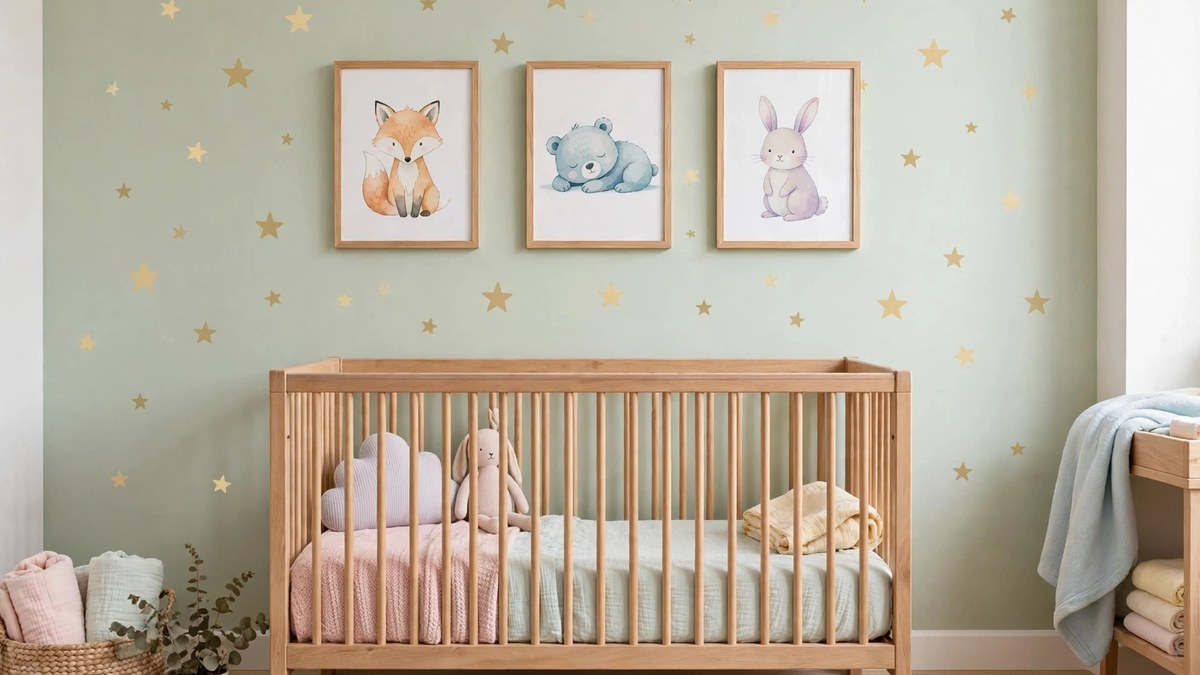
Decals are the renter’s and the realist’s best friend. Modern wall decals remove cleanly, come in everything from tiny stars to full woodland scenes, and let you trial a theme for the price of a pizza. Arrange them as one composed scene rather than scattered randomly — a horizon line, a cluster over the dresser — so they read as design rather than stickers.
Art should sit where the baby can enjoy it too: a high-contrast black-and-white print near the changing table gives a newborn something genuinely interesting to look at during changes. Keep glass out of frames over the crib and changing area; acrylic-fronted or canvas pieces are the safer choice everywhere within falling distance.
Textiles and Softness: Rugs, Curtains, and Layers
Textiles are where a nursery gets its hug. A large, soft rug anchors the room, gives tummy time a kind landing, and absorbs the sound of nighttime pacing. Choose low pile or flatweave in a washable material — the rug will meet every bodily fluid your baby produces, and “spot clean only” is a fantasy in this room.
Curtains do double duty: blackout lining for naps, and color or subtle pattern for the scheme. Hang them well clear of the crib, with cordless operation or cords secured high — window coverings are one of the nursery’s real hazards, and cordless styles are widely available now for exactly that reason.
Keep a small wardrobe of textiles ready: two or three fitted sheets, a couple of light blankets for the stroller and chair (never loose in the crib), and burp cloths that live in every corner. When the practical textiles match the palette, even the mess of real life looks oddly composed.
Wash everything before the baby arrives, in a gentle detergent, and air out new rugs and curtains for a few days too. New textiles carry a chemical smell that fades quickly but has no business in a newborn’s airspace, and pre-washing also tells you which pieces shrink, bleed, or pill before they are in daily rotation.
Furniture That Earns Its Floor Space
The nursery furniture list is short — crib, dresser with changing top, a comfortable chair, storage — and every piece should work double shifts. A dresser with a changing tray beats a dedicated changing table because it becomes normal storage the day diapers end. A crib that converts to a toddler bed buys years of use.
The chair deserves the biggest slice of the furniture budget after the crib. You will sit in it for hundreds of hours, often at night, sometimes in pain, always tired. Test chairs like mattresses: sit, rock, imagine holding 15 pounds one-armed while reaching for a water bottle. Arm height and lumbar support matter more than how it photographs.
Scale furniture to the room, not the showroom. In a small nursery — and many are tiny — a mini crib (where appropriate), a slim dresser, and a compact glider leave floor space for play, which the room will need within the year. Our guide to childrens room ideas small spaces picks up exactly where the nursery leaves off.
Storage That Keeps the Calm
Babies are small; their logistics are not. Nappies, wipes, creams, clothes in four sizes, blankets, bottles, and a rotating cast of gifted stuffed animals all need homes, or the calm palette will drown in stuff. Closed storage — drawers, lidded baskets, a wardrobe — keeps the room looking serene even when it is not, strictly speaking, tidy.
Set up a true changing station with everything in arm’s reach, because one hand never leaves the baby. A caddy on the dresser, spare clothes in the top drawer, and a lidded bin for the inevitable explosions will save your sanity nightly. Add labels shamelessly; grandparents and partners cannot read your mind at 3 a.m.
Plan one “in-between” basket for clothes the baby is between sizes in, and a donation box in the closet from day one. Outgrown items land there instead of colonizing drawers, and the room stays the size it was designed to be.
Think vertically for the overflow: the wall space above the dresser and door-height shelving hold the rarely used items — out-of-season clothes, the next size up, keepsakes — while daily supplies live between waist and shoulder height. Anything you must reach at 3 a.m. should never require a step stool.
Lighting for Feeds, Changes, and Sleep
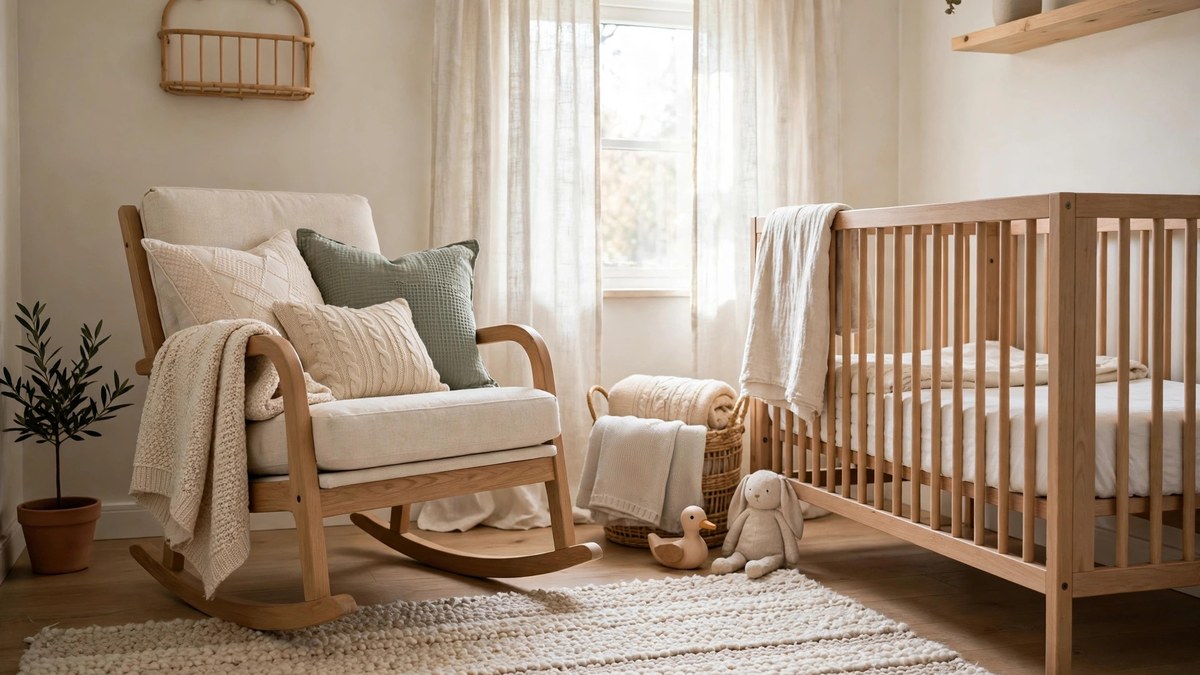
Nursery lighting has three jobs that conflict: bright enough to check a rash, dim enough to preserve sleep, and gentle enough for a parent’s night-adjusted eyes. Solve it with layers — an overhead light on a dimmer for full brightness, a warm lamp or wall light for evening wind-down, and a tiny amber or red-toned night-light for feeds.
Red and amber light deserves its reputation here: it disturbs melatonin — yours and the baby’s — far less than white or blue light, so everyone returns to sleep faster after a feed. A small plug-in or a lamp with a warm bulb near the changing area covers the night shift beautifully.
Keep every light switch reachable from the chair and the door, and put the lamp where you will not trip over its cord while carrying the baby in the dark. In this room, lighting design is safety design.
A small smart bulb or a plug-in timer can quietly professionalize the whole setup: lights that fade up slowly for the morning feed, a night-light that turns itself on at dusk. Automation is not a luxury in a nursery — it is one less thing for an exhausted brain to remember, which is the highest praise any nursery feature can earn.
Personal Touches: Photos, Names, and Heirlooms
The pieces that make a nursery feel loved are rarely bought as decor. A framed photo of the grandparents, the blanket a great-aunt knitted, the wooden toy from a parent’s own childhood — these carry the room’s emotional weight, and they deserve deliberate placement rather than leftover shelf space.
Name art is the classic personal touch: wooden letters, a simple framed print, or a small embroidered hoop above the dresser or door. Keep it light, secured properly, and never mounted where it could fall into the crib — above the changing table or on the wall opposite the crib is safer and just as visible.
Leave room to grow the story. A small shelf or a memory box for the hospital bracelet, first shoes, and the cards people send gives the room a living archive instead of a finished showroom — and if you are short on theme inspiration, browsing cute room themes is a happy way to spend an evening.
Small Nursery, Big Ideas
A small nursery is not a compromised nursery — babies need very little floor space, and small rooms are easier to keep calm, warm, and organized. Use the walls: floating shelves for books and supplies, a peg rail for the diaper bag and carriers, and art hung slightly higher than usual to free the lower wall for furniture.
Choose a light, consistent palette to stretch the space visually, and let one beloved item — the rug, a mural decal, a beautiful mobile — carry the theme so the room does not need ten competing pieces. Mirrors are genuinely useful here, mounted securely and out of reach, bouncing light and doubling the sense of space.
Most of all, resist filling it. The room will accumulate gifts, gear, and toys at a speed no one warns you about. Starting sparse is not minimalism; it is leaving yourself somewhere to put month three.
Common Mistakes to Avoid in Baby Room Decor
- Copying styled crib photos. Bumpers, draped blankets, and pillows in the crib contradict safe-sleep guidance. Style around the crib, keep the inside bare.
- Buying the whole theme set. Matched-set nurseries date fast and cannot grow. Buy a few themed accessories over classic furniture and paint.
- Forgetting the parent. No water spot, no reading light, an uncomfortable chair — the room fails its night-shift worker. Design for the adult too.
- Skipping furniture anchors. Tall dressers and shelves must be strapped to the wall before the baby can pull up, not after the first scare.
- Loose cords near the crib. Blinds, monitors, and lamps all trail cords. Route and secure every one out of reach from day one.
- Overfilling a small room. Gear expands on its own. Start sparse, store closed, and let the room grow at the baby’s pace.
Avoid these and your nursery stays what it should be: the calmest room in the house, for both of its residents.
Frequently Asked Questions
When should I start decorating the baby room?
Most parents start in the second trimester, when energy returns and there is time to paint, assemble furniture, and air out new textiles before the due date. Leaving the last month for rest rather than renovations is a kindness to yourself.
What colors are best for a baby room?
Soft, muted tones — warm white, sage, dusty blue, blush, pale grey — create the calmest backdrop for sleep and feeds. Save bold, high-contrast color for small accents like mobiles, play mats, and art, where stimulation is a feature.
How can I decorate a nursery on a budget?
Paint and decals deliver the biggest transformation per dollar. Then shop secondhand for furniture (with a new crib mattress and a safety check on any used crib), make the rug your one splurge, and let gifts fill the accessory gaps.
Is it safe to hang art above the crib?
Only with great care: use lightweight pieces with acrylic instead of glass, secured firmly so they cannot fall, or better, place art on walls the crib does not touch. Many parents keep the wall directly over the crib to decals or paint, which are risk-free.
What furniture does a nursery really need?
A safe crib with a firm mattress, a dresser that doubles as a changing station, a genuinely comfortable chair, and closed storage. Everything else — swings, extra seating, elaborate shelving — is optional and can arrive later if missed.
How do I make a nursery grow with my child?
Keep the permanent layer (paint, furniture, curtains) classic and put the theme in replaceable accessories. Choose a convertible crib and a real dresser rather than baby-only furniture, and the room evolves with bedding and art swaps instead of renovations.
What lighting is best for night feeds?
A dim, warm, amber-toned light near the changing area or chair. It gives you enough light to work by while disrupting sleep hormones far less than bright white light, helping both you and the baby settle again quickly.
Conclusion
The nurseries that work best are calm for the baby, comfortable for the parent, and ruthless about safety in the sleep space itself. Choose a theme that can grow, keep colors soft and textures rich, store the logistics behind closed doors, and style generously everywhere except inside the crib. Do that, and your baby room decor will carry your family from the first night home through the toddler years, one peaceful feed at a time.
And if the room is not finished by the due date, take a breath: your baby needs a safe sleep space, a fed and rested parent, and very little else. The decals can wait. The love is already installed.
