
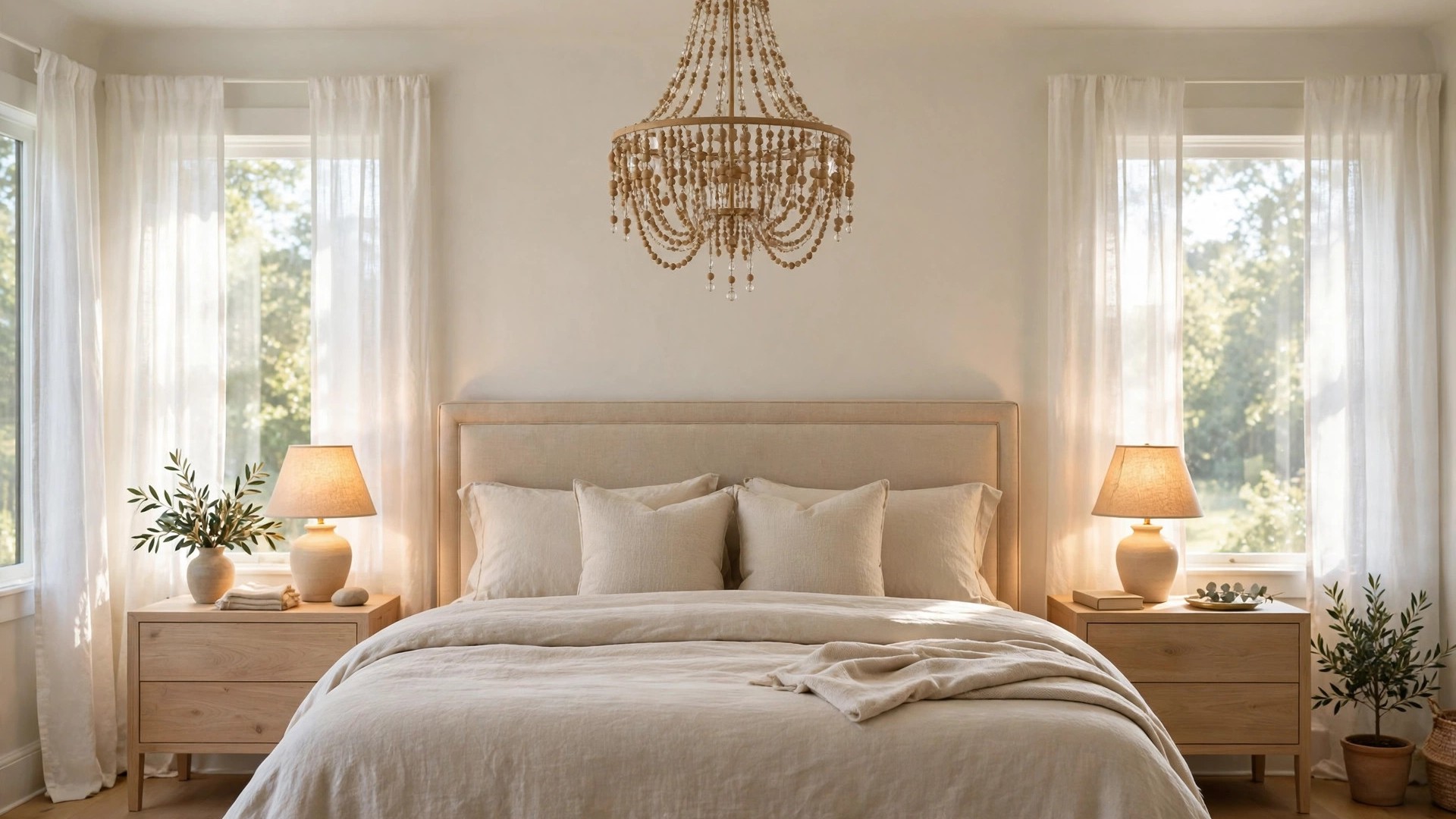

The right ceiling light can completely change how a bedroom feels, and few fixtures do it as dramatically as a chandelier. If you have been collecting bedroom chandelier ideas because your room still relies on a builder-grade flush mount and a couple of mismatched lamps, you are not alone. A chandelier adds a focal point, spreads soft light from the center of the room, and gives even a simple bedroom a finished, intentional look.
The good news is that a bedroom chandelier does not have to be a giant crystal palace piece. Today’s options range from petite beaded pendants for small rooms to sculptural modern fixtures that work like art. This guide walks you through sizing, hanging height, styles, bulbs, and the mistakes that make a beautiful fixture feel wrong once it is installed.
Why a Chandelier Belongs in the Bedroom
Bedrooms are often the last rooms to get good lighting. The bed, rug, and paint get all the attention, while the ceiling keeps whatever fixture the builder chose. A chandelier fixes that imbalance because it treats light as part of the decor, not just a utility.
A well-chosen chandelier also solves a practical problem. Most bedrooms need soft, even, ambient light rather than one harsh overhead bulb. A multi-arm fixture spreads light in several directions, reducing shadows and making the whole room feel calmer at night and brighter on grey mornings.
Finally, a chandelier anchors the room visually. Because the bed is usually centered on a wall, a fixture centered over the bed creates a natural axis that makes furniture placement feel deliberate. It is the same reason designers hang a statement light over a dining table: the eye needs a centerpiece.
There is also a simple finishing effect. Bedrooms decorated in stages often look almost right for years, and the missing piece is usually overhead. Swap the plain fixture for a chandelier and suddenly the curtains, rug, and bedding read as a coordinated scheme rather than separate purchases. Few single changes deliver that sense of completion at this price point.

How to Size a Bedroom Chandelier Correctly
Sizing is where most people go wrong, so start here before falling for a style. A widely used designer rule of thumb is to add the room’s length and width in feet, then use that number in inches as a starting diameter. A 12-by-14-foot bedroom, for example, points you toward a chandelier of roughly 26 inches across.
Beds change the math a little. If the chandelier hangs over the bed rather than the center of the room, scale it to the bed instead. A fixture about one-half to two-thirds the width of the bed usually looks balanced: roughly 24 to 30 inches for a queen and 30 to 36 inches for a king, stated as typical ranges rather than hard rules.
Height matters too. In a room with a standard 8-foot ceiling, a compact fixture 12 to 16 inches tall keeps heads safe and proportions calm. Taller ceilings can carry taller, tiered designs. When in doubt, tape the fixture’s outline on the ceiling and live with it for a day before ordering.
Do not forget the view from the bed itself. You will see the underside of this fixture every morning and night, so designs that look finished from below — covered bottoms, diffusers, or attractive bulb arrangements — are worth prioritizing. A chandelier that glares straight down at the pillows will annoy you no matter how pretty it looks from the doorway.
Vaulted and sloped ceilings need one extra step: a sloped-ceiling adapter or a longer downrod so the fixture hangs level. Most manufacturers sell compatible kits, but it is far easier to confirm before ordering than to discover the problem with the old fixture already removed.
The Right Hanging Height Over the Bed and in Open Space
Where the chandelier hangs decides its height. Over open floor space, the bottom of the fixture should sit at least 7 feet above the floor so nobody brushes it walking through. That clearance rule is the one to protect in hallways, dressing areas, and the foot of the bed if the fixture is oversized.
Over the bed, you have more freedom because nobody walks there. A common approach is to leave about 28 to 34 inches between the top of the mattress and the bottom of the chandelier. That keeps the fixture visually connected to the bed without crowding anyone sitting up to read.
If your ceiling is low, choose a semi-flush or short-drop design instead of forcing a long chain into a short room. Adjustable rods and chains help, but the fixture style itself should suit the ceiling height you actually have.
Crystal and Glass Chandeliers for a Touch of Glamour
The classic image of a chandelier — branching arms hung with cut-glass drops that scatter light — comes from centuries of candlelit design, and you can read more about that history in the Wikipedia overview of the chandelier. In a bedroom, that sparkle reads as romantic rather than formal, especially in a smaller scale.
Crystal works beautifully in primary bedrooms with upholstered headboards, mirrored nightstands, and soft neutral bedding. Keep the rest of the palette quiet so the fixture stays the star. A dimmer is almost mandatory here: full brightness for dressing, low glow for winding down.
If true crystal feels too formal, look at glass bead, seeded glass, or frosted globe designs. They borrow the light-play of crystal with a softer, more relaxed personality that suits everyday bedrooms better.
One practical note: crystal and glass drops collect dust, and dusty crystals stop sparkling. Plan on a gentle cleaning a few times a year — a microfiber glove or a spray-on drip-dry crystal cleaner makes it a ten-minute job. If that maintenance sounds miserable, choose a design with fewer, larger glass elements instead of hundreds of tiny drops.
Modern and Minimalist Chandeliers for Clean-Lined Rooms
Modern bedrooms call for chandeliers with simple geometry: slim rings, linear bars, black metal frames, and exposed bulbs. These fixtures deliver the presence of a chandelier without visual fuss, and they pair naturally with platform beds and uncluttered nightstands.
A ring or hoop chandelier in matte black or brushed brass is one of the most versatile choices. It reads sculptural from below, takes up little visual weight, and works with almost any bedding color. If your taste runs contemporary, browse our roundup of modern bedroom ideas to see how simple fixtures anchor a whole scheme.
Minimalist designs also suit renters and first-time buyers because they move well from room to room. A clean-lined fixture you love will work in your next bedroom, dining room, or entryway without feeling dated.
Finish choice carries a lot of weight in this style. Matte black feels graphic and pairs with white or pale wood; brushed brass warms up grey and navy schemes; chrome and polished nickel suit cool, crisp palettes. Because the shapes are simple, the finish becomes the personality — order finish samples if the retailer offers them, since metal tones vary more in person than in photos.

Rustic, Farmhouse, and Wood-Bead Chandeliers for Cozy Warmth
If your bedroom leans cozy rather than glamorous, rustic chandeliers bring texture overhead. Wood-bead strands, distressed iron, wagon-wheel rings, and rope details all soften a room and echo natural materials like linen, wool, and raw timber.
Wood-bead chandeliers are especially forgiving in bedrooms. They feel light and airy, diffuse the bulbs behind the beads, and suit coastal, farmhouse, and bohemian rooms equally well. Pair one with layered neutral bedding and woven baskets for a calm, collected look.
For a more rugged space, an iron cage or antler-style fixture adds weight above a chunky knit throw and leather accents. Just balance rustic overhead with smoother textiles so the room feels warm rather than themed.
Sputnik, Globe, and Statement Chandeliers for Bold Bedrooms
Some bedrooms want a showpiece. Sputnik chandeliers with radiating arms, clustered glass globes, and oversized sculptural pendants turn the ceiling into the room’s artwork. These are the fixtures guests remember.
Statement pieces work best when the rest of the room steps back. Plain bedding, a simple rug, and minimal wall art let the chandelier carry the drama. Choose one bold metal finish — aged brass is a favorite — and repeat it in small doses on drawer pulls or a mirror frame.
Scale is your safety net here. A bold fixture can be a little larger than the sizing rule suggests, but it should never hang so low or wide that it fights the headboard for attention.
Budget can stretch surprisingly far in this category. Because statement chandeliers rely on shape more than precious materials, many striking designs in painted metal or molded glass land in the same price band as ordinary fixtures. Watch the bulb count, though — a twelve-arm showpiece needs twelve bulbs, and specialty bulb shapes add up quickly at replacement time.
Small Bedroom Chandelier Ideas That Will Not Overwhelm
Small bedrooms benefit from a chandelier just as much as large ones; the trick is choosing a compact, airy design. Look for fixtures roughly 16 to 20 inches wide with open frames, clear glass, or beaded strands you can see through. Visual lightness matters more than actual size.
Semi-flush chandeliers and short pendants are made for low ceilings and tight rooms. They hug the ceiling while still offering the multi-bulb glow that makes a chandelier special. A single statement flush mount can do more for a small bedroom than three table lamps ever will.
Keep colors pale and finishes reflective. A whitewashed bead or polished nickel fixture bounces daylight around during the day, making the room feel bigger before you ever switch it on at night.
Placement can bend the rules in a small room, too. If a centered fixture would crowd a ceiling fan or sit awkwardly over a corner bed, consider centering the chandelier over the bed itself rather than the room’s true center. The wiring may need a swag hook or an electrician’s help, but visually the bed is the room’s anchor, and light that honors it looks intentional.
How Table Lamps in Bedroom Lighting Plans Complete the Picture
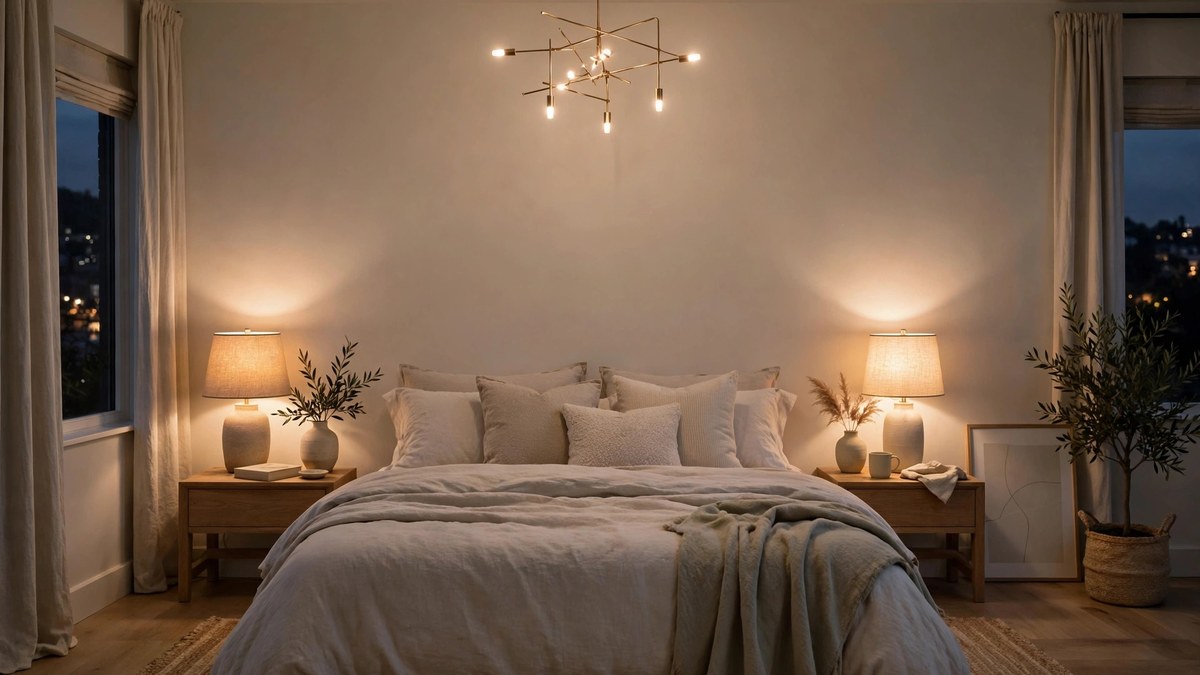
A chandelier provides ambient light, but it should never work alone. Designers layer light in three parts — ambient, task, and accent — and the task layer is where table lamps in bedroom plans earn their place. A lamp on each nightstand gives focused light for reading without flooding the whole room.
Match the lamp scale to the chandelier rather than copying it exactly. If the chandelier is ornate, choose simple ceramic or glass lamps. If the chandelier is minimal, lamps can carry texture through linen shades or turned-wood bases. The goal is a family resemblance, not a matching set.
Think about switches as much as style. Lamps you can switch off from bed, plus a chandelier on a dimmer by the door, mean nobody has to cross a dark room. For more ways to build a restful scheme, our guide to relaxing bedroom design ideas covers the full picture.
Bulbs, Brightness, and Color Temperature for Restful Light
The prettiest fixture fails with the wrong bulbs. For bedrooms, warm light in the 2,700K range is the usual recommendation; it flatters skin, wood, and bedding, and it signals to your body that the day is ending. Daylight-white bulbs around 5,000K belong in laundry rooms, not above your bed.
Total brightness matters too. A bedroom generally feels comfortable with the equivalent of roughly 1,500 to 3,000 lumens of ambient light from the chandelier and lamps combined, depending on room size and wall color. Dimmable LED bulbs let you span that whole range with one fixture.
Bulb shape is a style detail people forget. Exposed-bulb chandeliers look best with globe or Edison-style LED filaments, while shaded fixtures hide standard bulbs completely. Always check the fixture’s maximum wattage and base size before ordering bulbs.
Smart bulbs add another layer of control for those who want it. A set of dimmable smart bulbs can shift from bright morning light to a candle-like evening glow on a schedule, which pairs nicely with a chandelier’s decorative side. Just confirm the bulbs work with your dimmer switch — some smart bulbs prefer to be dimmed through their app and flicker on traditional dimmers.
Bedroom Chandelier Ideas for Every Budget
A chandelier sounds like a splurge, but the price spread is enormous, and lovely options exist at nearly every level. As a rough guide, expect to find simple bead, rattan, and small metal chandeliers in the under-$150 range at big home retailers, with the widest selection of styles between about $150 and $400. Above that, you are paying for scale, materials like real crystal or hand-finished brass, and designer names.
Where should the money go if you are choosing? Spend on size and finish first — those are what you see across the room. Save on bulb count and ornament; a clean six-arm fixture in a good finish looks richer than a fussy twelve-arm piece in thin, shiny metal that reads cheap up close.
Secondhand is the budget decorator’s secret weapon here. Chandeliers are durable, unfashionable ones get discarded during renovations, and a vintage brass or glass fixture often needs only cleaning, new bulbs, and occasionally rewiring by a lamp shop to look spectacular. Check the wiring carefully on older pieces and factor any rewiring cost into the price before you commit.
Renters are not left out either. Plug-in swag chandeliers hang from a ceiling hook and run their cord to a wall outlet, so you can get the look without touching the wiring, then take the fixture with you when you move. It is a slightly more casual look, but in a bedroom it reads as intentional and relaxed.
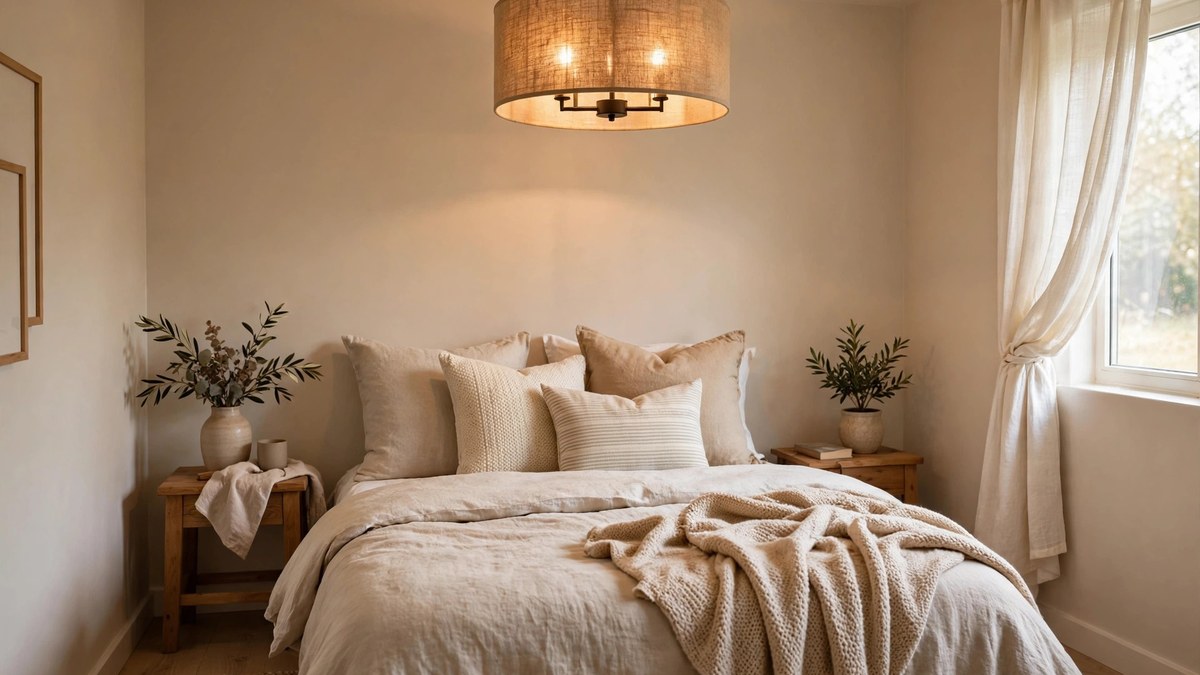
Common Mistakes to Avoid When Choosing a Bedroom Chandelier
Most chandelier regrets come from a handful of avoidable errors. Watch for these:
- Sizing by looks alone. A fixture that seemed delicate in a showroom can vanish in your room — or dominate it. Always measure against the sizing rule first.
- Hanging it too low or too high. Too low feels oppressive over the bed; too high disconnects it from the furniture below.
- Skipping the dimmer. A chandelier without a dimmer is either blinding or off. Budget for a compatible dimmer switch from the start.
- Ignoring the ceiling box. Heavy fixtures need a fan-rated or reinforced electrical box. If you are unsure, have an electrician check before installation day.
- Forgetting wall color. Dark walls absorb light, so a moody scheme needs a brighter fixture. Our breakdown of bedroom paint color ideas explains how color changes the light you need.
- Choosing style over bulbs. An open fixture with ugly bulbs looks unfinished. Include the right bulbs in your budget.
A little planning on these points separates a chandelier that delights you daily from one you stop noticing — or start resenting.
It is also worth deciding honestly whether this is a DIY swap or an electrician job. Replacing a fixture on an existing, properly rated box with the same mounting style is straightforward for many homeowners. Moving the box, adding a dimmer to old wiring, or hanging anything genuinely heavy is professional territory — and far cheaper to hire before a mistake than after one.
Frequently Asked Questions
Is a chandelier too formal for a bedroom?
Not anymore. Chandeliers now come in wood bead, rattan, matte metal, and simple glass styles that suit casual bedrooms as easily as formal ones. Choose the material to match your room’s mood, and the fixture will feel like it belongs.
What size chandelier is best for a 12×12 bedroom?
Start with the rule of thumb: add the room’s length and width in feet and use that number in inches, which gives you about 24 inches here. A fixture between roughly 20 and 26 inches wide, scaled to the bed, is a comfortable typical range.
How low should a chandelier hang over a bed?
Leave about 28 to 34 inches between the mattress top and the bottom of the fixture as a typical guideline. In open floor areas, keep the bottom at least 7 feet above the floor so people can pass underneath safely.
Can I install a chandelier in a bedroom with an 8-foot ceiling?
Yes — pick a semi-flush mount or a compact chandelier with a short drop, generally 12 to 16 inches tall. Open, airy designs feel less heavy in low rooms, and many chandeliers offer adjustable rods or chains to fine-tune the height.
Do bedroom chandeliers need a dimmer?
A dimmer is strongly recommended. Bedrooms shift between tasks — dressing, reading, relaxing — and one fixed brightness cannot serve them all. Make sure the dimmer is rated for LED bulbs if you use them, to avoid flicker and buzzing.
How much light should a bedroom chandelier give off?
Aim for a combined total of roughly 1,500 to 3,000 lumens from the chandelier and lamps together in an average bedroom. Rooms with dark walls or large footprints sit at the top of that range; small, pale rooms need less.
Can a chandelier replace bedside lamps completely?
It can provide the ambient light, but you will miss task light for reading and the soft glow lamps give at bedtime. The most comfortable bedrooms use both: the chandelier for overall light and lamps for focused, low-level pools of light.
Conclusion
A chandelier is one of the highest-impact upgrades you can make in a bedroom, and it does not require a renovation — just the right size, the right height, and bulbs that flatter the room. Start with the measurements, pick a style that matches the mood you want, and layer it with lamps for reading and relaxing. With those basics handled, your bedroom chandelier ideas turn into the warm, finished room you have been picturing.
If you are still torn between two styles, live with the room’s other elements first: the chandelier that echoes your headboard material, curtain color, or rug pattern will almost always be the one that feels right. Trust the measurements, buy the best finish you can afford, and enjoy looking up.
