
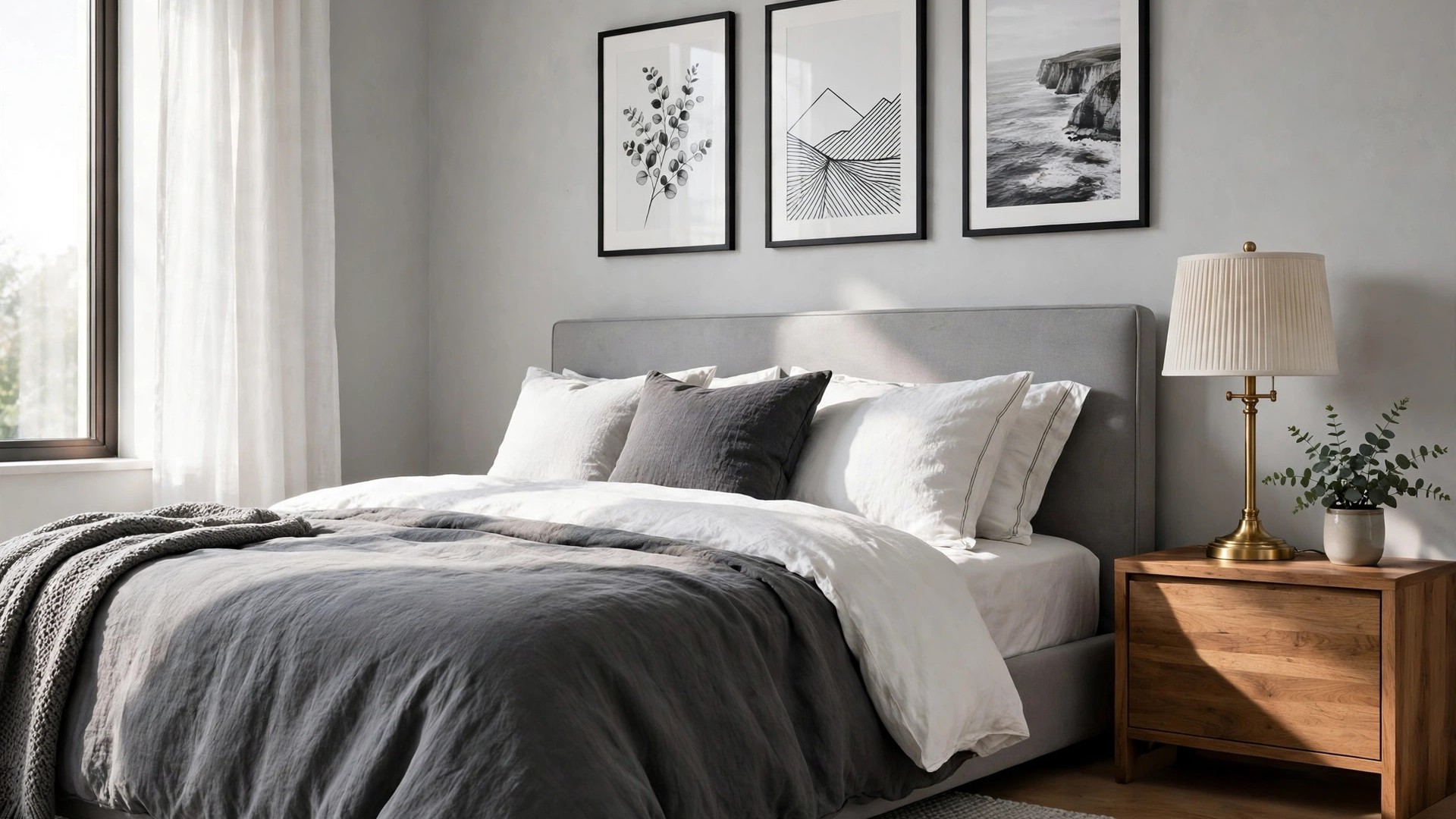

Grey is the most versatile bedroom color there is — and the easiest to get wrong. Done well, a grey bedroom feels serene, layered, and quietly expensive. Done badly, it feels like a car park. The difference is undertone, depth, and what you pair with it, and this guide to bedroom colour ideas grey covers all three: how to choose between light grey and charcoal, why warm greige rescues north-facing rooms, how black-and-white schemes stay soft, and the accent colors, textures, and lighting that keep grey on the right side of cozy.
One note on spelling before we start: whether you search “grey” or “gray,” you are in the right place — it is the same family of colors, and everything here applies to both sides of the Atlantic.
Why Grey Works in Almost Every Bedroom
Grey is technically an achromatic color — the colour grey sits between black and white with no strong hue of its own — and that neutrality is precisely its superpower. Grey recedes. It lets bedding, wood, art, and skin tones become the color story, while it provides the calm backdrop. Few colors flatter both cool palettes (blues, greens) and warm ones (blush, ochre, terracotta) equally well.
Grey also ages gracefully. Trend colors date a room to a specific year; a well-chosen grey scheme absorbs trend accents in cushions and art and lets them go just as easily. Landlords and sellers love it for the same reason decorators do: nearly everyone can imagine their life in a grey room.
The caveat is light. Grey is a mirror of its surroundings — it picks up blue from north light, green from a leafy window, warmth from wood floors. That chameleon quality is why testing in your actual room, at several times of day, is not optional with grey. It is the whole decision.
Light Grey vs. Charcoal: Picking Your Depth
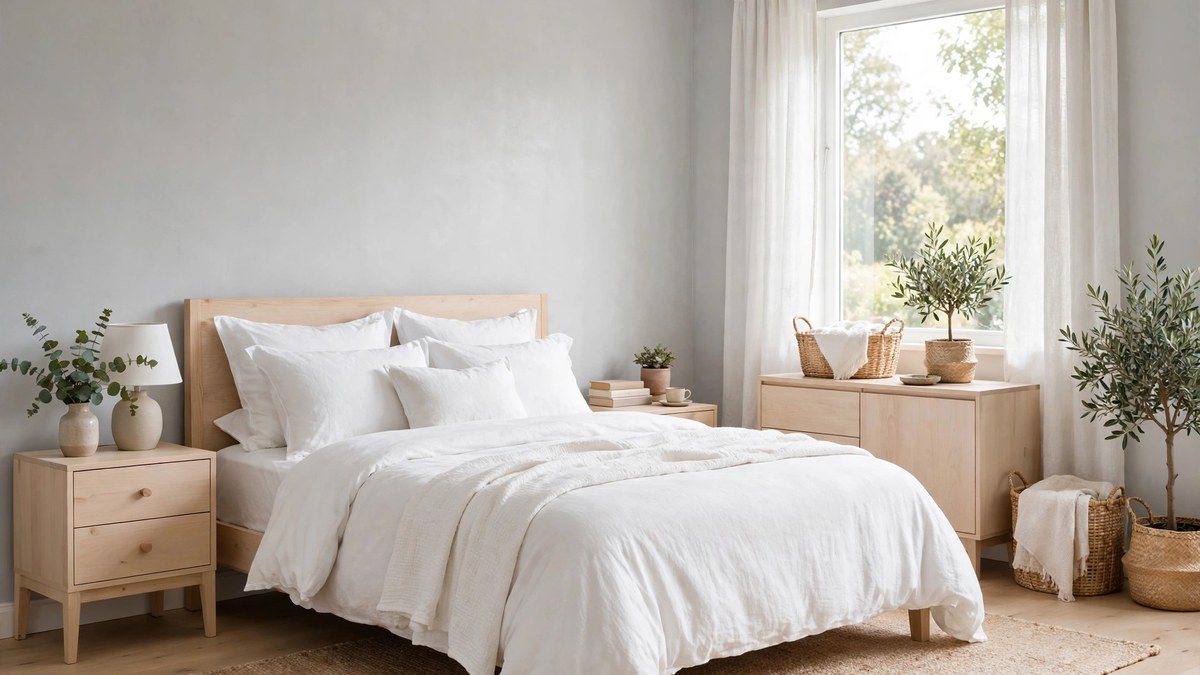
The first choice is depth, and it should follow the room’s daylight. Pale greys (think silver mist and dove) brighten small or dim bedrooms and pair with white bedding for a fresh, hotel-like calm. Their risk is blandness — pale grey on every surface with pale grey bedding can read as an absence of decision. Cure it with contrast: darker cushions, black frames, warm wood.
Mid greys are the workhorses: enough body to feel intentional, light enough for most rooms. They suit the classic scheme — mid-grey walls, white ceiling and trim, bedding in whites and a deeper grey or accent — and they hide the minor scuffs of real life better than pale shades.
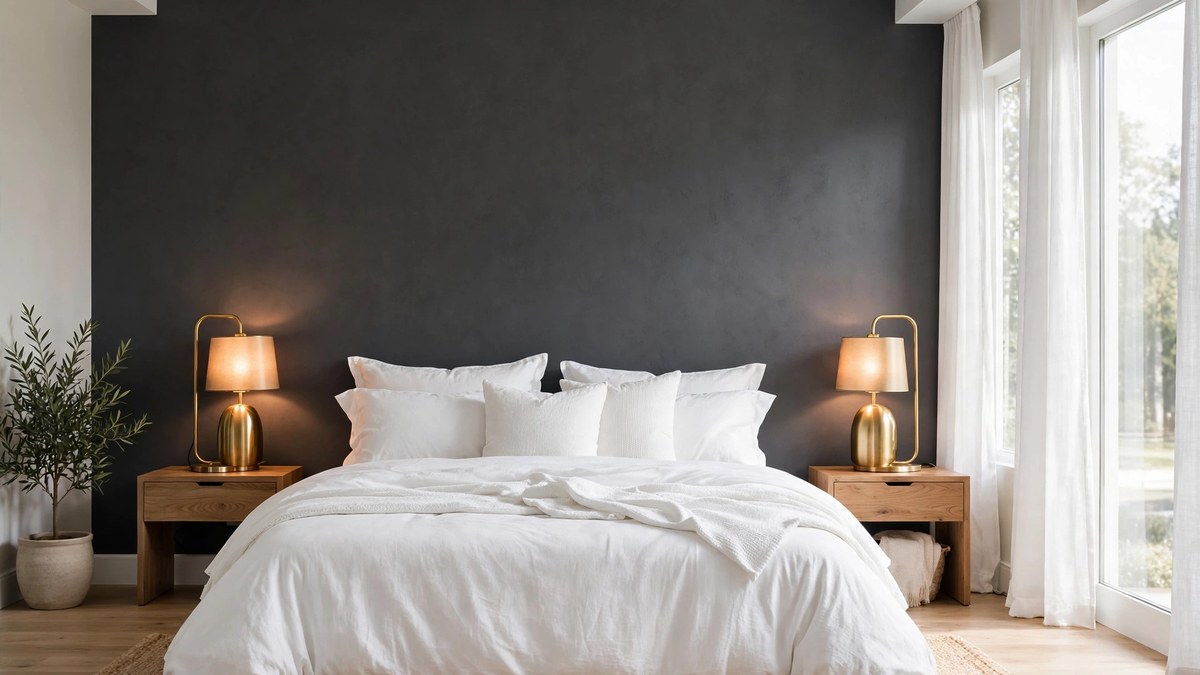
Charcoal and near-black greys create the cocoon: dramatic, intimate, and superb for sleep. In a bright room, a charcoal headboard wall or even four charcoal walls with pale bedding looks designed and enveloping. In a dark room, confine charcoal to one wall plus textiles, and warm it with brass and wood, or the cocoon becomes a cave.
A dependable depth formula: walls one depth, bedding one step lighter or darker, and the deepest grey reserved for one accent — a throw, a bench, the headboard fabric itself.
Test depth before committing with the largest swatch you can manage: two coats on a poster board, moved around the room for a full day. Grey is the most light-sensitive of neutrals — a shade that reads soft silver at noon can turn lavender at dusk or blue in a north window. Paint brands’ “true grey” claims deserve skepticism; almost every popular grey carries an undertone that light will eventually introduce to you. Better to meet it on a poster board than on four finished walls with the furniture back in place.
Bedroom Design Ideas Black and White Schemes
Black and white is grey’s bold sibling: maximum contrast, zero color risk. The scheme works in bedrooms when the ratio is handled well — white dominant (walls, most bedding), black as punctuation (frames, lamp bases, a bench, the headboard), and grey as the diplomat between them, softening the jump in duvet covers, rugs, and upholstery.
Texture is what stops black-and-white from going stark. A white bed needs linen’s slub, a knit’s loops, a quilt’s stitching. Black elements want matte finishes rather than gloss, which can read cold and hard. Our black bedroom ideas show the moody end of this spectrum, where black takes the lead — worth browsing if you are deciding which partner should dominate.
For a softer take, choose off-black (charcoal) and warm white (ivory) instead of true black and optic white. The scheme keeps its graphic clarity but loses the chill — a trick hotels and stylists use constantly. Add one warm metal, usually brass, and the palette is complete.
Warm Grey (Greige) for a Cozy Feel
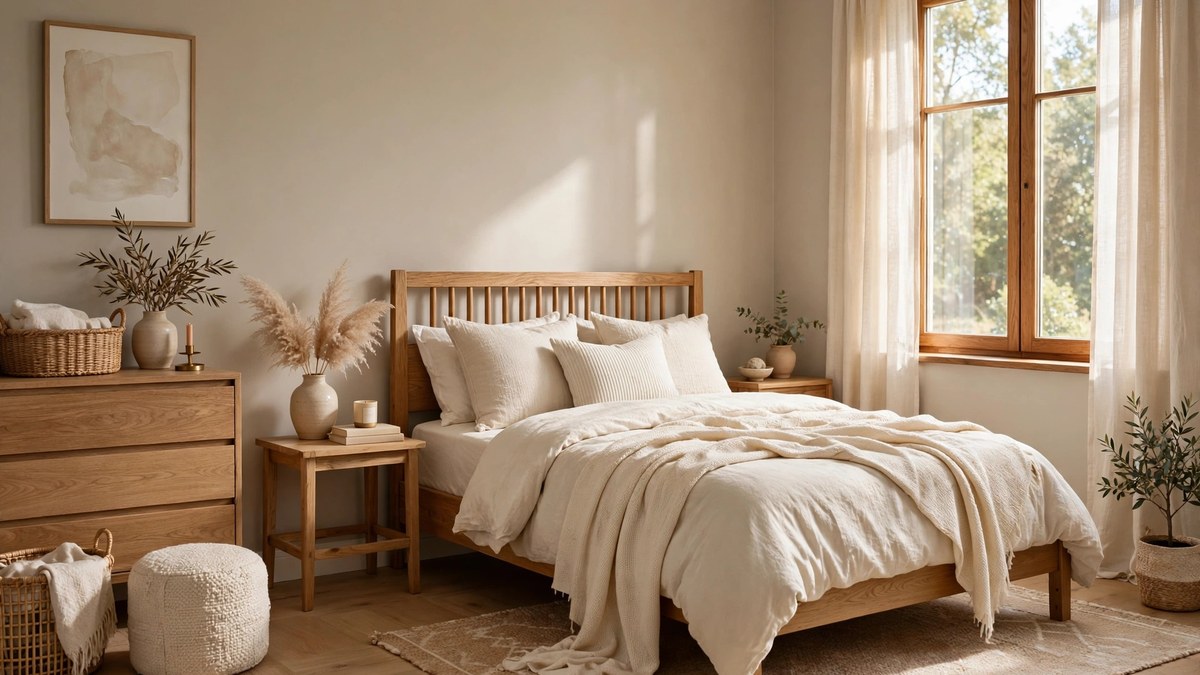
Greige — grey warmed with beige or brown undertones — is the single most forgiving bedroom wall color in existence. It reads neutral in every light, flatters wood furniture from oak to walnut, and never has the blue-ish chill that haunts pure greys in north-facing rooms.
How to choose within the family: the more beige, the cozier and more traditional the feel; the more grey, the crisper and more modern. Popular greige paint families sit right in that middle for a reason. Test two adjacent shades; in dim rooms the lighter usually wins, because greige darkens as light drops.
Greige also solves the existing-furniture problem. Honey oak floors, a cherry dresser, a grey upholstered bed — greige is the diplomatic color that lets warm and cool woods coexist, which is why it anchors so many real (non-staged) bedrooms. If your room mixes furniture eras and finishes, start the palette here.
Grey and White: The Crisp Classic
If greige is the diplomat, grey-and-white is the classic uniform: cool pale grey walls, bright white trim and bedding, and clarity everywhere. It suits coastal, Scandinavian, and modern rooms, and it is the scheme most likely to make a small bedroom feel larger and cleaner.
The scheme’s success depends on shade discipline. Choose one grey for the walls and repeat it (in textiles, art mats, upholstery) rather than sprinkling five unrelated greys — mismatched greys with clashing undertones are the chief cause of the “why does this look off?” feeling. Keep a swatch card of your scheme in your bag when shopping; grey matching from memory is a fiction.
Break the coolness deliberately at the end: a natural wood nightstand, a jute or wool rug, one plant. Grey-and-white without a warm natural element is the exact recipe for the car-park bedroom people fear.
Window treatments decide whether this scheme feels Scandinavian or clinical. White linen curtains that filter light keep the palette airy and private at once; white blackout blinds plus sheer panels give sleep control without color. Avoid bright-white synthetic curtains with a blue cast — they fight the grey on the walls all day. If your windows face north, warm the white itself: ivory and warm-white textiles keep the classic scheme from sliding into the blue-grey chill that makes people abandon grey altogether.
Choosing a Paint Finish for Grey Walls
Finish changes grey almost as much as undertone does, because sheen controls how much light the wall hands back to the room. Flat and matte finishes absorb light, which deepens any grey and forgives minor wall flaws — the calmest look for a sleeping room, and the kindest choice for older, imperfect walls. The trade-off is practical: matte walls scuff more easily and resist scrubbing, so they suit adult bedrooms better than high-traffic family spaces.
Eggshell is the middle path most grey bedrooms land on: a faint sheen that lifts pale greys out of flatness, wipes clean with a damp cloth, and still forgives small imperfections. Satin and glossier finishes generally belong on trim, doors, and furniture rather than bedroom walls, since gloss amplifies every bump and can turn grey steely under lamplight. The one exception is a satin charcoal on a single headboard wall, which can look deliberately lacquered if the wall beneath is flawless.
Keep walls and trim a step apart for definition: matte or eggshell walls with satin trim in a warm white frames the grey without glare. And always test your finalist grey in the exact finish you plan to live with — a matte swatch and an eggshell swatch of the very same color can read nearly a full shade apart once they are on the wall.
Grey With Color Accents: Blush, Navy, Mustard, and Sage
Grey’s party trick is that it makes almost any accent color look more expensive. The four pairings that never miss in bedrooms, each with its own mood:
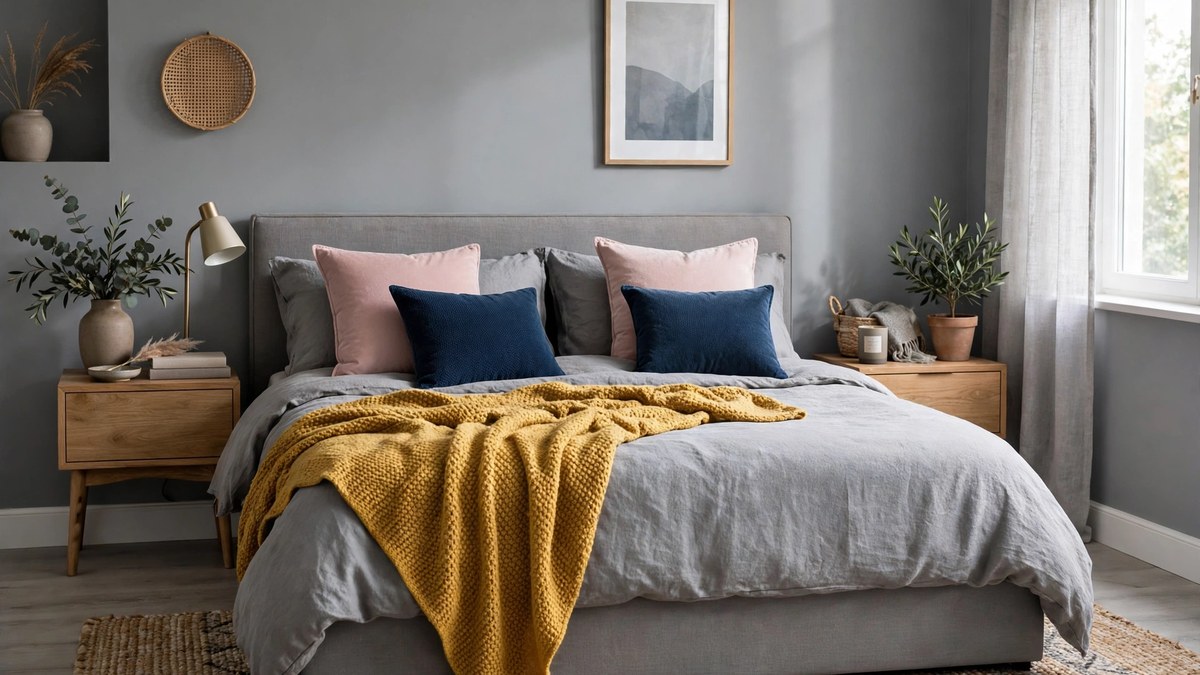
- Blush pink — the soft classic. Grey cools blush’s sweetness; blush warms grey’s reserve. Best as bedding accents, cushions, and art, against mid or pale grey.
- Navy — tailored and calm. Navy bedding or a navy headboard against light grey walls feels like a boutique hotel; brass hardware deepens the luxury.
- Mustard and ochre — grey’s warm counterpoint. A mustard throw and cushions against charcoal is the coziest version of grey going; superb in autumn-weight textiles.
- Sage green — the nature pairing. Sage softens grey toward the botanical and pairs beautifully with pale wood and linen for a restful, organic scheme.
The dosage rule: one accent color, in three to five places, at roughly 10 percent of the room. A second accent is allowed only as a whisper — a book spine, a flower. Our broader bedroom color ideas collection shows these accent pairings inside full palettes if you want to compare directions before committing.
Grey Bedding and Textiles
Bedding is where a grey scheme proves itself, because the bed is the largest grey surface most people actually buy. The layered grey bed — white or ivory sheets, a mid-grey duvet, a charcoal throw, cushions in the accent — has depth precisely because each layer shifts value. A single grey set in one flat shade is where the dull reputation comes from.
Buy textiles by undertone, not by name. “Grey” on a label can mean blue-grey, green-grey, purple-grey, or warm greige. Hold candidates together in daylight before committing; undertones that clash on the bed will clash every day. When buying online, order the cushion cover first as a scouting party for the expensive pieces.
Texture contrast does the rest: linen duvet against a velvet cushion, a smooth sateen sheet under a nubby wool throw, a quilted coverlet between. In a monochrome scheme, texture is not decoration — it is the entire visual interest, so vary it deliberately in every layer. The two-tone wall treatments in our two colour combinations for bedroom walls guide pair especially well with these layered grey beds.
Care rhythms differ by fabric in a grey scheme, because grey shows both lint and fading honestly. Rotate cushions and throws so sun exposure evens out; wash duvet covers inside-out to protect the surface; and keep a fabric shaver for wool and knit throws, whose pills read as dirt on grey. None of this is more work than any scheme — it is simply more visible, which is why grey rooms tend to belong to people who enjoy the ritual of keeping things crisp.
Grey Walls With Wood and Metal Finishes
Grey and wood are natural allies, but the undertone handshake matters. Cool blue-greys pair best with pale, ashy woods (white oak, ash, birch) and can fight orange-toned pine or red cherry. Warm greiges embrace mid and dark woods — walnut, teak, stained oak — and make them look richer. Test a wood sample against the wall swatch in the room’s own light.
Floors set the terms: a grey scheme over warm wood floors is balanced and classic; over grey-toned floors, the room needs deliberate warmth in textiles and metals or it drifts cold. Grey carpet is the riskiest base — choose it a shade warmer than feels necessary in the store.
Metals: brushed brass and antique gold warm grey like nothing else; chrome and polished nickel sharpen it toward modern; matte black grounds it and suits the black-and-white schemes. Pick one metal family for the room’s visible hardware and lamps and stay loyal — mixed metals are an advanced move that monochrome schemes rarely need.
Wood deserves the same loyalty as metal. A single wood tone family — pale ash for Scandinavian, warm oak for classic, deep walnut for drama — repeated in the bed frame, nightstands, and one picture frame unifies a grey room more powerfully than any accent color. If your existing furniture mixes woods, unify it visually instead: a shared rug under the main pieces, textiles in the same grey family on each, and the odd piece painted in the room’s grey so the family resemblance wins over the genealogy.
Lighting Grey Rooms: North-Facing vs. South-Facing
Light decides which grey you actually got. North-facing rooms receive cool, diffuse light that pushes greys blue and can make a chic pale grey feel like a dentist’s waiting room. Counter it by choosing greys with warm (beige, pink, or yellow) undertones, going one shade lighter than instinct, and using warm bulbs everywhere.
South-facing rooms have the opposite gift and the opposite trap: warm, abundant light keeps greys honest all day but can wash pale shades to near-white at noon, erasing the scheme’s contrast. South rooms tolerate — and often need — a step deeper than you first planned, plus matte finishes that do not bounce glare. In both orientations, test the swatch at the room’s brightest and dimmest hours; grey that behaves at both ends of the day is grey you can commit to for years.
South-facing rooms flood with warm light that flatters nearly every grey and can handle the cool, blue-based greys at full strength. Here the risk reverses: warm greiges can read almost beige at noon, which is fine if you know it is coming. East and west rooms swing between the two across the day — test swatches morning and evening before deciding.
Artificial light finishes the job: bulbs around 2700K warm every grey; daylight bulbs undo your careful undertone choices nightly. Dim, layered lamplight also deepens grey walls pleasantly — one reason grey bedrooms photograph so well at dusk and disappoint at noon under a ceiling light.
Small Grey Bedrooms: Keeping It Light
In a small bedroom, grey works best in its pale, warm registers. Pale greige or silver-mist walls, white bedding with a mid-grey throw, and mirrors to multiply light keep the scheme airy. Confine charcoal to a single element — cushions, a bench, frames — so depth appears without weight.
Continuity shrinks visual clutter: paint walls, trim, and even the ceiling in closely related pale tones, and choose a rug in the same family with texture instead of pattern contrast. The room reads as one calm envelope rather than a collection of edges.
One more small-room trick: keep the bed’s grey layers lighter than the walls’ grey by a step. The bed then glows slightly against the walls — the eye reads it as the bright center, and the room feels larger around it.
Grey Bedroom Mistakes to Avoid
The classic error is undertone chaos: a blue-grey wall, a purple-grey duvet, and a warm grey rug arguing quietly forever. Choose one undertone family and audit every grey against it in daylight. Second: the all-flat scheme — one grey, no texture variation — which is how grey earned its dull reputation. Layers and textures are not optional in monochrome.
Third, choosing grey under store lighting and never testing at home; grey shifts more between lights than almost any color. Fourth, forgetting warmth entirely — no wood, no warm metal, no warm light — and then blaming the color. Fifth, in dark rooms, painting four walls charcoal without the pale bedding and lighting plan that makes charcoal work.
Finally, grey bedding bought as a single matching set and never layered. A grey bed needs value steps and texture changes like any designed bed; treat it as a composition, not a uniform.
Grey for Every Style: Scandinavian, Modern, and Traditional Takes
The same grey palette speaks three dialects. Scandinavian grey is the lightest: near-white walls with a breath of grey, pale ash wood, white bedding, and one black accent per view to keep it from floating away. Texture is wool, linen, and light wood; the mood is morning light even in winter.
Modern grey goes architectural: mid-to-charcoal walls or a charcoal headboard wall, low-profile furniture, metal and glass accents, and art in large simple frames. Warmth comes from a single leather piece or a warm-white lighting scheme rather than from color — the drama is in the contrasts of value, not hue.
Traditional grey surprises people: greige walls, classic furniture silhouettes, layered curtains, and grey used as the neutral ground for inherited wood tones and brass. It proves grey is not a style but a stage — almost any furniture you own can stand on it. Choose your dialect first and let it moderate every purchase afterward; grey rooms fail when the dialects mix without a translator.
Frequently Asked Questions
Is grey a good color for a bedroom?
Yes — grey is one of the most restful and versatile bedroom colors because it is neutral, calming, and flattering to other colors. Success depends on undertone and light: warm greiges suit dim and north-facing rooms, while cooler greys excel in bright, south-facing ones. Always test in the room itself.
How do I stop a grey bedroom from feeling cold?
Add warmth in four places: warm-undertone paint (greige), warm wood furniture, brass or gold accents, and 2700K warm lighting. Layer textures — wool, linen, velvet — and include one soft accent color like blush or mustard. Cold grey rooms are almost always missing these layers, not the wrong color.
Which grey is best for a north-facing bedroom?
A warm greige or a grey with pink or beige undertones, one shade lighter than you first reach for. North light adds blue, so cool blue-greys turn icy. Paint a large swatch and judge it on a cloudy afternoon, the room’s most honest light.
Does grey go with a black and white bedroom scheme?
Perfectly — grey is the bridge that softens black-and-white contrast. Use mid greys in the rug, duvet, or upholstery between white bedding and black accents. Choosing warm white and charcoal instead of optic white and true black makes the whole scheme feel softer and more livable.
What colors go best with grey in a bedroom?
Blush pink (soft and classic), navy (tailored and calm), mustard or ochre (warm and cozy), and sage green (natural and restful) are the most reliable. Pick one accent, repeat it in three to five places at about 10 percent of the room, and let grey do the rest.
Should grey walls be lighter or darker than grey bedding?
Either works, but vary them by at least one clear step so the bed and walls do not melt into one flat mass. A favorite formula is mid-grey walls with lighter bedding and a charcoal throw, or pale walls with a deeper grey duvet creating the room’s anchor.
Is grey going out of style for bedrooms?
Cold, blue-based grey as an all-over default has faded, but warm greys and greiges remain designer staples precisely because they behave like neutrals rather than trends. A grey scheme built on texture and warm accents does not date the way a trendy color does.
Final Thoughts
Grey rewards the thoughtful: one undertone family, depth chosen for the room’s light, texture in every layer, and warmth deliberately added through wood, metal, and lamplight. Get those four right and grey stops being the safe choice and becomes the sophisticated one.
Start with the swatch test — two candidate greys, two walls, one full day. The room itself will tell you which grey it wants to be.
