

A themed room gets a bad reputation from childhood bedrooms that looked like a toy store exploded. Done well, though, a theme is just a shortcut: a ready-made palette, a few repeating motifs, and a mood you can feel the second you walk in. These cute room themes are the grown-up-proof kind — cottagecore softness, kawaii pastels, boho texture, coastal airiness — each built on ordinary furniture and bedding, with the cuteness carried by swappable layers rather than permanent commitments. Whether the room belongs to a kid, a student, or an adult who simply likes joy in their decor, the method below keeps the result charming instead of chaotic.
The rule that protects every theme in this guide: theme the textiles, art, and accessories; keep the furniture and walls broadly neutral. Swap the layers and the room changes personality in an afternoon — no repaint, no regret.
What Makes a Room Theme Feel Cute (Not Cluttered)
Cute is a ratio, not an ingredient list. A room reads cute when a soft palette, rounded shapes, and a few playful motifs appear against a calm, uncluttered background. It reads cluttered when every surface carries the theme at equal volume and nothing is allowed to be plain.
Aim for the theme to own about a third of what the eye sees: the bedding, one wall moment, and a cluster of accessories. The rest — furniture, curtains, rug — supports in the theme’s colors without wearing its motifs. Repetition is your other tool: the same motif (stars, strawberries, mushrooms, rainbows) appearing three times in different scales reads as design; twenty different motifs read as a collection problem.
As with any interior design approach, the style works when there is a hierarchy — one hero element, supporting players, and quiet background. Cute themes fail precisely when everything insists on being the hero.
Cottagecore: Soft Florals and Vintage Touches
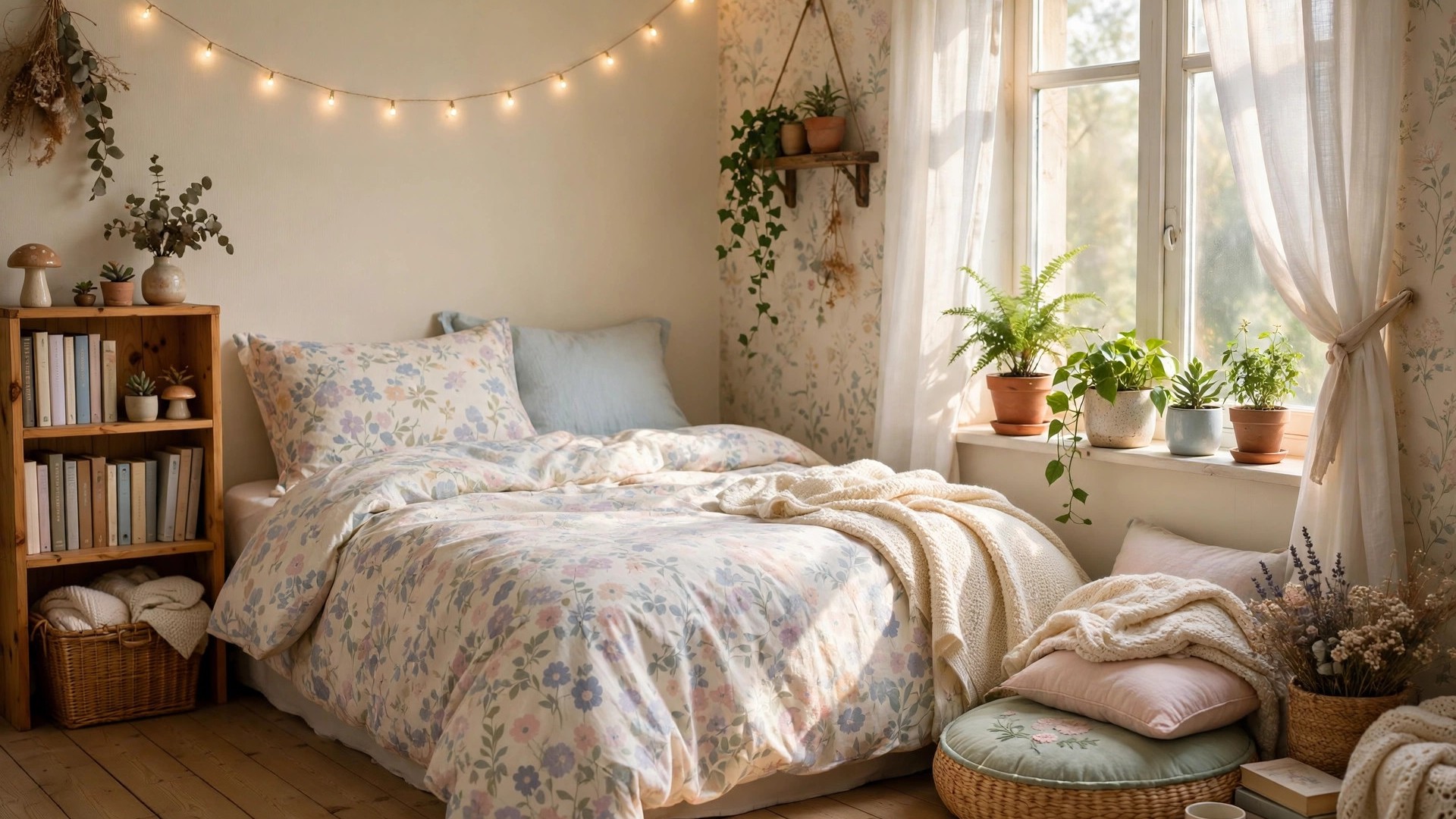
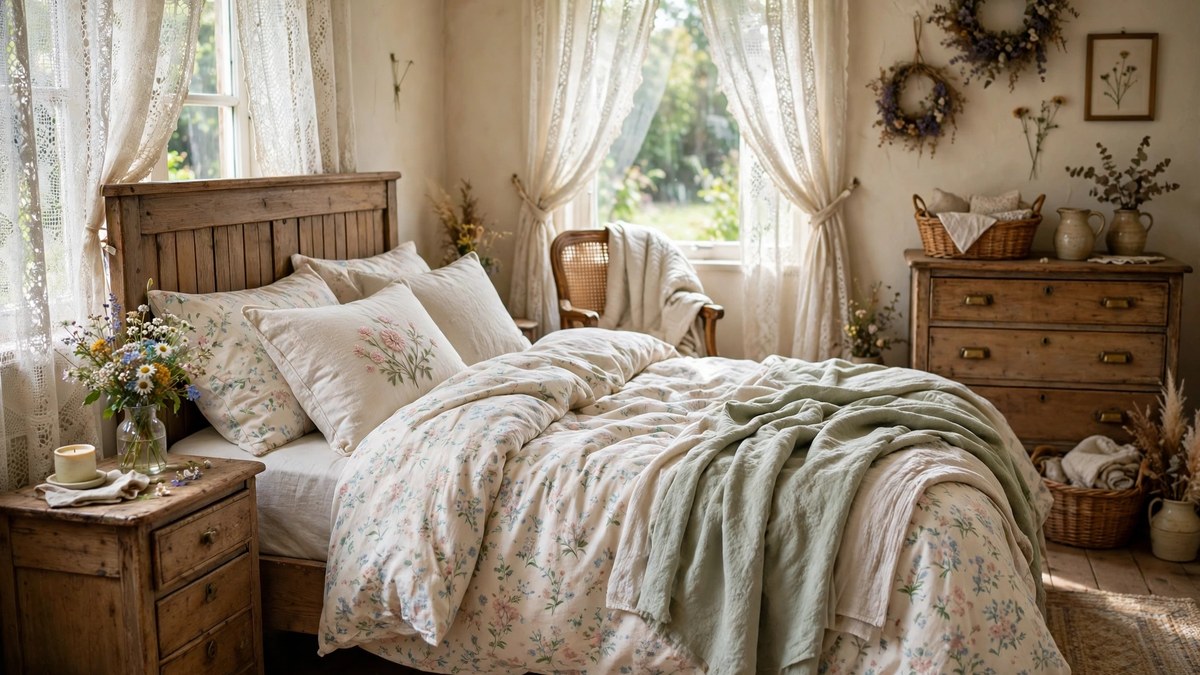
Cottagecore is the reigning cute aesthetic for good reason: it is built from things that are genuinely pleasant to live with — floral prints, natural wood, linen, plants, and objects that look handmade or inherited. The palette runs cream, sage, dusty rose, butter yellow, and faded sky blue, in patterns small enough to layer without fighting.
Build it with a floral or gingham duvet cover, a crocheted or knit throw, a small wooden bookshelf or crate stack, dried or fresh flowers in a jug, and warm fairy lights along a shelf or headboard. Vintage and thrifted pieces are not just allowed here, they are the point: a mismatched teacup holding rings does more for this theme than any new “cottagecore kit.”
Keep it from sliding into costume by grounding with plain pieces — a simple white curtain, an unpatterned rug, a modern lamp. The mix of one contemporary element keeps the room in this decade, in a good way.
Lighting deserves a cottagecore-specific note: this theme glows. Swap a harsh ceiling bulb for warm fairy lights along the headboard, a small ceramic or glass lamp on the bookshelf, and daylight kept soft with plain linen curtains. At night the room should look candlelit even when no candle is burning — that amber, low-level glow is what turns floral prints from “grandma’s spare room” into the storybook look the theme is famous for. If you add one purchase beyond the bedding, make it the warm lamp; it transforms every other piece you already own.
Cool Bedroom Decor With a Cute Edge
Some people want cute with the sweetness turned down — that is where cool-toned, slightly edgy themes come in. Think checkerboard patterns, chrome and silver accents against pastels, retro smiley or star motifs, Y2K pinks with black outlines, or a soft-grunge palette of lilac, charcoal, and cream.
The formula: choose pastel or soft colors for the big layers, then sharpen them with one graphic element — a checkerboard rug, a bold typographic print, black picture frames, a statement mirror with an irregular shape. The contrast is what makes it read cool rather than twee.
Lighting sells this look hard: LED strip glow behind the headboard or desk in a soft color, a lava lamp or sunset projector lamp as the evening source. Keep daytime layers (bedding, curtains) calmer than the night look, and the room works around the clock.
For a girl’s or teen’s room this middle lane — cute but not babyish — is usually the sweet spot, and it ages far better than a full character theme.
Cool-cute is also the most photograph-flexible theme for small rooms, because its graphic elements (checkerboard, stripes, one bold print) read clearly even in a wide phone shot. If your room is tiny, put the graphic element low — a rug or bed skirt — and keep walls in the soft color; pattern at eye level in a small room crowds, while pattern underfoot grounds. Add chrome or silver in just two places (a lamp base, a frame) so the metallic thread feels deliberate rather than leftover.
Kawaii and Pastel Themes
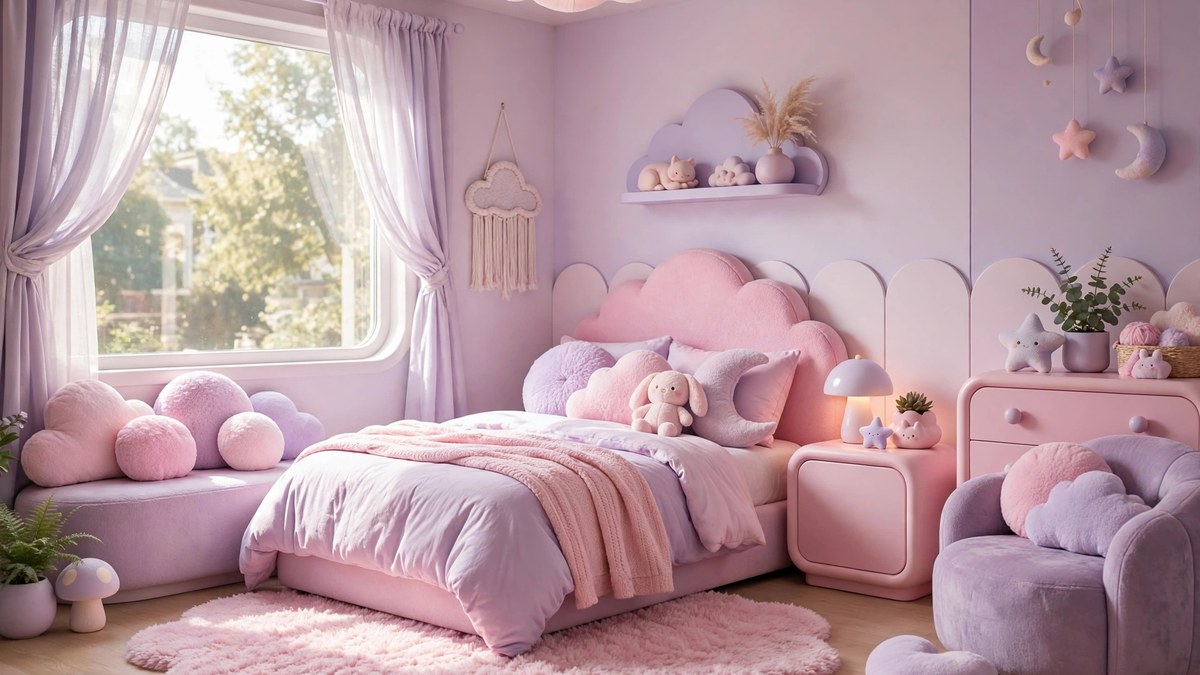
Kawaii styling runs on pastel color blocking: baby pink, mint, lavender, powder blue, and cream, assigned in zones — a pink bedding set, mint curtains, lavender cushions — rather than blended into muddle. Rounded shapes are the second ingredient: a cloud-shaped pillow, a round mirror, plush textures everywhere touch lands.
Motifs here are character-adjacent without needing licensed characters: stars, hearts, bows, strawberries, and simple smiley faces carry the look. Keep them to textiles and small objects (cushions, a rug, a desk set) so the room can grow up by swapping an armful of pieces.
Storage deserves special mention in kawaii rooms, because the aesthetic attracts small objects. Pretty, visible storage — clear boxes, pastel baskets, a pegboard painted to match — keeps the collection looking curated. Once small things sprawl across every surface, the cute curdles into clutter faster than in any other theme.
A kawaii desk zone deserves its own plan, because this theme often belongs to people who study, game, or create at the desk for hours. Keep the pastel palette but demand function: a proper chair softened with a pastel cushion and throw, a desk lamp in the palette (bonus if it has a cute silhouette), cable management hidden in a pastel box, and the collection displayed on a shelf above rather than across the work surface. The rule “cute on the walls and shelves, calm on the desk itself” preserves both the aesthetic and the GPA.
Boho-Cute: Rattan, Macramé, and String Lights
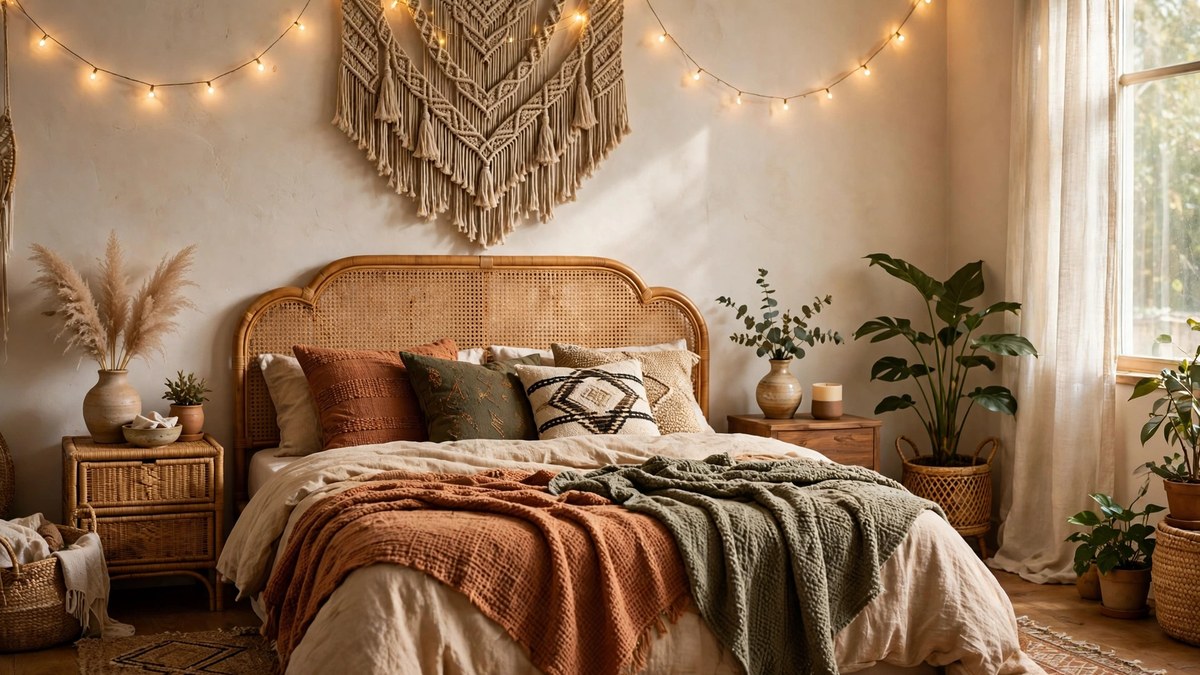
Boho-cute trades pastels for warmth: cream, terracotta, peach, and sage, with texture doing the decorating — macramé wall hangings, rattan and cane furniture, woven baskets, tassels and fringe, and plants in every corner that allows them.
The bed anchors this theme: layered neutral bedding, a patterned or fringed throw, cushions in mixed woven fabrics, and a rattan or upholstered headboard. Above it, a macramé hanging or a gallery of small woven pieces replaces the single art print. String lights — warm white, small globe or fairy style — are the evening signature.
This is the most adult-compatible cute theme: remove the string lights and it reads simply as relaxed bohemian. It also suits rooms with awkward architecture, because asymmetry and layering are features here, not flaws to hide.
Boho-cute also loves a reading nook, and the theme builds one almost for free: the rattan chair, a sheepskin-style throw, the bookshelf plant canopy, and a small rug define a corner that reads as pure storybook. Stock it honestly — current reads on the shelf, a mug coaster on the side table — because boho dead-ends into a stage set when nothing in the room is ever used. A lived-in boho room, throws rumpled and plant slightly wild, is more charming than the pristine version, which is why this theme forgives busy lives better than any other.
Coastal-Cute and Beachy Themes
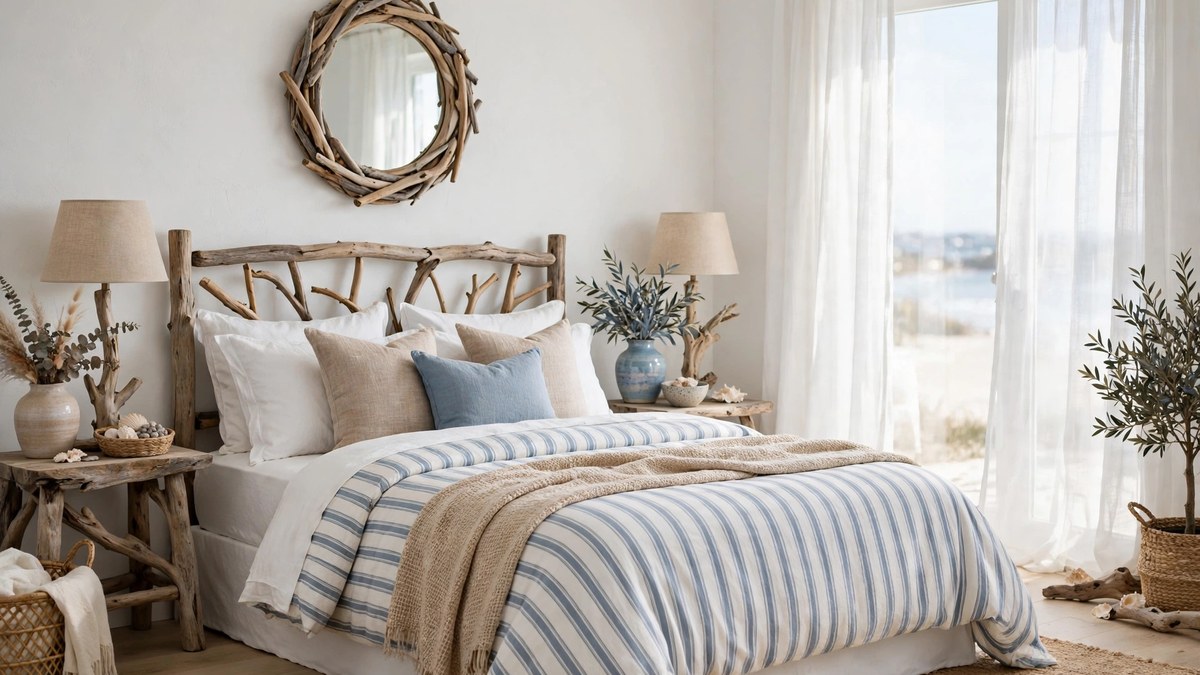
Coastal-cute keeps the beach house palette — white, sand, sea-glass blue and green, driftwood tones — and adds the playful motifs: shells, stripes, sailboats, sea creatures in small doses. The effect is fresh and bright rather than soft, which makes it ideal for rooms that need waking up.
Build it with white or striped bedding, a jute or pale woven rug, rope and driftwood accents, and art of simple seascapes or coastal maps. Woven pendant lights and baskets complete the picture. Our full coastal bedroom ideas guide develops this into a complete serene-retreat look if you want the grown-up version.
Guardrail: one motif family only. Shells plus anchors plus starfish plus “beach” signage is a souvenir shop; shells in three places, beautifully arranged, is a theme.
Themed Rooms for Kids That Still Look Stylish
Kids’ themes fail in two directions: the room a parent designs for Instagram that the child finds boring, and the character explosion the child loves for exactly four months. The stylish middle: a calm, quality shell (walls, furniture, rug in flexible neutrals) with the child’s current passion delivered in bedding, decals, a lamp, and display space they control.
Give the theme a showcase zone — a shelf, a ledge, a pinboard — where the collection lives and rotates. Outside that zone, keep to the palette. A dinosaur-obsessed kid in a sage-and-cream room with dino bedding, dino decals, and a dino shelf is a themed room; it is also one shopping trip away from being a space room, which is exactly the flexibility childhood needs.
Practical picks from our children’s room ideas for small spaces: furniture that scales (a real bed, adjustable desk), storage the child can operate alone, and lighting they can reach — a theme they cannot maintain themselves becomes the parent’s nightly chore.
Dorm and First-Apartment Themes on a Budget
Dorms and first apartments are where cute themes shine brightest, because the base room is a blank beige box and everything cute must be portable. The budget formula that works everywhere: bedding set in the theme palette first (largest surface), a tapestry or large print for the wall behind the bed, string lights, a small rug, and three to five motif accessories.
Thrift and secondhand hunting is a genuine strategy here, not a compromise: vintage pieces give themes (especially cottagecore and boho) authenticity that new kits lack. Set a palette before you shop so secondhand finds cohere.
Respect the logistics: measure the bed (dorms are often twin XL), check what can be hung and how, and keep every themed piece light enough to carry out in June. The best dorm theme is the one that survives move-out and reassembles in next year’s room.
Shared dorm rooms add a diplomatic layer: agree the palette with your roommate before either of you buys bedding, because two themed half-rooms in clashing colors photograph terribly and, more importantly, feel chaotic to live in. A shared color family with different motifs per side — her mushrooms, your stars, same palette — is the classic compromise. And invest jointly in the room’s shared elements (one good rug, one string-light set, a common lamp) rather than duplicating everything in miniature; the room will feel twice as furnished for the same money, and move-out day gets simpler too.
One Wall, One Palette, One Hero Piece: The Theme Formula
If you remember one method from this guide, make it this: every successful cute room has exactly one hero — the floral duvet, the checkerboard rug, the mural wall, the canopy. Choose it first, spend the largest share of budget on it, and let it set the palette.
Then assign the wall: one wall gets the theme’s biggest visual moment (tapestry, decals, gallery, shelf display), and the other walls stay quiet in a palette color. Finally, repeat the palette at least three times in small objects around the room so the hero does not look accidental.
This formula is also the un-theming formula: remove the hero, the wall moment, and the motif accessories, and you have a neutral room again. Themes become low-risk when the exit is that cheap — which is why they belong in layers, never in paint and furniture you must live with for a decade.
The formula also rescues themes that feel “off” but you cannot diagnose. Walk the room and ask three questions: What is the hero? (If you cannot answer instantly, there is none — or there are four.) Which wall carries the theme? (If all of them do, quiet three.) Where does the palette repeat? (If the hero’s colors appear nowhere else, add two small repetitions.) Nine times out of ten, the fix is subtraction or one repetition away, and it costs nothing but an hour of honest looking.
Color families recur across themes, so restyling is often a reshuffle: the lavender cushions from a kawaii phase become accents in a purple scheme like our purple bedroom ideas, and the boho baskets work in almost any warm room.
Seasonal Swaps That Refresh the Theme
Themed rooms stay fresh when they breathe with the year. The swap kit is small: two cushion covers, one throw, one small wall item, and a scent. Spring pushes florals and lighter layers; summer leans coastal or gingham; fall warms everything with rust, mustard, and plaid; winter adds fairy lights, heavier knits, and the “cozy” version of your motif.
Store the off-season pieces in one labeled box in the closet. The rotation makes the room feel redecorated quarterly for almost no money — and it gives beloved theme pieces a rest so they do not wear out their welcome.
If a theme starts feeling stale entirely, do not scrap it at once: remove the motif accessories first and live with the palette for a week. Often the palette was the real attachment, and one new hero piece in the same colors restarts the love affair for a fraction of a full redo.
Theme Mistakes That Tip Into Tacky
The number one mistake is saturation: themed curtains, themed rug, themed bedding, themed lamp, themed wall art, all shouting the same motif. Cut half of it and the room doubles in style. The eye needs plain places to rest, especially in a room meant for sleep.
Second, matching-set syndrome: buying the entire coordinated collection guarantees a showroom-of-the-theme look. Mix sources and vintages instead. Third, ignoring the room’s actual light and size — a dark, moody version of a theme in a tiny north-facing room reads as a cave, not a vibe.
Fourth, adult rooms decorated entirely in a childhood register (or a child’s room with no play in it). Match the theme’s maturity to the occupant, and revisit yearly — cute is a moving target as tastes grow.
Adult Bedrooms With a Cute Theme (Yes, Really)
Plenty of adults want the joy of a theme without a room that apologizes for itself, and the trick is upgrading every material while keeping the motif. The cottagecore bedroom of a thirty-year-old uses a real floral quilt and a wooden bookshelf, not the printed polyester set; the kawaii-leaning room uses pastel cashmere-blend throws and a sculptural lamp rather than plastic accessories.
Adult cute also edits harder. One motif, beautifully repeated — strawberries in the art, a cushion, and a small rug — beats the same motif in fifteen places. Scale helps too: oversized versions of cute elements (a huge round cushion, an extra-large checkerboard throw) read as design statements where clusters of small ones read as merchandise.
The rooms that pull this off best share a serious foundation: a good bed, real curtains, a proper rug, and lighting with dimmers. On that foundation, a bow-shaped cushion or a mushroom lamp is not a regression — it is personality, and personality is the entire difference between a styled room and a lived-in one. Guests remember the mushroom lamp fondly precisely because the room around it is so composed.
Cute Themes That Welcome Pets, Too
A themed room and a pet can coexist happily if the theme is built from washable, forgiving pieces from the start. Choose bedding and throws in the mid-tone shades of your palette: the paler pastels show every muddy paw print, while a slightly deeper version of the same color hides a week of real life between washes. Keep two duvet covers in rotation so laundry day never leaves the bed off-theme.
Fabric choice matters more than color. Smooth, tightly woven cottons release pet hair with a shake or a lint roller, while loose knits, boucle, and faux fur trap it more or less permanently. Save the high-texture pieces for shelves and wall hangings, at heights above shedding level, and let everything within pet reach be wipeable or machine washable.
Give the pet an official place inside the theme instead of fighting their unofficial ones. A cushion or small pet bed in the room’s palette, set in the sunny corner they already prefer, reads as part of the design and concentrates fur in one washable spot. Add a framed photo of them in a frame that matches the motif family, and the “pet corner” becomes a deliberate feature guests compliment rather than a compromise you apologize for.
One caution for the plant-loving themes: check every plant against a pet-safety list before it joins the room, and keep trailing or tempting specimens on high shelves. Several common decorative houseplants are unkind to cats and dogs who chew, and no theme is cute enough to be worth a vet visit.
Frequently Asked Questions
What are the most popular cute room themes right now?
Cottagecore leads, followed by kawaii pastel, boho-cute, coastal, and the “coquette” soft-bow aesthetic. Checkerboard “cool cute” and soft grunge are the popular options for teens who want cute without sweetness. All of them can be built on neutral furniture with themed layers.
How do I theme a room without it looking childish?
Keep furniture and walls neutral, put the theme in textiles and a few accessories, choose one hero piece, and limit motifs to about a third of the visible elements. Quality materials (real wood, woven textures, framed art) also push any theme firmly into adult territory.
What is the cheapest way to create a themed room?
Start with a bedding set in the theme’s palette, one wall moment (tapestry, decal set, or print), string lights, and three motif accessories — realistically achievable secondhand and on sale for a modest budget. The palette discipline matters more than the spend.
How many colors should a cute theme use?
Three main colors plus a neutral base is the reliable formula — for example cream as the base with sage, dusty rose, and a touch of butter yellow. More colors than that usually reads as rainbow clutter unless you are deliberately doing a maximalist rainbow theme with strong editing elsewhere.
Can a small room handle a theme?
Yes — small rooms often suit themes better, because a little goes further. Use the formula strictly: one hero, one wall, motifs in small accessories only, and keep the palette light if the room lacks windows. A themed nook corner can carry the whole effect in a tiny space.
How do I transition a kid’s themed room as they grow?
Keep the shell (walls, furniture, rug) neutral from the start, and let bedding, decals, and the display shelf carry each phase. Give the child control of the showcase zone — when the obsession changes, only the layers change, which keeps transitions cheap and tear-free.
Are themed rooms a bad idea for resale or rentals?
Not if the theme lives in portable layers. Paint and permanent fixtures in strong themes can complicate resale and violate leases, but bedding, art, rugs, and accessories leave with you. Renters should skip themed paint entirely and let textiles do the work.
Final Thoughts
A cute theme is a promise about how a room feels — soft, playful, personal. Keep the shell neutral, crown one hero piece, repeat a gentle palette, and let motifs appear in edited doses, and any theme in this guide will read as charming design rather than decoration overload.
Pick the theme that makes you smile in the first three seconds. That reaction is the whole point — the formula just makes sure you still smile at it in month six.
