
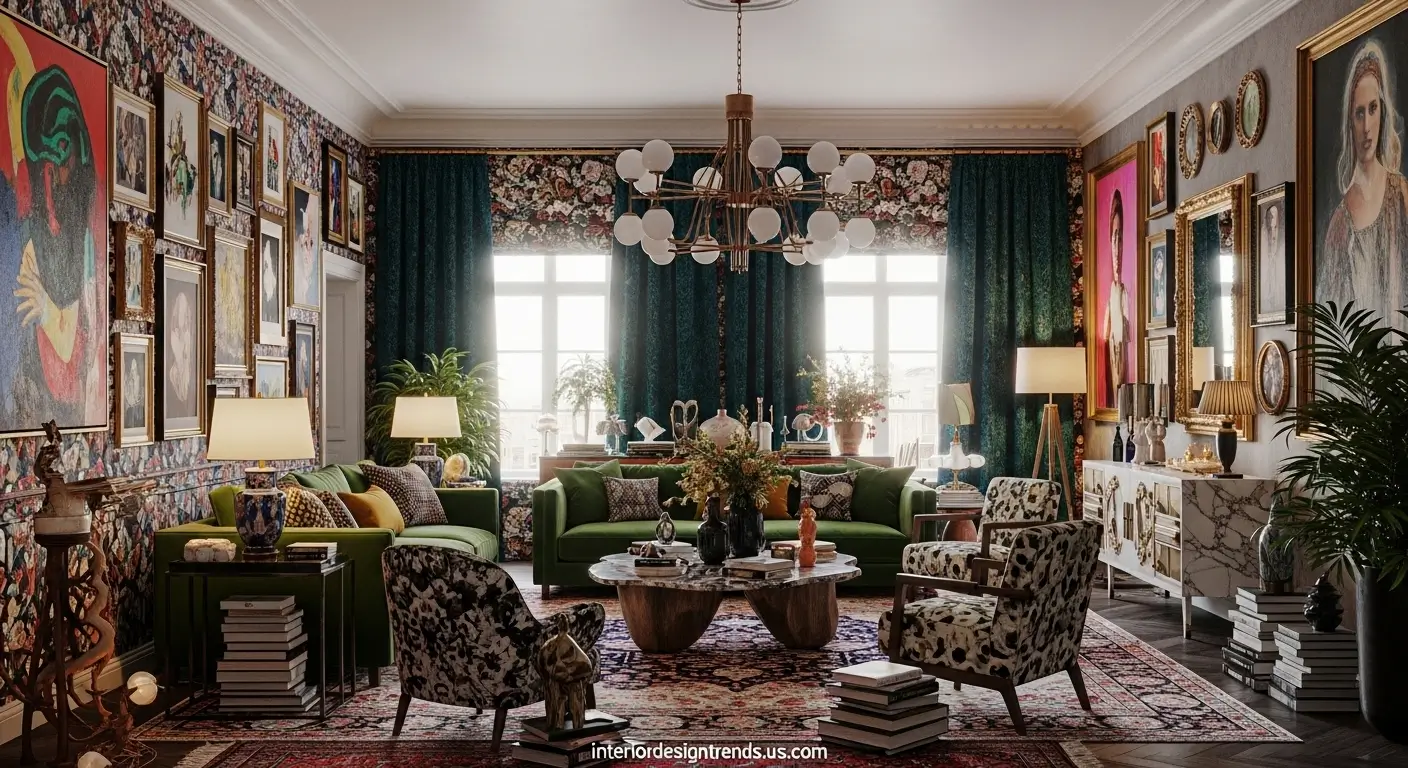

Maximalist decor is a home style that celebrates beauty, personality, comfort, and detail. Instead of making a room look empty or too simple, this style allows you to fill your space with art, books, patterned fabrics, stylish lighting, vintage finds, and personal pieces that matter to you. A well-designed maximalist room feels warm, expressive, and full of life. It does not try to hide the character. It brings character forward and turns it into the main strength of the room.
Many people think maximalist decor means putting too many things in one place, but that is not the real meaning. Good maximalism is not random clutter. It is a thoughtful way of decorating where every layer has a purpose. The colors connect, the textures balance, and the objects tell a story. When done well, this style feels rich and inviting rather than busy or stressful. That is why more homeowners now see maximalism as a smart and stylish way to create a memorable home.
What Is Maximalist Decor
Maximalist decor is a decorating style that uses more color, more pattern, more texture, and more personality than simple design styles. It gives you freedom to mix beautiful things in a way that feels expressive and memorable. In a maximalist room, you may see deep wall colors, patterned curtains, layered rugs, statement furniture, decorative lighting, art-filled walls, and shelves styled with meaningful objects. The room feels collected, lived in, and visually rich.
The real heart of maximalism is not simply having more items. The real heart of maximalism is creating a room that feels intentional. A successful room still has structure. It has a color story. It has repeated shapes, repeated tones, and balanced styling. That is why some full rooms look elegant while others look messy. The difference is planning and editing. Maximalism works best when every item supports the mood of the room.
Another important point is flexibility. Maximalism does not belong to only one design look. It can feel classic, modern, vintage, artistic, romantic, dramatic, or soft. One home may use jewel tones and ornate furniture. Another may use rich neutrals, dark wood, and layered natural materials. The details can change, but the feeling remains the same. A maximalist room should feel full of character, beauty, and identity.
How Maximalist Decor Is Different from Minimalism
Minimalism is based on simplicity. It usually uses fewer objects, less decoration, softer colors, and more space. A minimalist room often feels calm and airy. Maximalism works differently. It uses layering, contrast, visual richness, and personal detail to create warmth and energy. Instead of removing many details, it uses details carefully to build atmosphere and emotion.
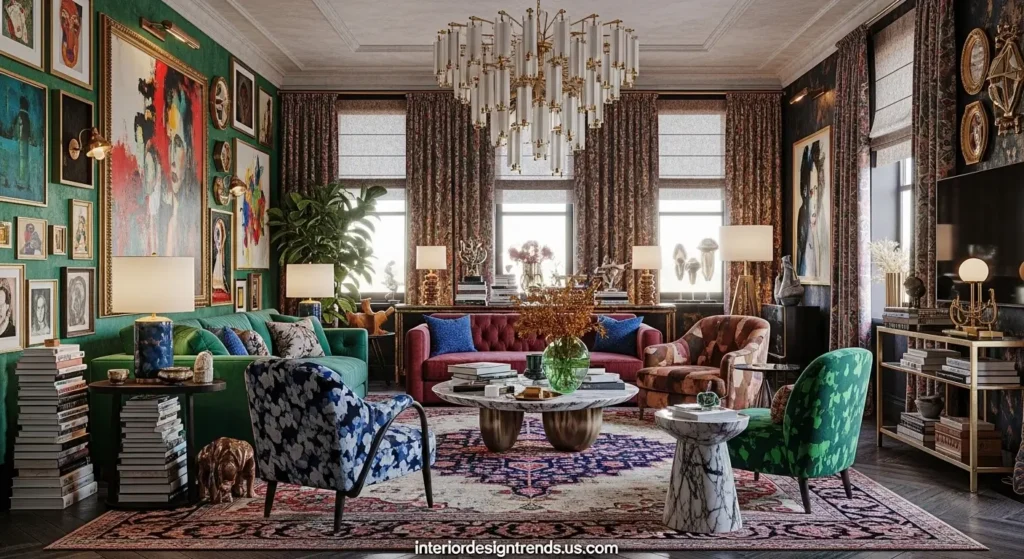
In a minimalist room, you may find a plain sofa, simple walls, and limited decor. In a maximalist room, you may find patterned cushions, a decorative rug, books, artwork, mixed materials, and collected objects. Minimalism removes extra layers. Maximalism builds them with care. Neither style is wrong. They simply create different emotions. If you want your home to reflect more of your taste, hobbies, and memories, maximalism often gives you more room to do that.
Why Personal Style Matters in Maximalism
Personal style is the foundation of maximalist decor. The best maximalist homes do not look copied from a showroom. They look unique. They feel collected over time. They often include favorite books, family pieces, travel finds, handmade objects, old furniture, and meaningful art. This makes the home feel real instead of overly staged.
When you decorate with personal style in mind, the room gains depth. A brass lamp from a market, a painting you love, a stack of old design books, or a fabric from your travels can become more than decor. These pieces become part of the story of the home. Maximalism is powerful because it permits you to show what you love in a beautiful and organized way.
Why Maximalist Decor Is Trending Again
Maximalist decor is growing in popularity because many people are tired of rooms that feel too plain or too similar to each other. For years, simple neutral interiors were everywhere. White walls, beige furniture, and very little decoration became a common look. That style can still work well, but many homeowners now want more comfort, more story, and more visual personality in their homes.
Maximalism answers that need. It makes room for color, pattern, art, memory, and emotion. It lets people create homes that feel lived in and expressive instead of overly controlled. Social media, design magazines, and home tours have also made bold interiors more visible. As people see colorful walls, layered shelves, gallery walls, and patterned rooms that still look polished, they become more confident about trying stronger design choices in their own homes.
The Move Away from Plain Neutral Rooms
Neutral rooms can still be elegant, but they do not always feel personal. When every room uses the same pale tones and very little decoration, the result can sometimes feel flat or cold. Many people now want a stronger emotional feeling in their homes. They want spaces that feel warm, memorable, and connected to their lives.
Maximalist decor brings that feeling back. Even one rich wall color, one patterned fabric, or one art-filled corner can change the mood of a room. The goal is not to reject all neutral design. The goal is to add more identity, more comfort, and more visual interest where needed. That is why maximalism appeals to people who want their home to feel more alive.
Why This Style Feels More Welcoming
Maximalist rooms often feel more welcoming because they use softness and layering. Rugs make a room feel grounded. Curtains soften the walls. Lamps add warmth. Cushions, throws, art, and books make the room feel lived in. These elements create comfort as well as style.
A plain room can look neat, but a layered room often feels more inviting. It encourages people to sit, stay, and enjoy the space. A room that includes memory, texture, and color usually feels emotionally warmer than a room that only focuses on restraint. This is one reason maximalist interiors have such a strong emotional appeal.
The Core Elements of Maximalist Decor
Bold Colors
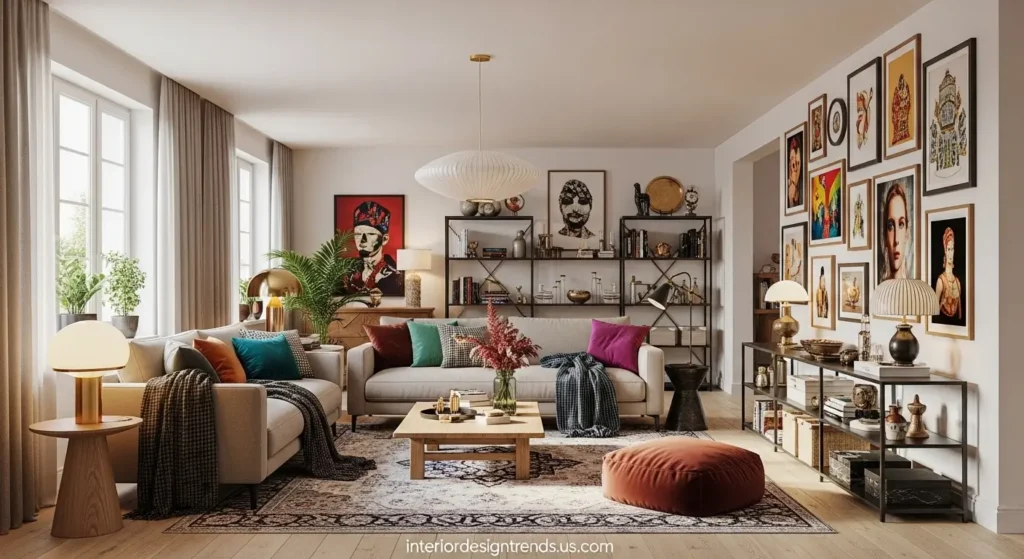
Bold colors are one of the biggest features of maximalism. Deep blue, emerald green, mustard, burgundy, rust, plum, blush, black, and gold all work well. These colors can appear on walls, furniture, rugs, curtains, art, or decorative accessories. Rich color creates instant atmosphere and gives the room confidence.
The secret is not using every strong color at once. The secret is building a clear color palette. Choose a few shades and repeat them across the room. A blue tone in the rug can appear again in the art. A rust tone in the cushion can reappear in a lamp base or throw. This repeated color pattern helps the room feel connected instead of chaotic.
Mixed Patterns
Mixed patterns bring energy and movement into a room. You can combine florals, stripes, checks, geometric prints, traditional motifs, or animal-inspired patterns. The key to pattern mixing is balance. If one pattern is large and dramatic, pair it with one that is smaller or more regular. This keeps the room lively without making it hard for the eye to rest.
A simple rule is to vary the pattern scale and repeat colors. For example, a large floral curtain, a medium striped cushion, and a small geometric chair print can work together if they share at least one or two colors. Good pattern mixing looks fearless, but behind it, there is usually a very clear design logic.
Layered Textures
Layered textures make a maximalist room feel deep and luxurious. Without texture, even a colorful room can feel flat. Velvet, linen, leather, wood, glass, metal, ceramic, cane, marble, boucle, and woven baskets all add tactile interest. When several textures appear together, the room feels more complete.
Texture is especially important in rooms that use fewer bright colors. A neutral maximalist room may rely more on woven materials, heavy drapery, soft upholstery, carved wood, and handmade surfaces. This shows that maximalism is not only about color. It is also about richness in material and touch.
Statement Pieces
Every strong maximalist room needs a few statement pieces. This could be a dramatic chandelier, a painted cabinet, a large artwork, a colorful sofa, an antique mirror, or bold wallpaper. A statement piece gives the room direction. It becomes a visual anchor and helps other layers feel intentional.
The best statement pieces are not only beautiful. They also support the mood of the space. A moody room may need a dark marble coffee table or a brass lamp. A cheerful room may need a patterned armchair or a bright rug. Choosing one or two hero pieces first often makes the rest of the design process much easier.
How to Start with Maximalist Decor
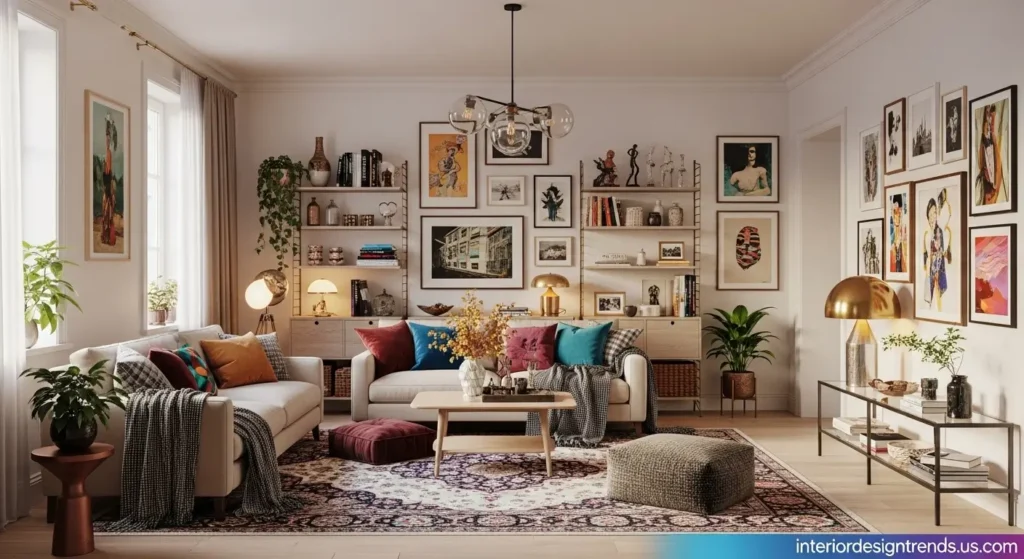
Starting maximalism can feel difficult because there are many choices. The best way is to begin slowly. Do not try to redesign your whole home at once. Start with one room and one clear idea. That may be a wallpaper you love, a bold paint color, a patterned rug, or a statement sofa. Let that first choice guide the rest of the room.
After choosing your main inspiration piece, build a color palette of three to five shades. One should lead the room, while the others support it. Then add layers over time. Start with furniture and lighting, then add textiles, art, and decorative objects. This slower approach prevents expensive mistakes and helps the room feel collected rather than rushed.
How to Choose a Working Color Palette
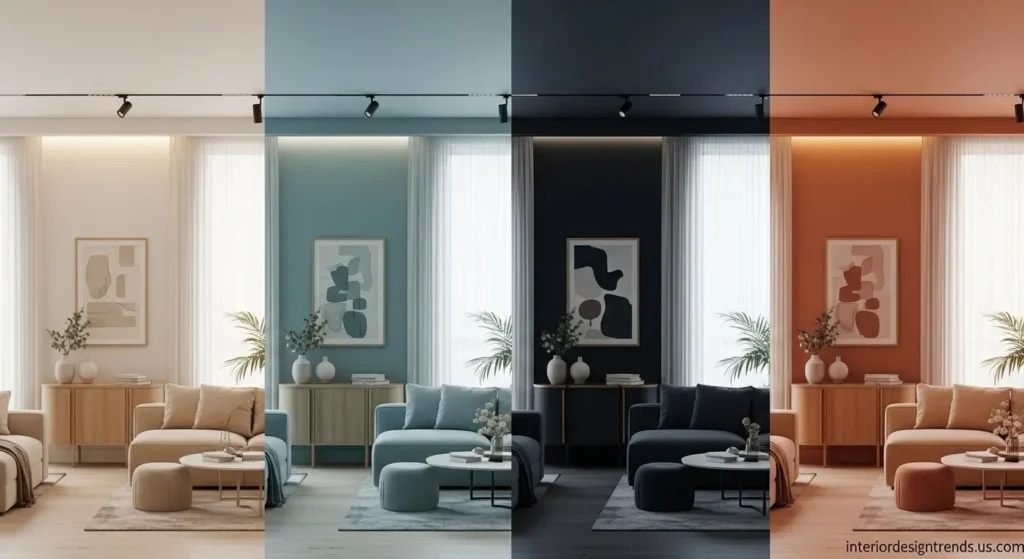
A color palette is essential in maximalist decor because it keeps rich styling under control. Without a clear palette, the room can feel random. With a palette, even a very layered room can look polished. Choose one main color, one or two supporting colors, and one accent tone for contrast.
For example, you could build a room around forest green, cream, rust, and black. Or you could use navy, pink, mustard, and walnut wood. Once you choose your palette, repeat those tones throughout the room in fabric, art, accessories, and furniture. Repetition is what turns abundance into cohesion.
How to Mix Colors, Prints, and Textures Like a Pro
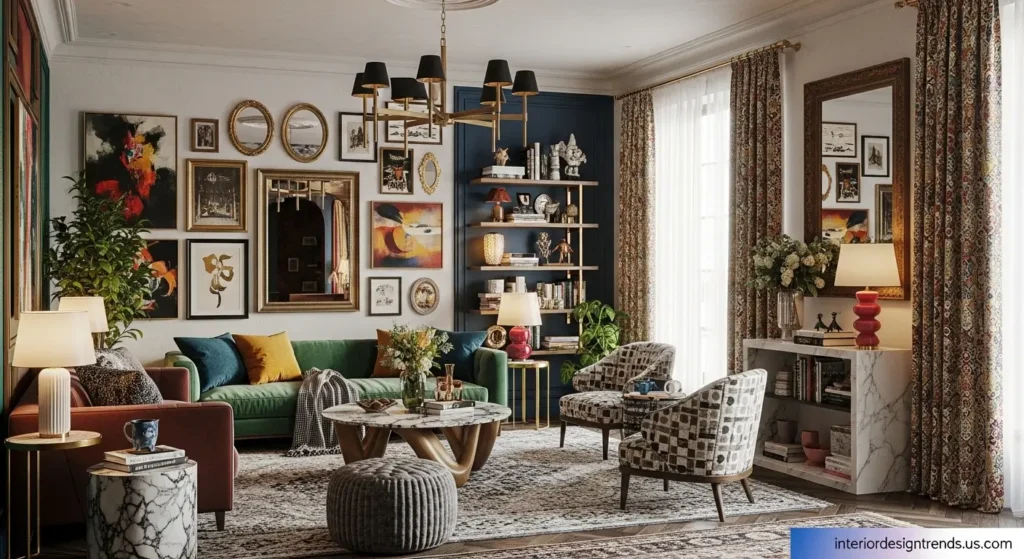
The easiest way to mix colors, prints, and textures is to think in layers. Start with the largest surface, such as the wall color or rug. Then move to medium elements like curtains, chairs, and bedding. Finish with smaller items like cushions, lampshades, and accessories. This gives the room structure.
Use different pattern sizes instead of patterns that all compete equally. Mix one large print, one medium print, and one subtle print. Add texture through at least three material types, such as soft fabric, wood, and metal. Repeat colors and materials across the room so the eye keeps finding familiar details. This is what makes a layered room feel professionally styled.
Living Room Ideas for Maximalist Decor
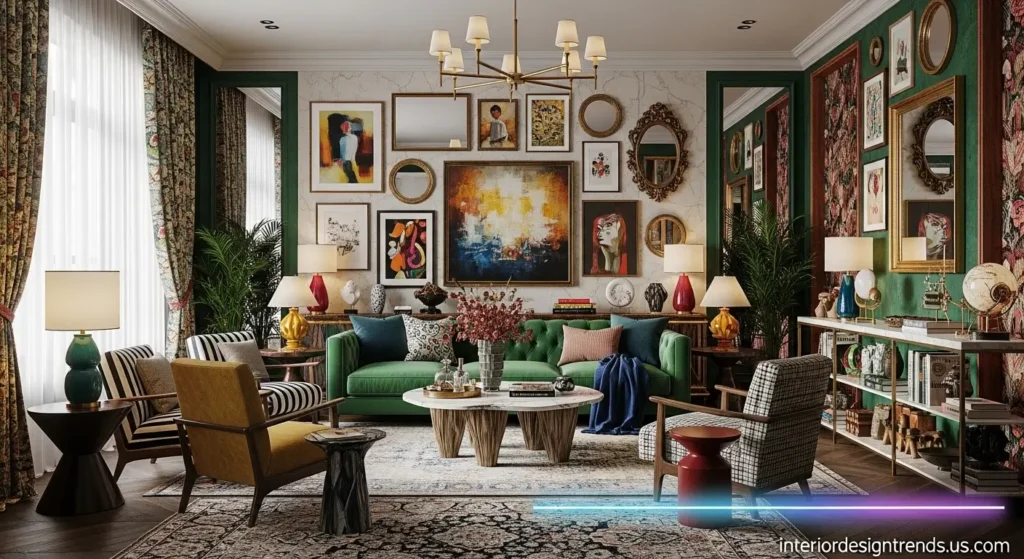
The living room is one of the best places to use maximalist decor because it gives you many styling opportunities. Start with a rug that has color or a pattern. Choose a sofa that feels rich and comfortable. Add cushions in mixed prints, but tie them together with shared colors. Use a coffee table that adds material contrast, such as dark wood, marble, or brass.
Walls matter a lot in a maximalist living room. A gallery wall, painted bookshelves, large art, or patterned wallpaper can completely change the feel of the space. Lighting should also be layered. Use a ceiling light, a floor lamp, and at least one table lamp to build warmth and depth. Books, plants, trays, candles, and collected objects can finish the room, but they should be grouped with intention instead of scattered everywhere.
If you want a more advanced look, mix old and new pieces. A modern sofa can sit beside a vintage side table. A sleek lamp can work with traditional art. This contrast gives the room personality and keeps it from feeling too predictable.
You may also find our article on One moment, please… helpful for the next step.
Bedroom Ideas for Maximalist Decor
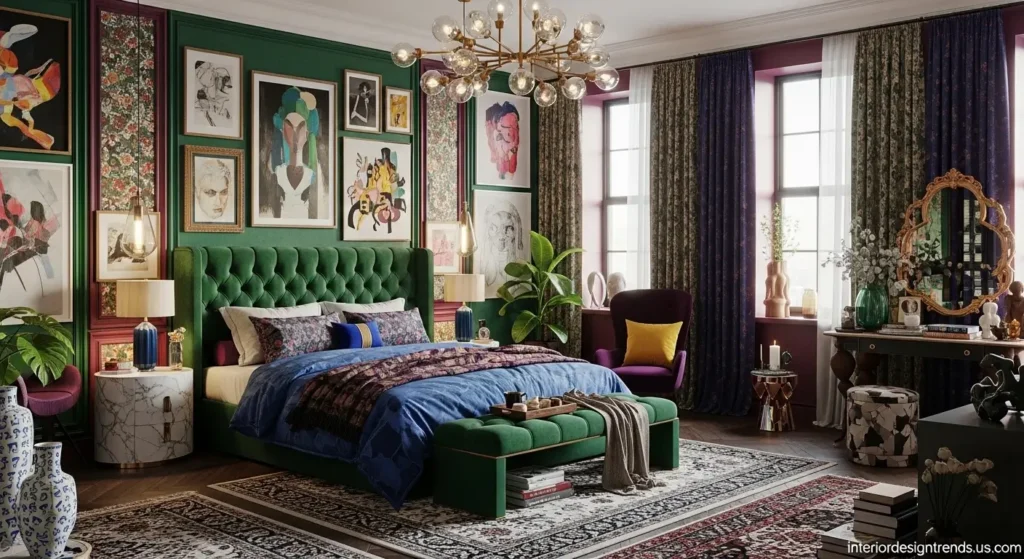
A maximalist bedroom should feel rich and cozy. The bed usually becomes the main focus, so start there. You can create impact with a bold headboard, patterned wallpaper behind the bed, or colorful bedding. Layer pillows, throws, and blankets to add comfort and texture. Curtains should feel like part of the design, not an afterthought.
Bedside tables offer another chance for style. Lamps, books, small framed art, and decorative objects help the room feel personal. If you have enough space, add a bench, accent chair, or vintage chest to increase depth. If the room is small, choose one strong feature, such as wallpaper or painted walls, then keep the other pieces more connected and controlled. This helps the room feel lush without becoming overwhelming.
Dining Room Ideas for Maximalist Decor
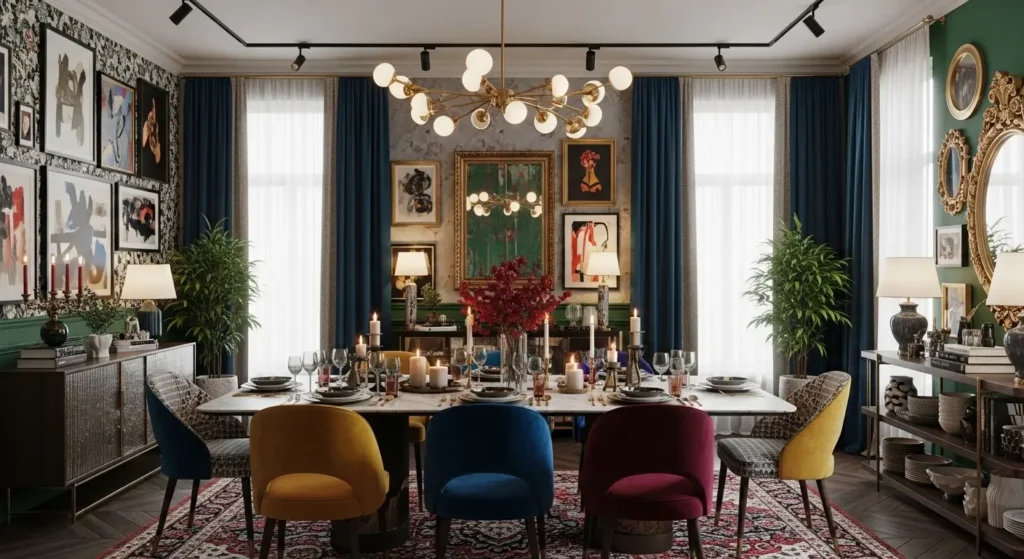
Dining rooms are perfect for bold design because people spend shorter periods there. That means you can take a little more risk with color and pattern. A dramatic light fixture, dark paint, patterned wallpaper, or richly colored curtains can make the room feel special and memorable.
You can also bring maximalism into the dining room with layered table styling, upholstered chairs, statement art, or a vintage cabinet for display. Mixing classic and modern pieces often works well here. For example, a traditional dining table can look beautiful under a contemporary chandelier. A mirror can also help by adding depth and reflecting candlelight or decorative lighting across the room.
Home Office Ideas for Maximalist Decor
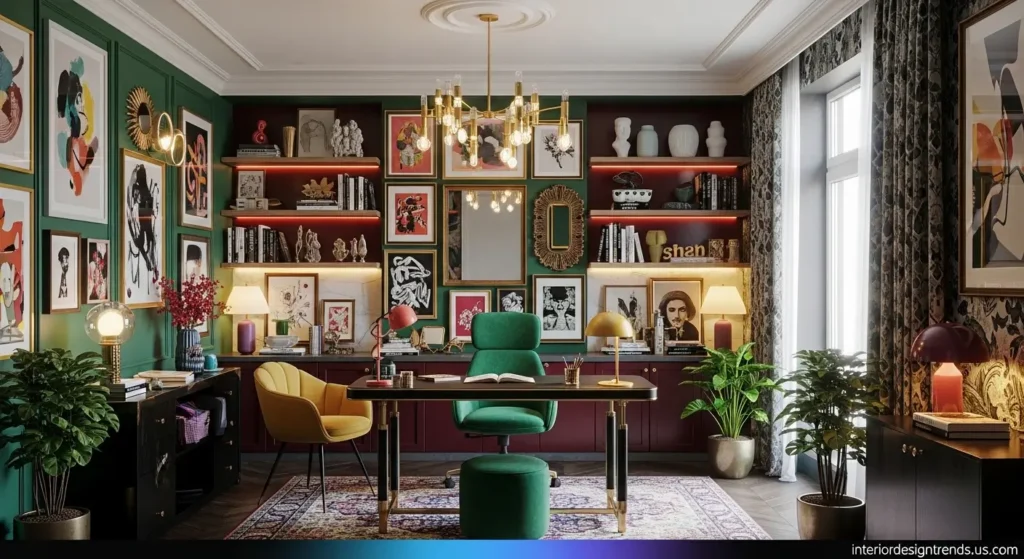
A home office should feel inspiring as well as practical. Maximalist decor can help you create a workspace that feels creative and personal. Start with a desk and chair that support comfort, then add personality with color, art, shelves, and lighting. A painted wall, patterned blind, or stylish rug can turn a simple office into a much more engaging space.
Shelving is especially useful in a maximalist office. Books, boxes, trays, framed prints, and decorative pieces can all add visual interest, but they should still be organized. The goal is not distraction. The goal is energy, focus, and identity. If you attend video calls, a thoughtfully styled background can also make the room look more polished and professional.
Bathroom and Entryway Ideas
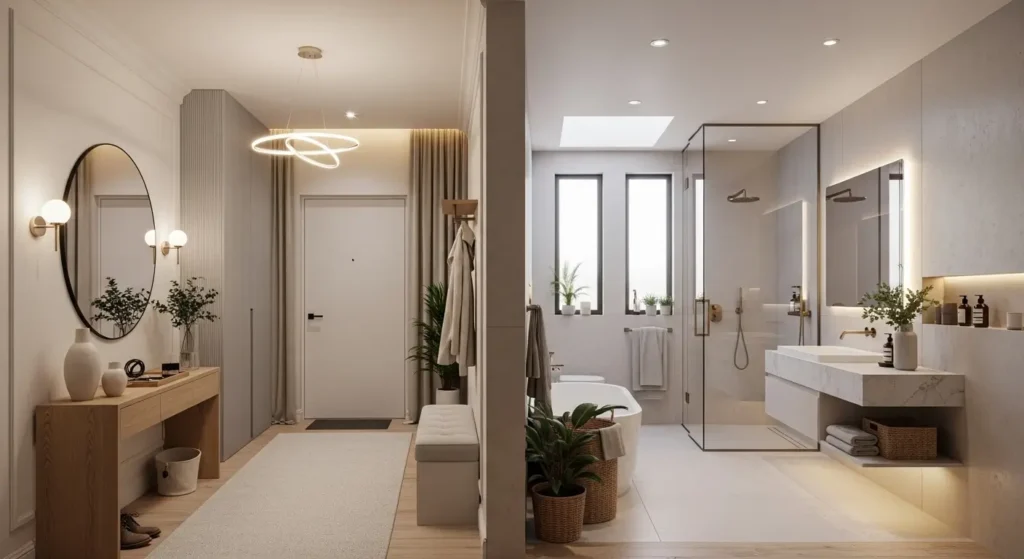
Small spaces are often the easiest places to try maximalism because you need fewer items to make a strong impact. In a bathroom, you can use wallpaper, a painted vanity, a stylish mirror, patterned tiles, or decorative lighting. In an entryway, you can add a bold runner, a console table, art, a lamp, and a mirror to create a strong first impression.
Because these spaces are small, the design choices feel powerful very quickly. That makes them ideal for testing your confidence before moving into larger rooms. Keep the palette connected and avoid overcrowding the floor. In small spaces, one bold surface and a few carefully chosen accessories can be enough to create the maximalist feeling.
How to Make Maximalist Decor Work in Small Spaces
Many people think maximalism only works in large homes, but small spaces can look amazing in this style. The trick is to use fewer, better pieces. Instead of many tiny objects, choose a few stronger ones. A large mirror, bold artwork, patterned rug, and rich curtains can do more for the room than lots of small accessories.
Storage also matters. Hidden storage keeps the room from becoming messy. Open shelves can still work, but they should be edited carefully. Use vertical space well with taller curtains, higher art placement, and shelving that draws the eye upward. Good lighting also makes a big difference. If the room is dark, combine richer colors with mirrors or lighter accents so the space still feels balanced.
What Is Neutral Maximalism
Neutral maximalism is a softer version of maximalist decor. It uses the same idea of layering and abundance, but with a calmer palette. Instead of very bright colors, it may use cream, beige, brown, charcoal, olive, rust, and muted tones. The room still feels rich and expressive, but the richness comes more from texture, shape, and material than from bright color.
This style works well for people who like warmth and personality but still want a calmer atmosphere. A neutral maximalist room may include linen curtains, a boucle chair, wood furniture, textured cushions, ceramic vases, stacked books, and tonal artwork. It proves that maximalism does not always need to be loud. It can also be elegant, earthy, and restful.
Budget-Friendly Tips for Maximalist Decor
You do not need a huge budget to create a beautiful maximalist home. In fact, this style often looks better when it grows over time and includes a mix of old and new pieces. Maximalism benefits from character, and character often comes from second-hand finds, inherited items, and collected treasures.
Start by shopping your own home. Books, frames, trays, bowls, baskets, and textiles may already exist in other rooms. Next, look at thrift stores, flea markets, and second-hand websites for mirrors, lamps, art, side tables, and vintage decor. Paint is also one of the most powerful low-cost tools in any maximalist room. A painted wall, shelf, cabinet, or ceiling can transform the mood without a full renovation.
Textiles are another smart budget tool. Cushions, curtains, throws, bedding, and rugs can introduce pattern and texture without replacing all your furniture. If you spend carefully on large impact items and collect the smaller layers slowly, you can create a rich look without overspending.
Common Mistakes to Avoid
One of the biggest mistakes in maximalist decor is adding too much too fast. When you buy many things quickly, the room may lose direction. Build the space slowly and review it often. Another common mistake is having no color plan. If every item introduces a new shade, the room looks random. A clear color palette keeps rich styling under control.
Too many small objects can also create noise. Balance them with larger art, stronger lamps, fuller curtains, or larger furniture pieces. Another mistake is ignoring the function. A beautiful room still needs walking space, storage, comfort, and useful lighting. Finally, do not confuse clutter with style. If the room feels stressful, it may need editing. Remove items that do not support the look or story of the space.
A Simple Step-by-Step Plan
Step one is choosing the room you want to style. Step two is picking one strong feature, such as wallpaper, a rug, a paint color, or a sofa. Step three is building a color palette of three to five shades. Step four is adding your supporting layers,s such as curtains, art, lamps, and cushions.
Step five is mixing textures such as wood, metal, fabric, ceramic, and glass. Step six is styling shelves and surfaces in groups so the room feels curated rather than scattered. Step seven is stepping back to edit. Remove anything that feels out of place. Step eight is living in the room for a while and improving it slowly. This process keeps you in control while still allowing creativity.
Maximalist Decor Versus Eclectic Decor Versus Minimalism
These styles are related, but they are not the same. Minimalism focuses on simplicity, open space, and limited decoration. Eclectic decor focuses on mixing different styles, time periods, and influences. It may be colorful or calm depending on how it is done. Maximalist decor focuses on fullness, layering, strong visual interest, and expressive design.
A room can be both eclectic and maximalist, but maximalism usually has more decorative richness. The easiest way to understand the difference is this. Eclectic design is about variety. Minimalism is about restraint. Maximalism is about intentional abundance.
How to Keep Maximalist Decor Timeless
Some people worry that maximalism may go out of style, but a thoughtful room built around personal taste always has value. To keep the look timeless, focus on what you truly love instead of chasing every trend. Choose quality when possible. Mix newer pieces with classic or vintage ones. This gives the room depth and keeps it from feeling temporary.
You can also refresh your home by rotating items instead of replacing everything. Move art, pillows, lamps, or accessories from one room to another. This keeps the home feeling new while protecting the identity you have already built. Timeless maximalism is not about constantly buying. It is about refining a space with care.
Frequently Asked Questions
Is maximalist decor always colorful?
No. Many maximalist rooms use rich neutrals instead of bright colors. The style is more about layering, personality, and visual depth than about one fixed color rule. Neutral maximalism is a great example of this softer approach.
Can beginners use maximalist decor?
Yes. Beginners should start small. One room, one color palette, and one focal point are enough to begin. When you work step by step, maximalism becomes much easier to manage.
Does maximalism make a room look smaller?r
Not always. If you use good lighting, correct furniture scale, mirrors, and thoughtful storage, a small room can still look beautiful and stylish with a maximalist design. The key is editing and smart balance.
How do I stop my room from looking messy?
Use a clear color palette, repeat materials, group objects, and remove items that do not fit. Editing is one of the most important parts of successful maximalist decor.
Can I mix modern and vintage furniture?
Yes. Mixing modern and vintage furniture often makes a maximalist room more beautiful because it adds contrast, story, and character. This mix helps the home feel collected rather than overly matched.
For even more inspiration, explore our post on One moment, please….
Pair these ideas with the tips in One moment, please… for a complete look.
Conclusion
Maximalist decor is a wonderful style for people who want their home to feel warm, expressive, and full of personality. It allows you to use color, pattern, texture, art, and meaningful objects in a way that creates beauty and depth. The best maximalist homes are not messy. They are carefully layered and thoughtfully designed.If you are new to this style, start simply. Choose one room, one focal point, and one clear color palette. Add layers slowly. Mix textures. Use objects you love. Edit as you go. Over time, your room will become richer, more personal, and more beautiful. That is the real magic of maximalist decor. It helps you create a home that feels truly yours.
