


Welcome to your complete guide on bathroom wallpaper ideas. Decorating your bathroom with wallpaper is an easy way to give it a fresh, stylish look. Whether your bathroom is small or large, wallpaper can add color, pattern, and personality that paint alone cannot achieve. With the right choice, it can make your bathroom feel brighter, bigger, or more luxurious.
Before picking a design, it is important to understand the materials and patterns that work well in humid spaces. In this guide, we will explain how to choose moisture-resistant wallpaper, the best styles for 2026, placement ideas, and practical tips for installation. By following these suggestions, you can create a bathroom that looks professional, feels comfortable, and reflects your personal style.
Why Use Wallpaper in Your Bathroom (Design + Function)
Decorating your bathroom with bathroom wallpaper is not just about beauty it’s also about functionality. Wallpaper allows you to add personality, color, and texture to your space in ways paint cannot. It can completely transform a plain bathroom into a stylish, inviting room, whether you want a calm retreat or a bold, modern statement.
Benefits of Wallpaper in Bathrooms
Using bathroom wallpaper has several advantages:
- Instant Style Upgrade: Wallpaper adds patterns and colors that instantly make your bathroom look updated and unique.
- Customizable Design: From subtle textures to bold prints, you can choose a design that reflects your personal style.
- Small Bathroom Solution: Certain patterns, like vertical stripes or light colors, can make small bathrooms feel bigger and brighter.
- Cost-Effective Refresh: Adding wallpaper is an affordable way to refresh your space without a full renovation.
- Focal Points and Accent Walls: Wallpaper can highlight areas like the vanity or tub, drawing attention and adding depth to the room.
Practical Considerations Before You Start
Before installing wallpaper, consider your bathroom’s conditions:
- Moisture and Humidity: Bathrooms produce a lot of steam, which can damage regular wallpaper. Choose moisture-resistant or vinyl options for durability.
- Ventilation: Ensure your bathroom has proper airflow through windows or exhaust fans to prevent peeling or mold.
- Wall Preparation: Clean, dry, and smooth walls are essential for a long-lasting finish. Repair cracks or imperfections before applying wallpaper.
By understanding both the design benefits and functional requirements, you can confidently choose wallpaper that is beautiful, long-lasting, and practical for your bathroom.

Choosing the Right Material for Bathroom Wallpaper
Selecting the right material is one of the most important steps when adding bathroom wallpaper. Bathrooms are humid and often exposed to water splashes, so using the wrong type of wallpaper can lead to peeling, bubbling, or mold growth. Choosing a durable, moisture-resistant material ensures your walls stay beautiful for years while making maintenance easy.
Vinyl and Moisture-Resistant Wallcoverings
Vinyl wallpaper is the most popular choice for bathrooms because it is water-resistant and durable. It comes in a variety of patterns and textures, from smooth finishes to embossed designs, making it ideal for both small powder rooms and large master bathrooms. Some benefits include:
- Moisture Resistance: Vinyl can handle steam, humidity, and occasional splashes without losing its shape or color.
- Easy to Clean: Wipe down with a damp cloth to remove dirt, soap residue, or fingerprints.
- Durable and Long-Lasting: High-quality vinyl can last 5–10 years in a well-ventilated bathroom.
Peel-and-Stick vs Traditional Wallpaper
Peel-and-stick wallpaper is perfect for renters or those who want a temporary update. It is easy to install, remove, and reposition without damaging walls. This type is ideal for accent walls or small bathrooms where you want a quick style refresh.
Traditional wallpaper, on the other hand, is more permanent. It requires adhesive and careful installation but often provides a higher-quality finish and a more professional look. If you are renovating your bathroom for the long term, traditional wallpaper might be the better choice.
Other Considerations
- Non-Woven Wallpaper: Another bathroom-friendly option, non-woven wallpaper is breathable and tear-resistant.
- Textured Wallpaper: Adds dimension and visual interest, but ensure it is sealed properly to prevent water damage.
- Surface Preparation: Smooth, clean walls help wallpaper adhere better, ensuring durability and a polished finish.
Choosing the right bathroom wallpaper material sets the foundation for a successful design. With vinyl, peel-and-stick, or non-woven options, you can combine style with practicality, creating a bathroom that is both beautiful and functional.

Top Bathroom Wallpaper Style Ideas for 2026
Choosing the right style of bathroom wallpaper can make a big difference in how your space feels and looks. In 2026, interior design trends focus on creative patterns, calming textures, and combinations that make bathrooms feel fresh, stylish, and modern. Below are the top design ideas you can use, whether you prefer bold looks or simple elegance.
Bold Botanical Prints
Botanical wallpaper features leaves, flowers, and natural shapes that bring a sense of nature into your bathroom. These prints work well with plain tiles or white fixtures, creating a relaxing and refreshing feel. Choose larger leaf patterns for a dramatic look, or smaller floral designs for a gentle, calming atmosphere.
Botanical prints are especially great for bathrooms that receive natural light. The natural shapes help soften the room and make it feel like a small retreat.
Geometric and Graphic Motifs
Geometric wallpaper is perfect if you want a modern, clean look. Patterns like chevrons, diamonds, or repeating shapes add rhythm and energy to your walls. These designs pair well with simple bathroom fixtures and help give a contemporary edge to your space.
Graphic motifs can also help direct attention. For example, a bold patterned wall behind a vanity or mirror becomes a focal point that elevates the whole room.
Marble and Stone‑Inspired Patterns
If you like a luxury hotel feel but do not want to spend a lot on real marble or stone, wallpaper with marble or stone effects can be the perfect solution. These patterns mimic the natural look of stone but are lighter and easier to install.
Stone‑inspired wallpapers work beautifully behind bathtubs or on a large wall, giving your bathroom a sophisticated and timeless appearance.
Minimalist and Neutral Textures
Minimal designs are perfect for creating a calm and clutter‑free environment. Wallpapers in soft neutrals—such as light gray, creamy white, or beige—with gentle textures can make a bathroom feel larger and more open. This style is ideal for small spaces or bathrooms where you want a peaceful, spa‑like experience.
Neutral textures also blend easily with other design elements like wood finishes, stone tiles, and sleek mirrors.
Metallic and Luxe Finishes
For those who want extra style and brightness, metallic accents in wallpaper are an exciting trend for 2026. Designs with gold, silver, or bronze elements reflect light, making the room feel brighter and more luxurious. These wallpapers look especially good in powder rooms or guest bathrooms where you want a bit of drama.
Metallic finishes work best when used as an accent wall rather than covering the entire room, so the look remains balanced and elegant.
Creative Placement Tips
Using bathroom wallpaper effectively isn’t just about the pattern—it’s also about where you place it. Strategic placement can enhance your bathroom’s style, highlight features, and even make the space feel bigger or cozier. Here are some creative placement ideas for 2026 trends:
Accent Walls vs Full Wallpaper Coverage
An accent wall is a beginner-friendly option. Instead of covering the entire bathroom, focus on one wall—typically behind the vanity, bathtub, or toilet. This approach draws attention to a focal point without overwhelming the room.
Full-wall coverage is best suited for larger bathrooms. Using bold or large-scale patterns on all walls creates a dramatic, luxurious effect, but make sure the room is spacious enough to avoid feeling cluttered.
Half-Wall and Wainscoting Combinations
Pairing wallpaper with wainscoting or tile adds texture and dimension to your bathroom. The lower half of the wall can have tile for water protection, while the upper half features wallpaper for style. This layered design combines practicality and elegance, perfect for traditional and modern bathrooms alike.
Ceiling Wallpaper in Bathrooms
Wallpapering the ceiling is a trend gaining popularity. A bold or patterned ceiling can make a small bathroom appear taller, or add a unique visual twist in larger spaces. Metallic finishes work particularly well on ceilings, reflecting light and adding subtle luxury.
Pairing Wallpaper with Tile and Fixtures
For a cohesive look, choose wallpaper colors and patterns that complement your tiles, vanities, and bathroom fixtures. Neutral wallpapers pair well with vibrant tiles, while bold wallpaper can enhance simple, minimalist fixtures. Harmony between colors and materials creates a professional, polished aesthetic.
Other Placement Tips
- Use wallpaper behind mirrors to create depth.
- Avoid wallpaper directly in wet zones like inside showers unless it’s fully waterproof.
- Consider vertical stripes for small bathrooms to make ceilings appear higher.
By thoughtfully placing your bathroom wallpaper, you can turn a plain room into a stylish, well-balanced space that feels intentional and modern.
Installation Guide: How to Wallpaper Your Bathroom Walls
Applying bathroom wallpaper may seem intimidating, but with the right preparation and steps, you can achieve a professional-looking finish. Bathrooms require extra care due to moisture and humidity, so following these instructions ensures long-lasting results.
Prepping Walls and Tools Needed
Before starting, your walls must be clean, smooth, and dry. Any cracks, holes, or bumps can cause the wallpaper to peel or bubble. Remove old wallpaper, scrub walls to eliminate dirt or grease, and apply primer if needed.
Essential tools include:
- Measuring tape and pencil
- Wallpaper adhesive (or peel-and-stick backing)
- Smoothing brush or plastic scraper
- Utility knife or sharp scissors
- Level for straight lines
Proper preparation is the foundation of a smooth, durable wallpaper application.
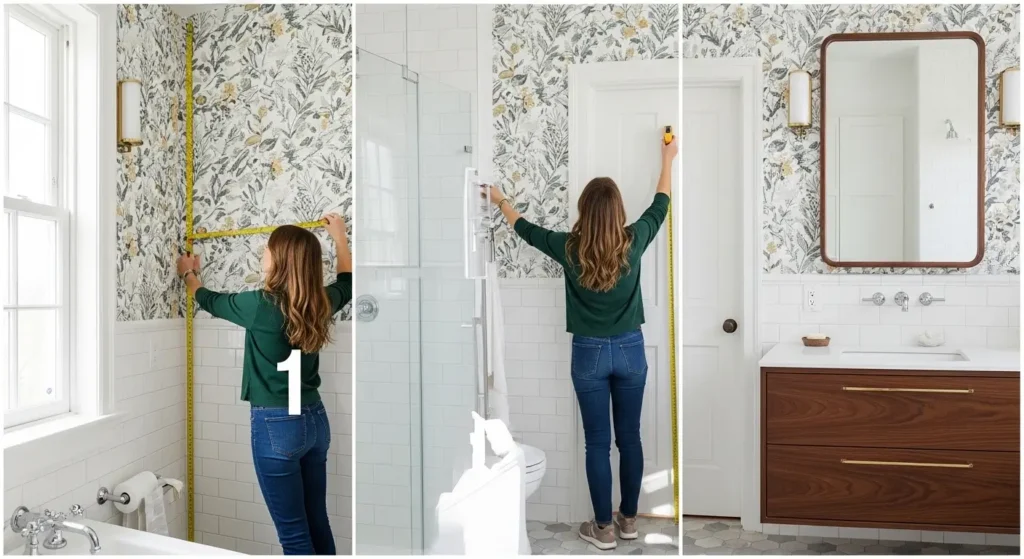
Step-by-Step Wallpaper Application
Installing bathroom wallpaper can be simple when you follow a clear, organized process. Each step ensures your wallpaper adheres properly, aligns beautifully, and lasts for years in a humid environment.
Measure and Cut Panels
- Measure the height of your walls carefully and add a few extra inches at the top and bottom for trimming.
- Use a straight edge and pencil to mark cuts, ensuring accuracy.
- Cut each panel individually, especially if your wallpaper has a repeating pattern, to align designs seamlessly.
Prepare the Wall
- Clean walls thoroughly to remove dirt, grease, or old adhesive.
- Fill cracks and smooth rough spots using spackle or a wall filler.
- Allow the wall to dry completely before applying wallpaper.
Apply Adhesive or Use Peel-and-Stick
- For traditional wallpaper, apply a thin, even layer of adhesive to either the back of the paper or the wall, as per manufacturer instructions.
- Peel-and-stick wallpaper skips this step, but ensure the wall is clean and dry for proper adhesion.
Position and Align the First Panel
- Start at a corner or behind a key feature like the vanity.
- Use a level to ensure the panel is perfectly straight vertically.
- Allow a slight overlap at edges for trimming later.
Smooth Out Air Bubbles and Wrinkles
- Use a smoothing brush or plastic scraper to push out air bubbles from the center toward the edges.
- Work slowly to avoid tearing delicate wallpaper.
Match Patterns on Subsequent Panels
- Align repeating patterns carefully as you apply each additional panel.
- Ensure seams are tight without gaps to maintain a cohesive design.
Trim Excess Edges
- Use a sharp utility knife to trim extra wallpaper at the ceiling, baseboards, and corners.
- Cut slowly and carefully for a clean, professional finish.
Finishing Touches
- Wipe any excess adhesive immediately with a damp cloth.
- Let the wallpaper dry completely before exposing it to moisture or water splashes.
- Inspect seams and edges to make sure they are secure.
Common Mistakes to Avoid
- Applying Wallpaper on Damp Walls: Moisture can prevent adhesion and cause peeling.
- Skipping Smoothing: Failing to remove air bubbles leads to wrinkles and uneven texture.
- Mismatched Patterns: Misalignment can ruin the visual flow, especially with bold prints.
- Using Non-Water-Resistant Adhesives: Always choose products suitable for humid environments.
Following these steps ensures your bathroom wallpaper looks flawless and lasts for years. With careful measurement, proper alignment, and attention to detail, even beginners can achieve stunning results.

Styling and Color Tips Based on Bathroom Size
Choosing the right style, pattern, and color for bathroom wallpaper can make a huge difference, especially depending on the size of your bathroom. The goal is to create a space that feels spacious, balanced, and visually appealing while reflecting your personal style.
Small Bathrooms: Make Space Feel Bigger
Small bathrooms can feel cramped if you choose dark or busy patterns. Here’s how to style them effectively:
- Light Colors: Whites, creams, pale blues, and soft pastels make the room feel brighter and more open.
- Vertical Stripes: Stripes that run from floor to ceiling create the illusion of height, making low ceilings appear taller.
- Minimal Patterns: Simple designs prevent the space from feeling cluttered. Geometric shapes or subtle textures work well.
- Accent Walls: Instead of covering all walls, use wallpaper on a single wall behind the vanity or mirror to add style without overwhelming the space.
Large Bathrooms: Embrace Bold and Luxurious Styles
In bigger bathrooms, you can be more adventurous with patterns and colors:
- Bold Patterns: Large-scale florals, geometric shapes, or graphic prints add drama and style.
- Dark Colors: Deep blues, greens, or charcoal shades can make a large bathroom feel cozy and sophisticated.
- Texture and Metallics: Adding textured wallpaper or metallic accents creates depth and a luxurious atmosphere.
- Full-Wall Coverage: In large spaces, covering multiple walls with wallpaper is feasible and visually impressive.
Balancing Colors and Fixtures
- Complement Your Fixtures: Match wallpaper tones with your vanity, tiles, and hardware to create a cohesive look.
- Contrast for Interest: Lighter walls with dark fixtures or vice versa create visual interest and highlight features.
- Natural Light Considerations: In bathrooms with limited sunlight, lighter wallpapers reflect light and make the space feel airy.
Additional Styling Tips
- Combine wallpaper with other elements like mirrors, lighting, and plants to enhance the design.
- Avoid overly busy designs in small bathrooms, as they can make the space feel chaotic.
- In large bathrooms, layering different textures (matte, metallic, textured wallpaper) adds depth and sophistication.
By selecting patterns, textures, and colors that suit your bathroom’s size, your bathroom wallpaper can enhance space, style, and ambiance, creating a visually pleasing and functional environment.
Maintenance and Longevity of Bathroom Wallpaper
Once your bathroom wallpaper is installed, proper care is essential to ensure it remains beautiful and durable. Bathrooms are high-humidity areas, so selecting the right maintenance methods can prevent peeling, discoloration, and mold growth.
Cleaning Your Bathroom Wallpaper
- Regular Dusting: Use a soft, dry cloth or microfiber duster to remove dust from the surface. This prevents buildup that can dull patterns and colors.
- Spot Cleaning: For vinyl or washable wallpaper, lightly wipe any stains or splashes with a damp cloth and mild soap. Avoid harsh chemicals that can damage the finish.
- Avoid Excess Water: Even moisture-resistant wallpaper can be damaged by excessive water. Always wring out clothes thoroughly before cleaning.
Preventing Moisture Damage
- Ventilation: Ensure your bathroom has proper airflow through an exhaust fan or window. Good ventilation reduces condensation and prevents mold growth.
- Limit Direct Water Exposure: Avoid placing wallpaper directly behind showerheads or sinks unless it is specifically designed for high-moisture zones.
- Check Seams Regularly: Inspect edges and seams periodically to ensure adhesive is holding. Apply extra adhesive if you notice lifting.
Frequently Asked Questions (FAQ)
Can I use regular wallpaper in a bathroom?
Using regular wallpaper in a bathroom is not recommended because most standard wallpapers are not moisture-resistant. Humidity and water splashes can cause peeling, bubbling, or mold growth. For durability, choose vinyl, non-woven, or peel-and-stick bathroom wallpaper specifically designed for humid spaces.
How do I prevent wallpaper from peeling in a bathroom?
To prevent peeling, ensure:
- Walls are clean, smooth, and dry before installation.
- You use moisture-resistant adhesive for traditional wallpaper.
- Your bathroom has proper ventilation, such as an exhaust fan or window, to reduce humidity.
- Seams are pressed firmly,y and edges are secured during installation.
Can wallpaper make a small bathroom look bigger?
Yes! Using light colors, vertical stripes, or subtle patterns in small bathrooms can make the space feel taller and brighter. Accent walls or partial-wall coverage can also add style without overwhelming the room.
How do I clean bathroom wallpaper without damaging it?
- Dust regularly with a soft cloth or microfiber duster.
- Spot-clean using a damp cloth and mild soap for vinyl or washable wallpaper.
- Avoid harsh chemicals or abrasive tools.
- Never saturate the wallpaper with water; always wring out cloths thoroughly.
Which wallpaper materials are best for bathrooms?
The most durable and practical options include:
- Vinyl wallpaper: Water-resistant, easy to clean, and long-lasting.
- Non-woven wallpaper: Breathable, tear-resistant, and suitable for humid areas.
- Peel-and-stick wallpaper: Easy to install and remove; ideal for temporary or accent walls.
Can I use wallpaper in the shower area?
Most wallpapers are not recommended inside showers unless they are specifically designed for waterproof environments. Instead, consider waterproof panels, tiles, or specialized shower wallpaper.
Conclusion
Using bathroom wallpaper is one of the most effective ways to transform your bathroom into a stylish, modern, and inviting space. From bold botanical prints and geometric patterns to luxury marble effects and metallic finishes, there is a design to suit every taste and bathroom size. Proper selection of materials, placement, and colors, combined with careful installation, ensures a professional look that lasts for years.
Remember, maintenance and moisture management are key to preserving your wallpaper’s beauty. With the right techniques, your bathroom can feel larger, brighter, and more luxurious, all while reflecting your personal style. Whether you are decorating a small powder room or a spacious master bathroom, bathroom wallpaper offers endless possibilities to create a space that is both functional and visually stunning.

